How this product aligns with the EYLF
Supporting play-based learning and inquiry
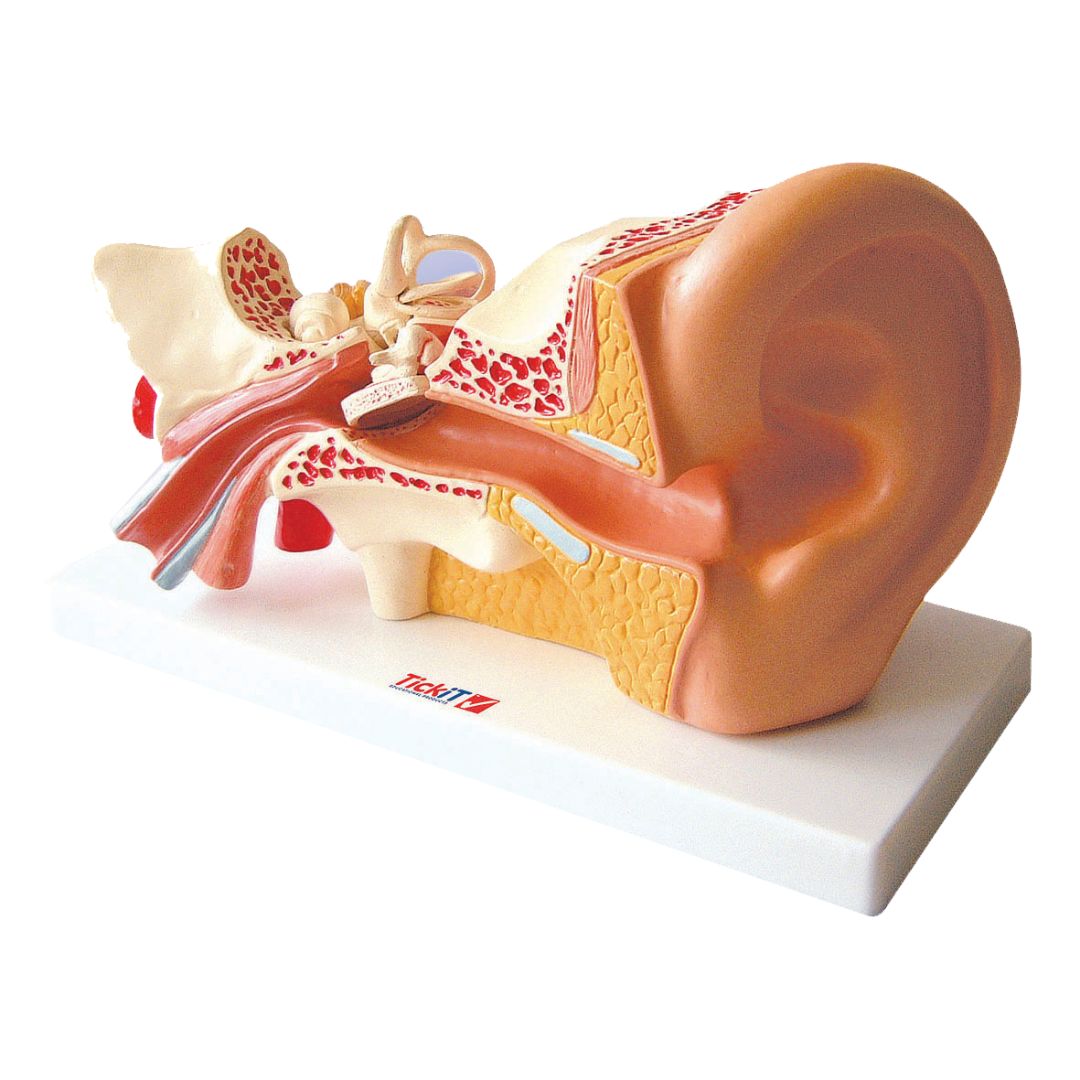
The Human Ear Model encourages children to engage in hands-on exploration of the anatomy of the ear, fostering inquiry-based learning. As children manipulate the removable parts, they can ask questions and make discoveries about how sound is processed, promoting a deeper understanding of their own bodies and the world around them.
Developing early STEM and problem-solving skills
This model serves as a valuable resource for introducing concepts related to biology and sound. Children can engage in problem-solving as they identify and assemble the different parts of the ear, enhancing their critical thinking skills and laying the foundation for future scientific learning.
Relevant EYLF Outcomes
Outcome 2: Children are connected with and contribute to their world.
Outcome 4: Children are confident and involved learners.
Outcome 5: Children are effective communicators.
Classroom, Play Activity & Provocation Ideas
Classroom & Learning Area Ideas
Set up a science corner where the Human Ear Model is displayed alongside books and resources about the human body, encouraging independent exploration and discussion among children.
Play-Based Activity Ideas
Create a role-play scenario where children can act as doctors or scientists, using the ear model to explain how hearing works to their peers.
Encourage children to create sound experiments using various materials, discussing how sound travels and how the ear processes these sounds while referencing the model.
Provocation Ideas
Introduce a sound scavenger hunt where children listen for different sounds in the environment and then use the ear model to discuss how those sounds are perceived.
Facilitate a group discussion about the importance of hearing and how it affects communication, using the model to illustrate key points.