
How this product aligns with the EYLF
Supporting play-based learning and inquiry
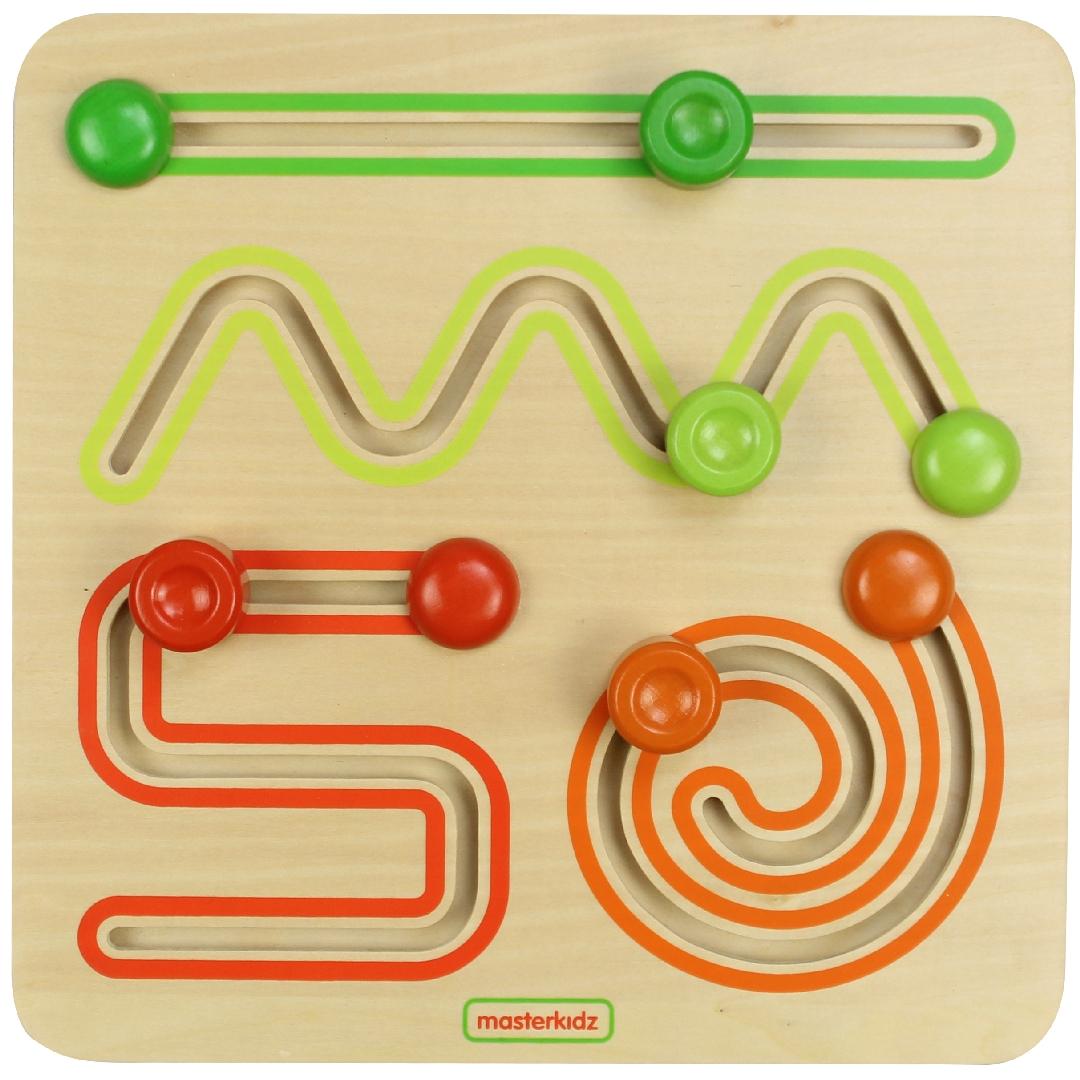
The Sliding Patterns Board encourages children to engage in hands-on exploration as they manipulate the wooden pieces according to the directional arrows. This interactive experience fosters curiosity and inquiry, allowing children to experiment with different movements and observe the outcomes of their actions, thereby enhancing their understanding of cause and effect.
Developing early STEM and problem-solving skills
Through the use of the Sliding Patterns Board, children can practise fundamental hand movements such as straight, seesaw, circular, and turning motions. This activity not only supports the development of fine motor skills but also promotes early STEM learning as children begin to understand spatial awareness and problem-solving through the manipulation of the pieces.
Relevant EYLF Outcomes
Outcome 3: Children have a strong sense of wellbeing
Outcome 4: Children are confident and involved learners
Outcome 5: Children are effective communicators
Classroom, Play Activity & Provocation Ideas
Classroom & Learning Area Ideas
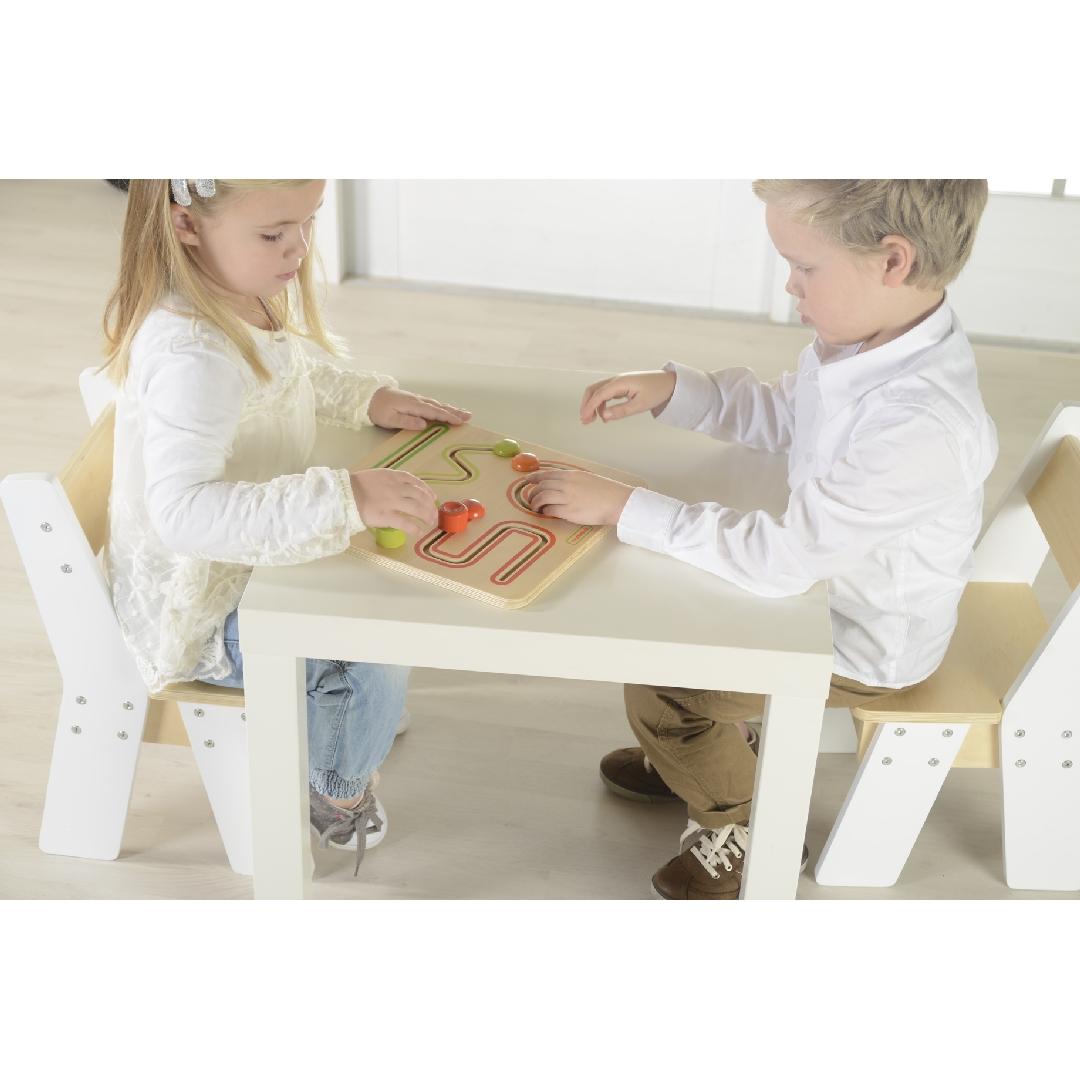
Set up a dedicated space for the Sliding Patterns Board where children can explore different movements and patterns, integrating it into a sensory or fine motor skills area. Use the board as part of a rotation in a manipulative play station to encourage peer interaction and collaborative play.
Play-Based Activity Ideas
Invite children to create their own patterns using the Sliding Patterns Board, encouraging them to describe their movements and the resulting patterns. Organise a group challenge where children take turns to replicate a pattern demonstrated by an educator, fostering communication and teamwork.
Provocation Ideas
Introduce the Sliding Patterns Board alongside a story that features movement or patterns, prompting children to relate the narrative to their play. Encourage children to create their own movement sequences with the board and share their ideas with peers, promoting language development and self-expression.