
How this product aligns with the EYLF
Supporting play-based learning and inquiry
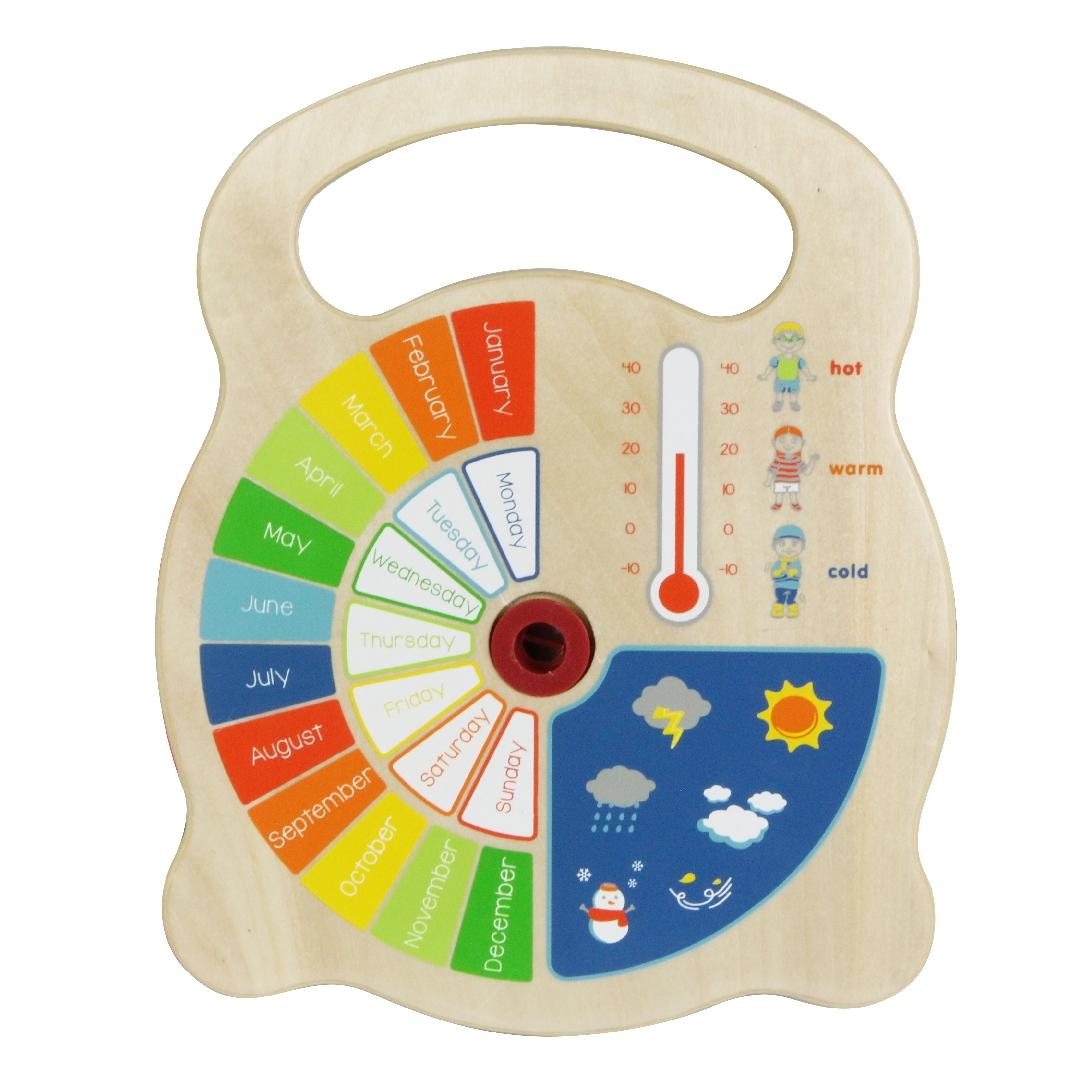
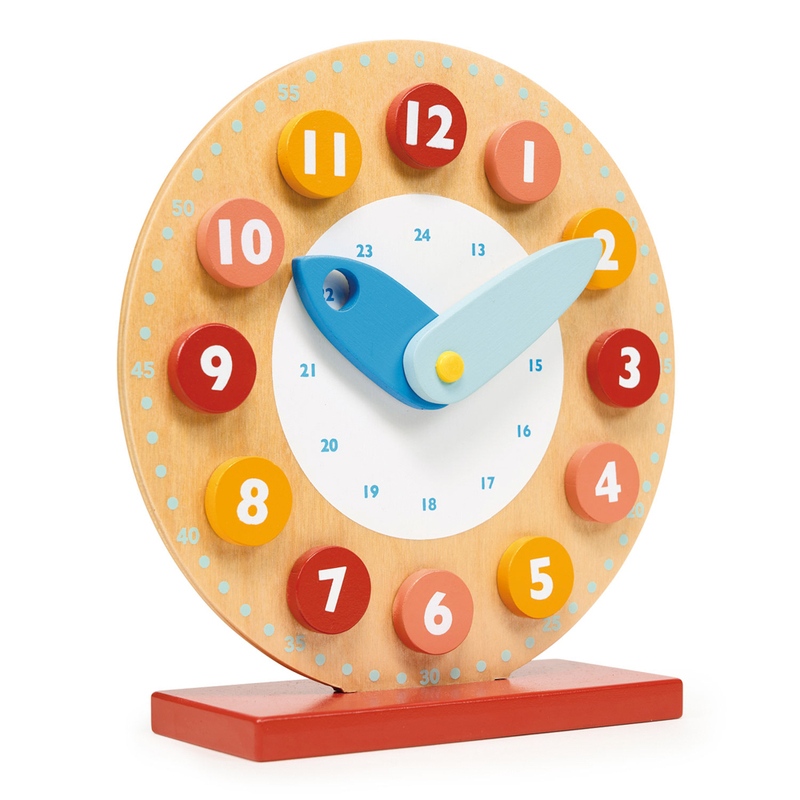
The Wooden Teaching Clock provides children with a tangible resource to explore concepts of time, days of the week, and seasons through hands-on interactions. As children manipulate the clock, they engage in inquiry-based learning, asking questions and discovering relationships between time and their daily routines.
Developing early STEM and problem-solving skills
This product encourages children to develop foundational STEM skills by exploring mathematical concepts related to time and measurement. As they learn to read the clock and understand its functions, children practice problem-solving by determining how to express time in different ways, fostering critical thinking and reasoning skills.
Relevant EYLF Outcomes
Outcome 4: Children are confident and involved learners.
Outcome 5: Children are effective communicators.
Classroom, Play Activity & Provocation Ideas
Classroom & Learning Area Ideas
Set up a designated area with the Wooden Teaching Clock alongside books about time and seasons, allowing children to explore these concepts through reading and discussion.
Incorporate the clock into a daily routine chart, where children can visually track the time and relate it to their activities throughout the day.
Play-Based Activity Ideas
Create a game where children take turns setting the clock to different times and describing what activities they would do at those times, enhancing their language skills.
Encourage children to use the clock to create a daily weather report, discussing how the weather changes with the seasons and relating it to time.
Provocation Ideas
Invite children to create their own weather and time-related artwork using the clock as inspiration, promoting creativity and expression.
Pose open-ended questions about time, such as “What happens when the clock strikes 12?” to stimulate discussion and critical thinking among the children.