How this product aligns with the EYLF
Supporting play-based learning and inquiry
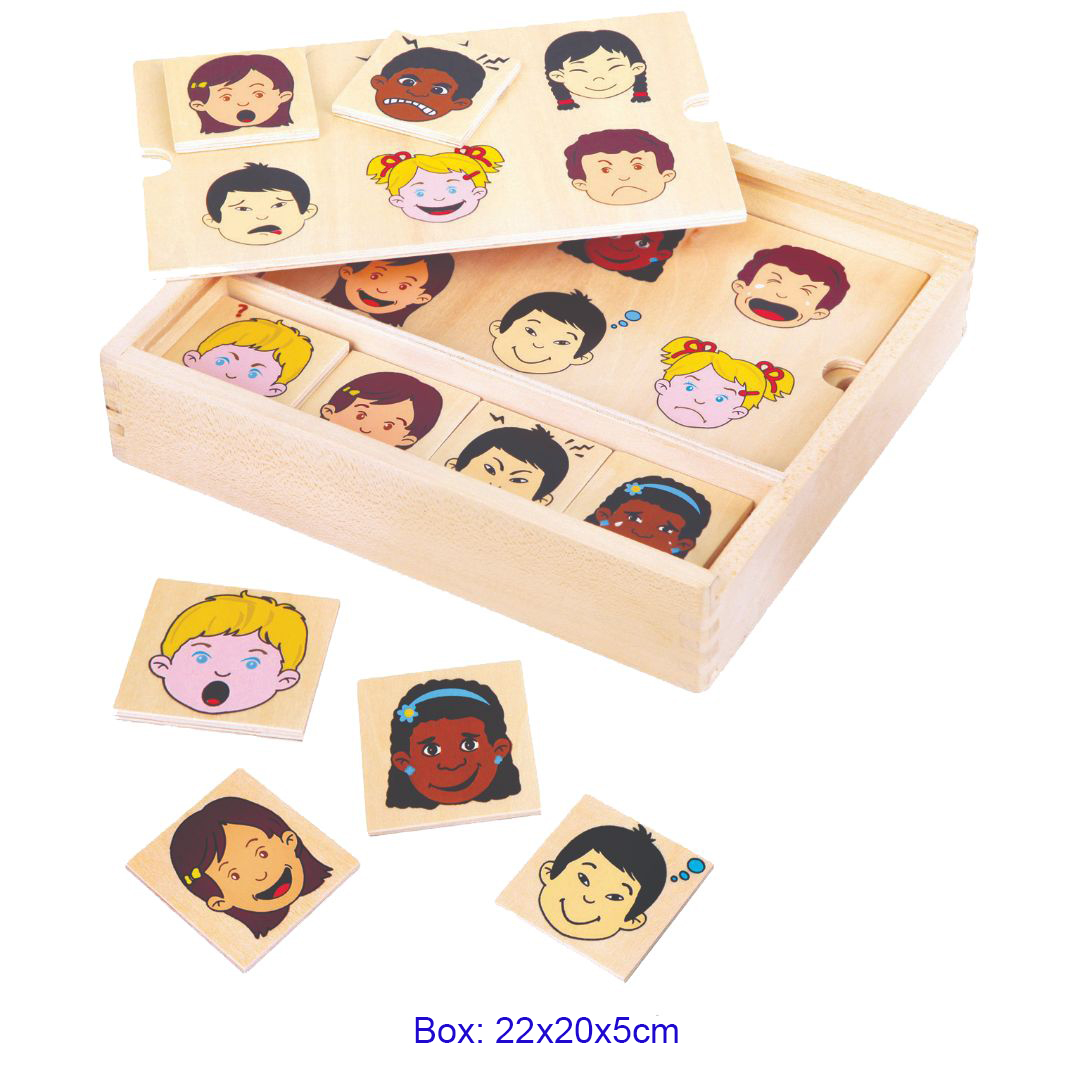
The Matching Expressions game encourages children to engage in play-based learning by exploring emotions through observation and interaction. As children match facial expressions, they are prompted to inquire about feelings, fostering discussions that deepen their understanding of social-emotional concepts.
Building language, imagination, and social skills
This game provides a platform for children to develop their language and social skills as they describe and discuss the emotions represented on the cards. By engaging in conversations about feelings, children enhance their vocabulary and learn to express their own emotions, promoting empathy and social connections.
Relevant EYLF Outcomes
Outcome 1: Children have a strong sense of identity
Outcome 2: Children are connected with and contribute to their world
Outcome 5: Children are effective communicators
Classroom, Play Activity & Provocation Ideas
Classroom & Learning Area Ideas
Set up a dedicated emotion corner where children can explore the Matching Expressions game alongside books about feelings, encouraging them to relate stories to their own experiences.
Play-Based Activity Ideas
Encourage children to create their own facial expression cards using art materials, allowing them to express their feelings and share with peers during playtime.
Organise small group sessions where children take turns matching expressions and discussing what each emotion means, promoting collaborative learning and communication.
Provocation Ideas
Introduce a feelings chart alongside the game, prompting children to identify and match their own expressions to the cards, facilitating self-reflection and emotional awareness.
Use role-play scenarios where children act out different emotions and use the game to match their expressions, enhancing their understanding of social cues and empathy.