
How this product aligns with the EYLF
Supporting play-based learning and inquiry
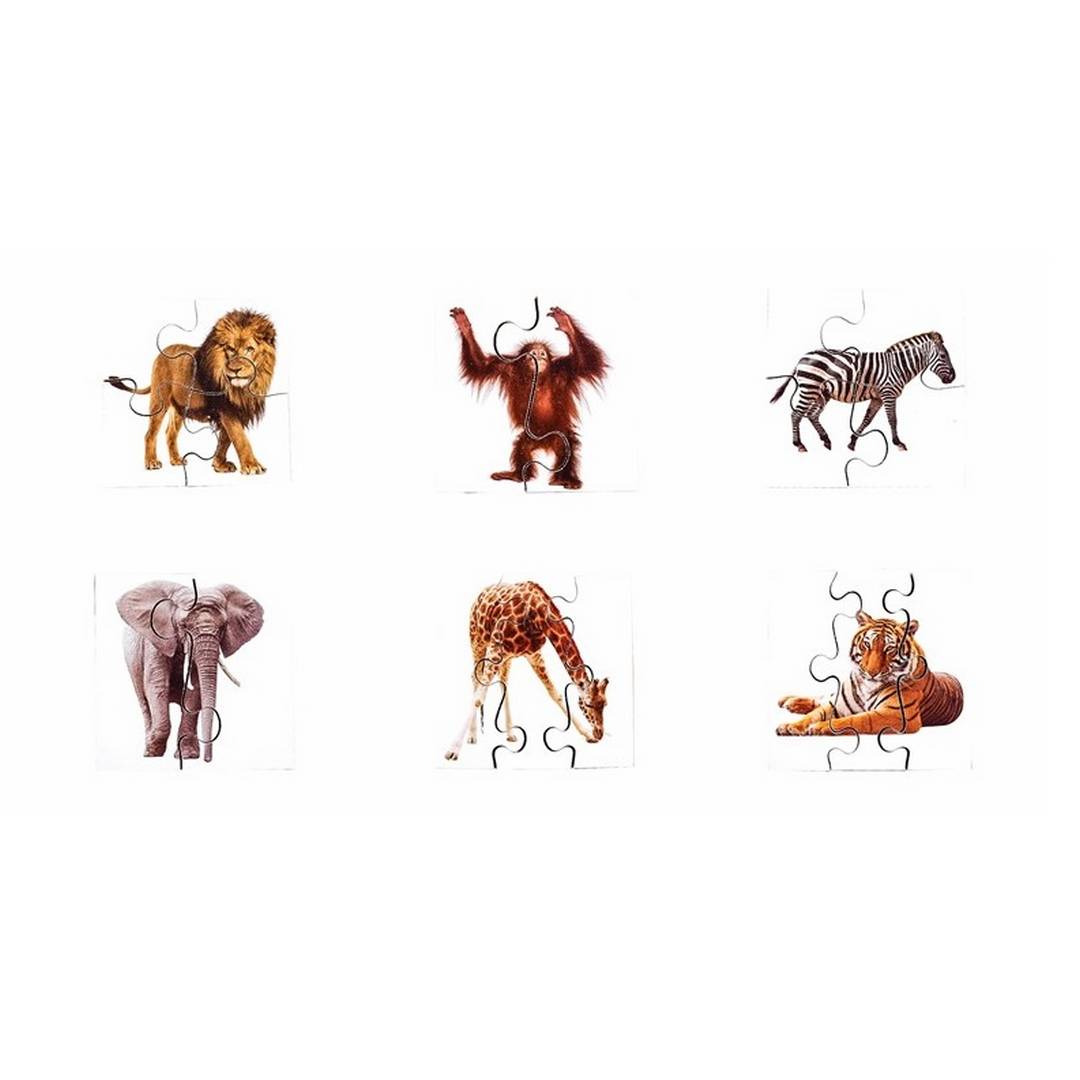
The Real Life Wild Animals First Puzzles encourage children to engage in play-based learning by exploring the world of animals through hands-on problem-solving. As children manipulate the chunky pieces to complete each puzzle, they develop their fine motor skills and spatial awareness, fostering a sense of inquiry about the natural world.
Developing early STEM and problem-solving skills
These puzzles provide an excellent opportunity for children to enhance their early STEM skills as they learn to recognise patterns and develop critical thinking. By working through the puzzles, children practice problem-solving strategies, which are essential for their cognitive development and understanding of how to approach challenges.
Relevant EYLF Outcomes
Outcome 4: Children are confident and involved learners.
Outcome 5: Children are effective communicators.
Classroom, Play Activity & Provocation Ideas
Classroom & Learning Area Ideas
Set up a dedicated puzzle corner where children can independently explore the Real Life Wild Animals First Puzzles, promoting self-directed learning and engagement.
Incorporate the puzzles into a themed animal learning area, allowing children to connect the puzzles with books and images of wild animals.
Play-Based Activity Ideas
Encourage small group play where children can collaborate to complete the puzzles, fostering social skills and teamwork.
Use the puzzles as a springboard for storytelling, prompting children to create narratives about the animals they are assembling.
Integrate the puzzles into a sensory play experience by providing animal figurines and natural materials for children to explore alongside the puzzles.
Provocation Ideas
Introduce a discussion about different habitats and environments where wild animals live, using the puzzles to illustrate these concepts.
Create a matching game where children can pair the completed puzzles with corresponding animal facts or images, enhancing their understanding of animal characteristics.