
How this product aligns with the EYLF
Supporting play-based learning and inquiry
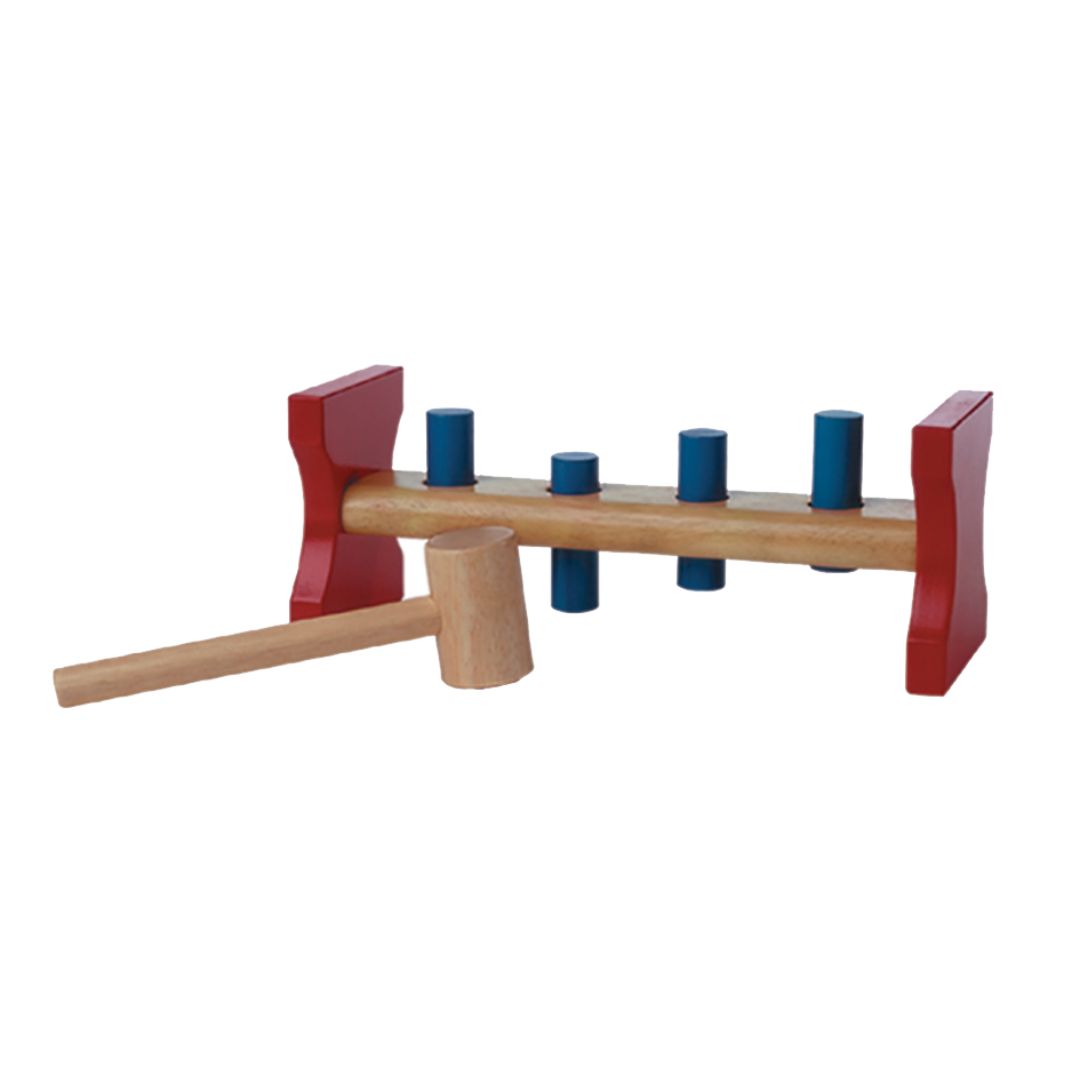
The Pounding Bench encourages children to engage in hands-on play, allowing them to explore concepts of cause and effect as they hammer pegs through the holes. This type of play fosters curiosity and inquiry, as children experiment with different ways to use the bench and observe the outcomes of their actions.
Developing early STEM and problem-solving skills
Through the use of the Pounding Bench, children can develop foundational STEM skills by exploring patterns, colours, and spatial awareness. As they manipulate the pegs and balls, they are also encouraged to problem-solve, figuring out how to balance the pegs and how to effectively use the hammer, thus enhancing their critical thinking abilities.
Relevant EYLF Outcomes
Outcome 4: Children are confident and involved learners.
Outcome 5: Children are effective communicators.
Classroom, Play Activity & Provocation Ideas
Classroom & Learning Area Ideas
Set up a dedicated construction area where children can explore the Pounding Bench alongside other building materials, promoting collaborative play and discussion.
Play-Based Activity Ideas
Encourage children to create a rhythm by hammering the pegs in time with music, enhancing their auditory skills and understanding of patterns.
Introduce a challenge where children can see how many pegs they can hammer in a minute, fostering a sense of achievement and friendly competition.
Provocation Ideas
Provide a variety of objects with different weights and textures for children to experiment with, encouraging them to discuss how these factors affect their play with the Pounding Bench.
Invite children to create a story about the Pounding Bench, using the pegs and balls as characters, which promotes language development and imaginative play.