
How this product aligns with the EYLF
Supporting play-based learning and inquiry
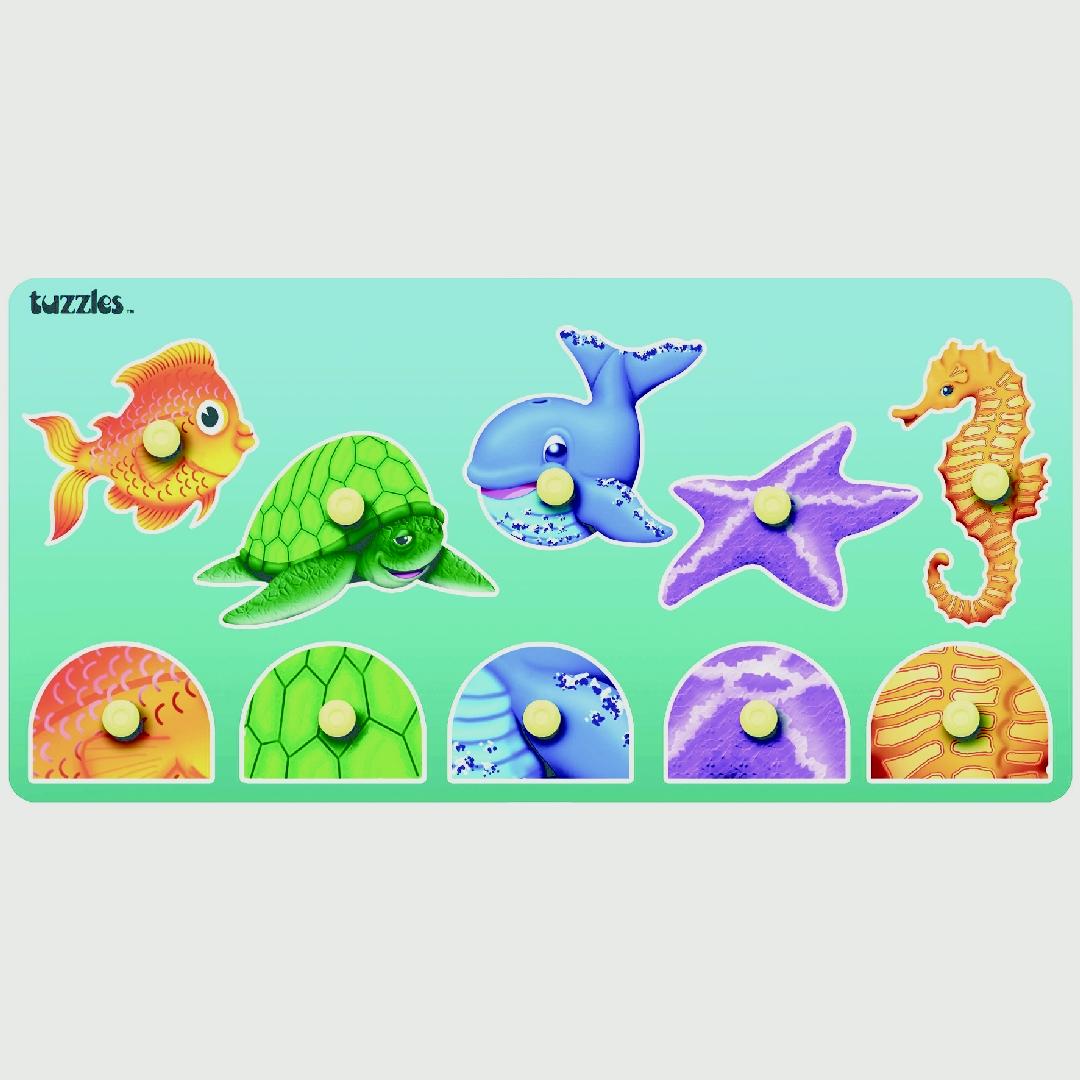
The Matching Ocean Animals Peg Puzzle encourages children to engage in play-based learning by exploring the vibrant ocean animals and their corresponding patterns. As children manipulate the chunky pegs, they are prompted to inquire about the different animals, fostering curiosity and encouraging discussions about marine life.
Developing early STEM and problem-solving skills
This puzzle supports the development of early STEM skills as children learn to match shapes and patterns, enhancing their visual discrimination and cognitive abilities. Through the process of solving the puzzle, children practice problem-solving strategies, such as trial and error, which are essential for their overall learning journey.
Relevant EYLF Outcomes
Outcome 2: Children are connected with and contribute to their world.
Outcome 4: Children are confident and involved learners.
Outcome 5: Children are effective communicators.
Classroom, Play Activity & Provocation Ideas
Classroom & Learning Area Ideas
Set up a dedicated puzzle corner where children can explore the Matching Ocean Animals Peg Puzzle alongside other ocean-themed resources, promoting collaborative play and exploration.
Incorporate the puzzle into a marine life learning area, providing books and images of ocean animals to enhance children’s understanding and vocabulary.
Play-Based Activity Ideas
Encourage children to create their own ocean animal stories using the puzzle pieces as prompts, fostering language development and imagination.
Organise a matching game where children pair the puzzle pieces with real-life images of ocean animals, reinforcing their understanding of visual similarities and differences.
Facilitate a group activity where children work together to complete the puzzle, promoting teamwork and communication skills.
Provocation Ideas
Introduce sensory play with water and ocean-themed items, inviting children to explore the textures and sounds of the sea while referencing the puzzle.
Use the puzzle as a starting point for a discussion about ocean conservation, encouraging children to think critically about their environment and the importance of protecting marine life.