
How this product aligns with the EYLF
Supporting play-based learning and inquiry
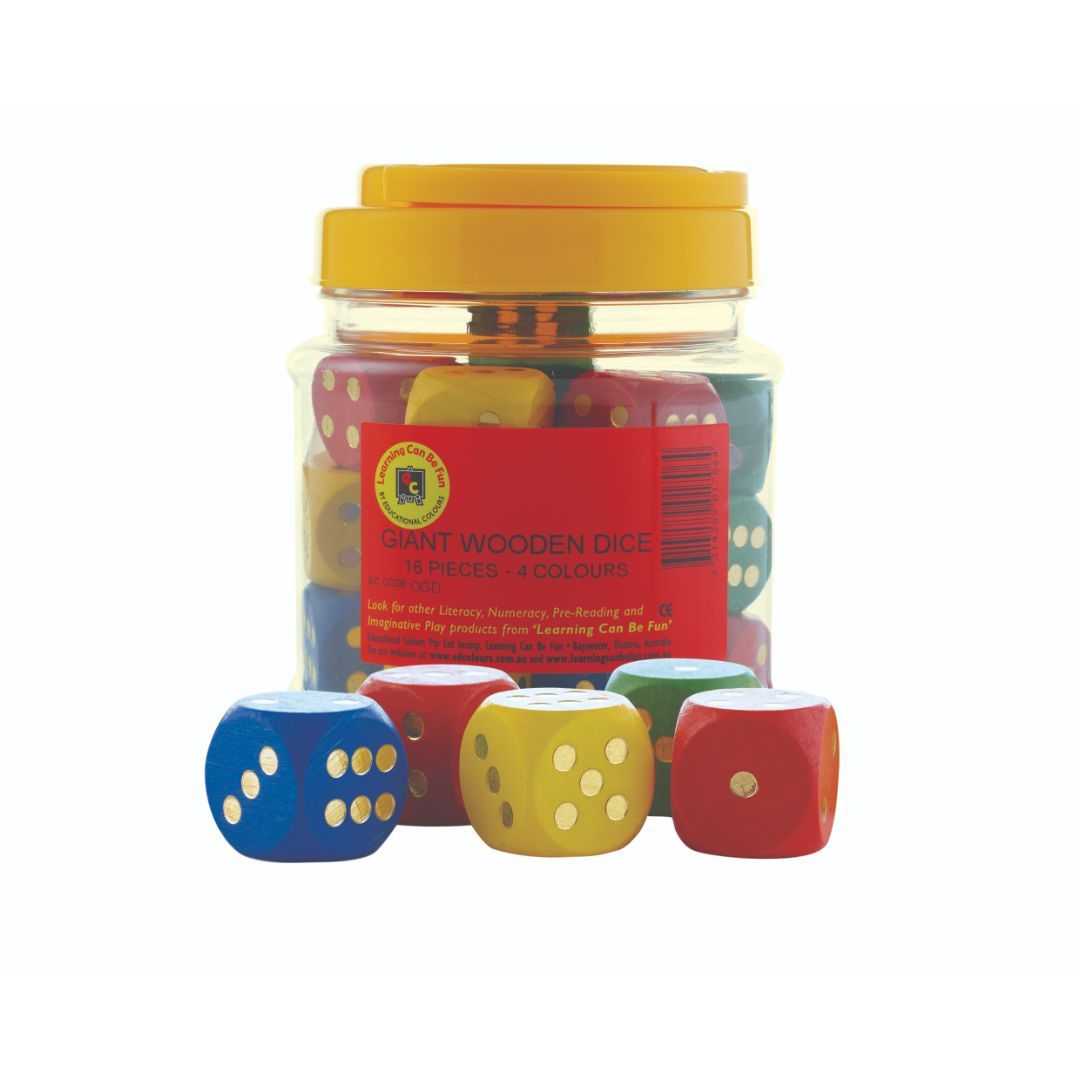
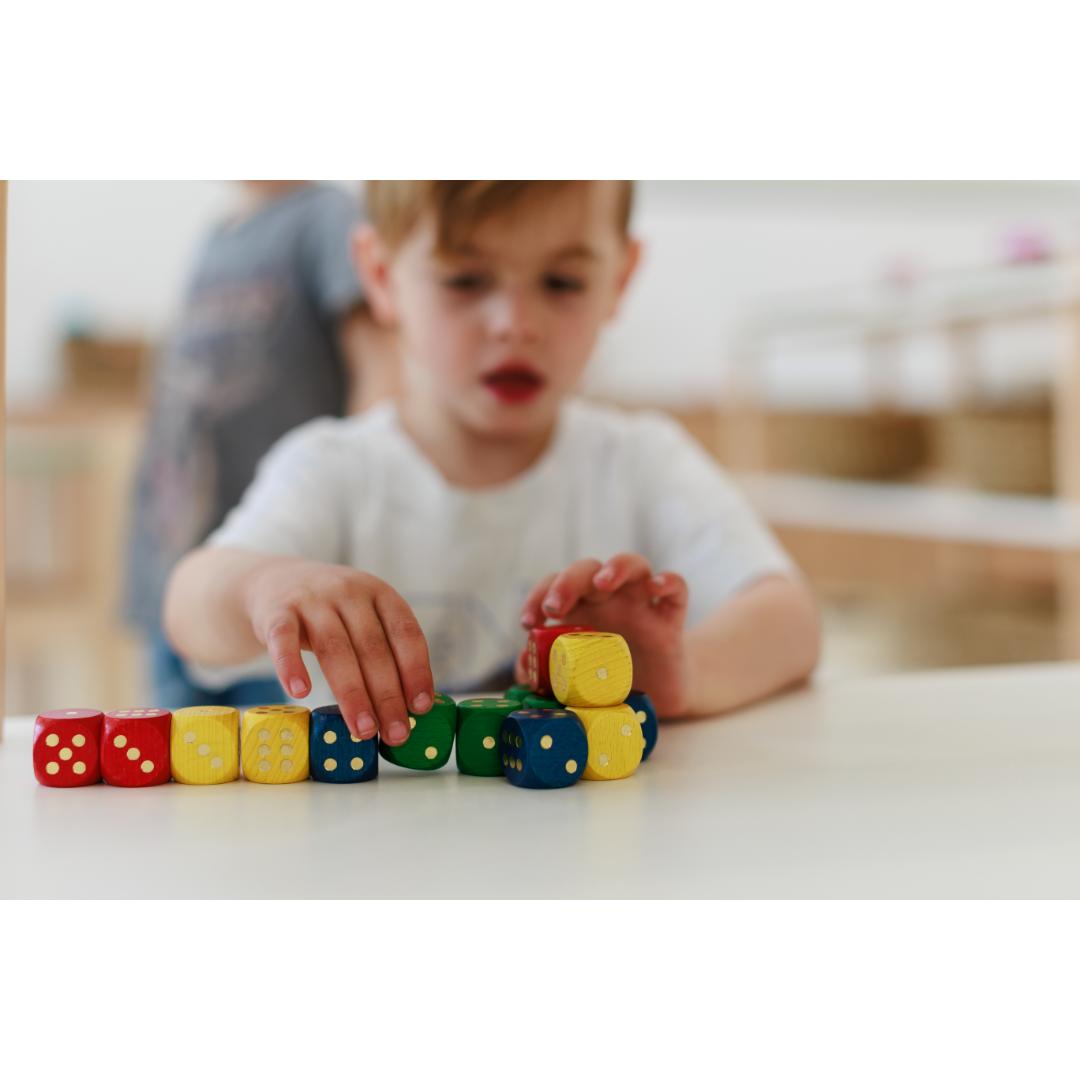
The Big Wooden Dice provide a versatile resource for play-based learning, encouraging children to engage in mathematical exploration through games and activities. As children roll the dice, they can practice counting, number recognition, and basic arithmetic in a fun and interactive manner, fostering their natural curiosity and inquiry skills.
Developing early STEM and problem-solving skills
These wooden dice serve as a practical tool for developing early STEM skills, as children can use them to explore concepts such as probability and patterns during play. By incorporating the dice into various activities, educators can facilitate problem-solving discussions and encourage children to think critically about numbers and their relationships.
Relevant EYLF Outcomes
Outcome 4: Children are confident and involved learners.
Outcome 5: Children are effective communicators.
Classroom, Play Activity & Provocation Ideas
Classroom & Learning Area Ideas
Set up a maths corner where children can use the dice to create their own counting games, fostering collaborative play and peer learning.
Incorporate the dice into a number line activity, allowing children to explore sequencing and number recognition through hands-on manipulation.
Play-Based Activity Ideas
Organise a dice rolling game where children take turns rolling the dice and performing actions based on the number rolled, promoting physical activity and social interaction.
Create a storytelling session where children roll the dice to determine characters or events, enhancing their narrative skills and creativity.
Use the dice in a simple board game designed by the children, encouraging teamwork and strategic thinking as they navigate the game.
Provocation Ideas
Present the dice alongside a variety of materials for children to create their own games, stimulating creativity and problem-solving as they design rules and objectives.
Encourage children to explore different ways to group the dice by colour or number, promoting mathematical thinking and classification skills.