How this product aligns with the EYLF
Promoting connection with the natural world
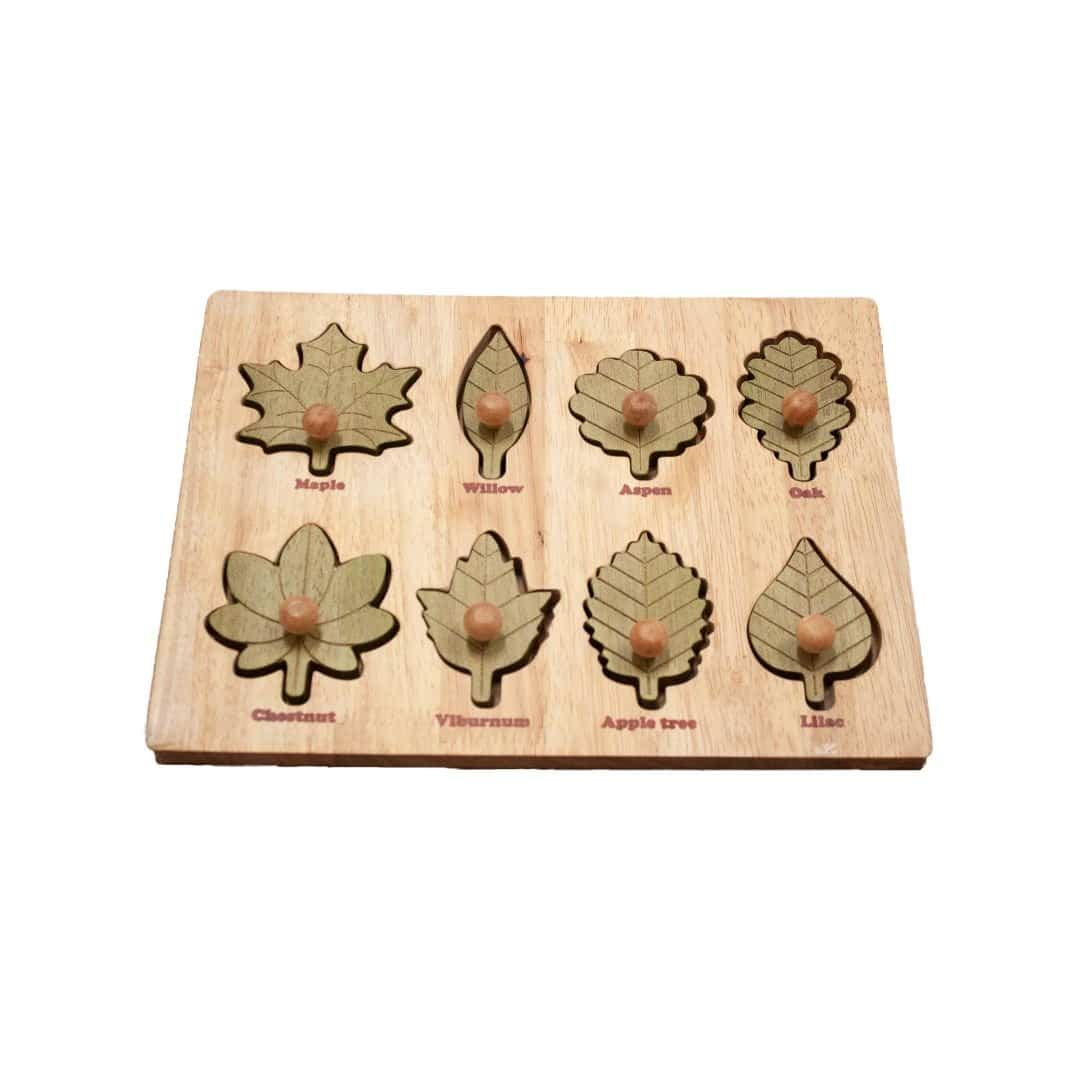
The Montessori Leaf Puzzle encourages children to engage with the beauty of nature through tactile exploration of leaf shapes. This resource fosters an appreciation for the environment, allowing children to connect their learning experiences with the natural world around them.
Supporting play-based learning and inquiry
By manipulating the puzzle pieces, children engage in hands-on play that promotes problem-solving and critical thinking. The design of the puzzle invites inquiry as children explore the different shapes and textures, enhancing their understanding of the world through play.
Relevant EYLF Outcomes
Outcome 2: Children are connected with and contribute to their world.
Outcome 3: Children have a strong sense of wellbeing.
Outcome 4: Children are confident and involved learners.
Classroom, Play Activity & Provocation Ideas
Classroom & Learning Area Ideas
Set up a nature-themed learning area where children can explore the Montessori Leaf Puzzle alongside real leaves and natural materials, encouraging comparisons and discussions about their findings.
Incorporate the puzzle into a sensory play station, allowing children to explore textures and shapes while engaging in imaginative play.
Play-Based Activity Ideas
Encourage children to create their own leaf rubbings using crayons and paper after playing with the puzzle, linking their understanding of leaf shapes to art.
Facilitate a group activity where children work together to complete the puzzle, promoting collaboration and communication skills.
Introduce storytelling by asking children to create a narrative about the leaves represented in the puzzle, enhancing their language and imaginative skills.
Provocation Ideas
Provide a variety of natural materials such as twigs, flowers, and stones alongside the puzzle to inspire children to explore and discuss the differences and similarities in shapes and textures.
Invite children to observe and collect leaves from outside, then compare them to the puzzle pieces, fostering inquiry and connection to their environment.