How this product aligns with the EYLF
Supporting play-based learning and inquiry
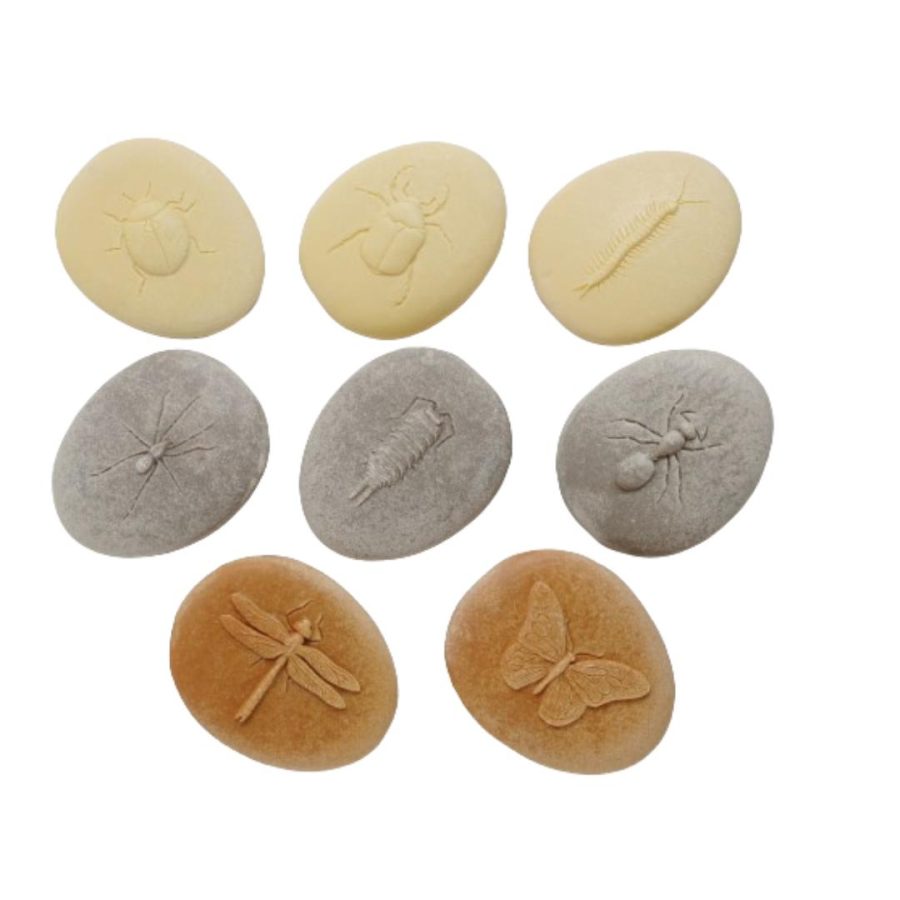
The Life Cycle Discovery Stones Set invites children to engage in hands-on exploration of biological concepts through play. By arranging and sorting the stones, children can investigate the stages of life cycles, fostering curiosity and encouraging them to ask questions about the natural world.
Promoting connection with the natural world
This resource provides an opportunity for children to connect with living things and understand their development. Through the exploration of life cycles of various species, children can develop a deeper appreciation for nature and the interconnectedness of life.
Relevant EYLF Outcomes
Outcome 2: Children are connected with and contribute to their world.
Outcome 4: Children are confident and involved learners.
Outcome 5: Children are effective communicators.
Classroom, Play Activity & Provocation Ideas
Classroom & Learning Area Ideas
Set up a dedicated science corner where children can display their arranged life cycle stones alongside related books and materials, encouraging ongoing exploration.
Incorporate the life cycle information cards into a matching game, allowing children to pair stones with their corresponding stages and enhance their understanding of life cycles.
Play-Based Activity Ideas
Encourage children to create stories or role-play scenarios based on the life cycles depicted on the stones, promoting language development and imagination.
Facilitate a group discussion where children can share their findings about the life cycles, fostering communication skills and collaborative learning.
Use the stones to create a sensory pathway, allowing children to explore textures while learning about the different life stages.
Provocation Ideas
Introduce a nature walk where children can observe real-life examples of the life cycles they have learned about, prompting them to make connections between the stones and their environment.
Present a question such as “What do you think happens next?” after showing the stones, stimulating critical thinking and inquiry into the life cycle process.