
How this product aligns with the EYLF
Supporting play-based learning and inquiry
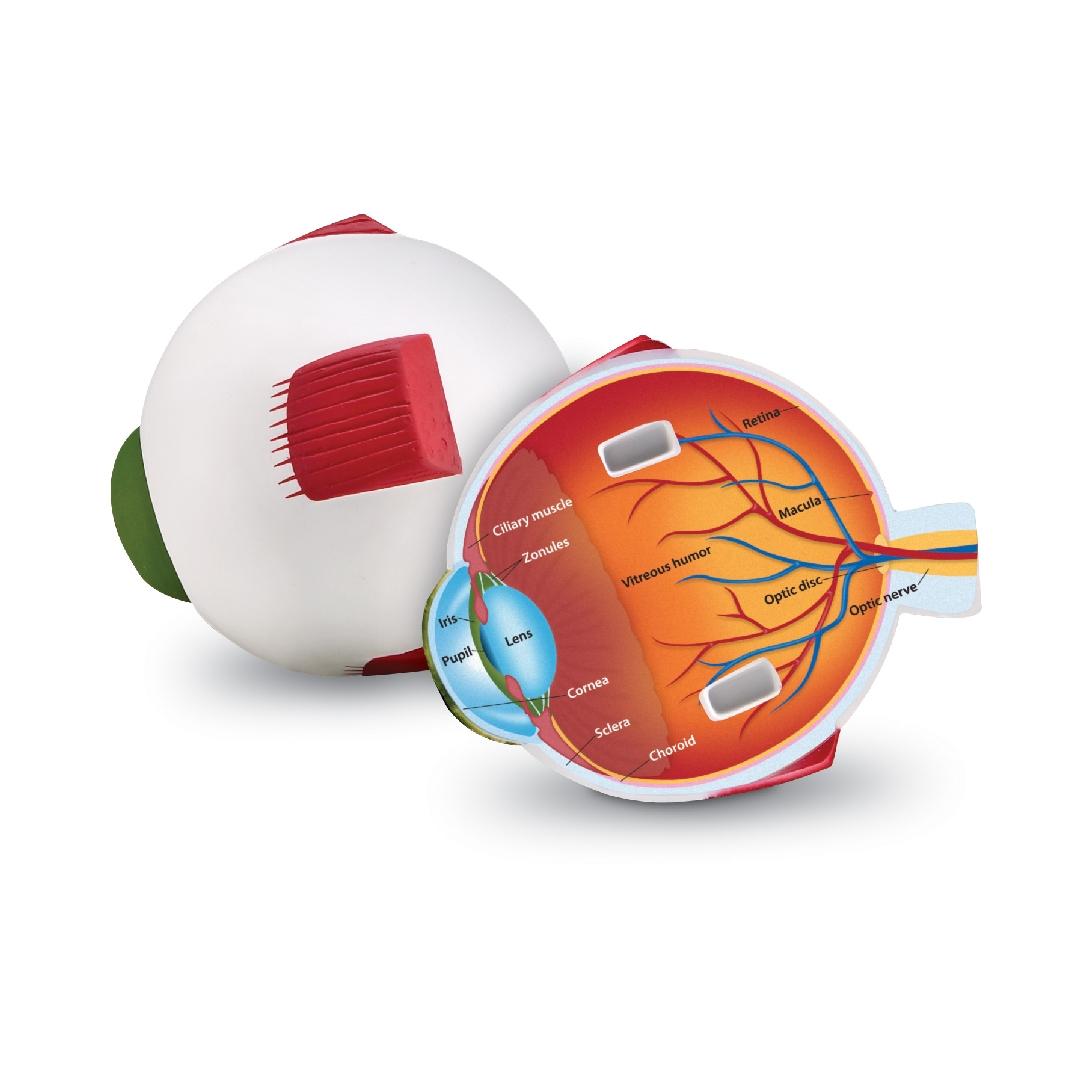
The Soft Foam Cross-Section Eye Model encourages children to engage in hands-on exploration of the human body, fostering curiosity and inquiry. As children manipulate the model, they can ask questions, make observations, and discuss their findings, which supports their natural inclination to learn through play.
Developing early STEM and problem-solving skills
This product provides opportunities for children to explore scientific concepts related to anatomy and physiology. By identifying and labelling the different parts of the eye, children enhance their understanding of biological systems, which aligns with the development of early STEM skills and critical thinking.
Relevant EYLF Outcomes
Outcome 2: Children are connected with and contribute to their world.
Outcome 4: Children are confident and involved learners.
Outcome 5: Children are effective communicators.
Classroom, Play Activity & Provocation Ideas
Classroom & Learning Area Ideas
Set up a science discovery corner where children can explore the Soft Foam Cross-Section Eye Model alongside books and resources about the human body.
Incorporate the model into a themed learning unit on the senses, allowing children to connect their understanding of sight with the anatomy of the eye.
Play-Based Activity Ideas
Encourage children to quiz each other by covering the labelled side and asking friends to identify the parts of the eye based on the letters.
Create a collaborative art project where children draw and label their own eye diagrams, using the model as a reference for accuracy.
Facilitate a role-play scenario where children act as doctors or scientists, using the model to explain how the eye works to their peers.
Provocation Ideas
Present the Soft Foam Cross-Section Eye Model alongside magnifying glasses and other tools, inviting children to investigate further and ask questions about vision and light.
Introduce a storytelling session where children create narratives about the journey of light through the eye, using the model to illustrate key points in their stories.