
How this product aligns with the EYLF
Supporting play-based learning and inquiry
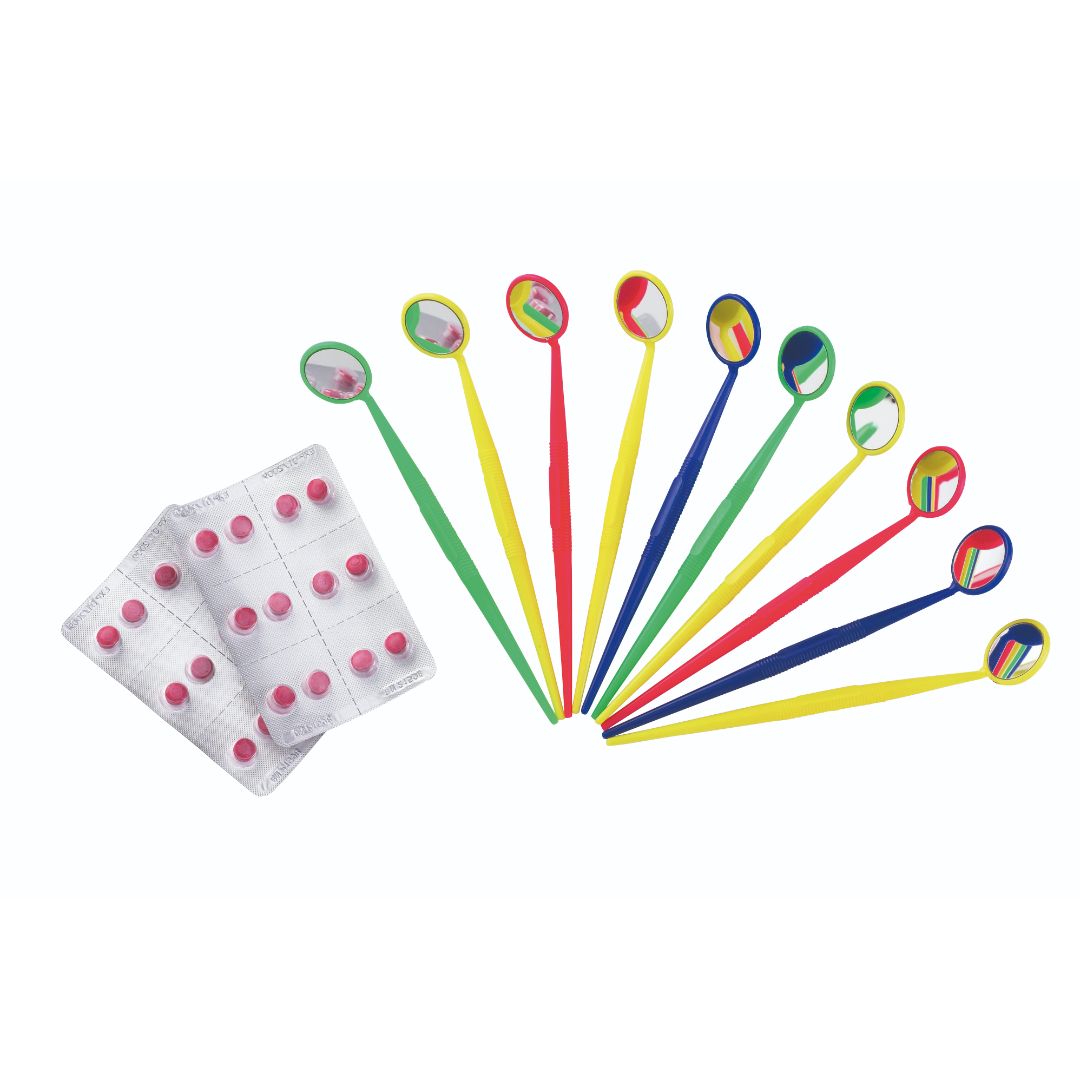
The dental mirrors encourage children to explore their understanding of the human body through play-based inquiry. As children use the mirrors to examine their mouths and facial features, they engage in self-discovery and develop curiosity about their own bodies, fostering a sense of agency in their learning.
Developing early STEM and problem-solving skills
Using dental mirrors invites children to think critically about angles and reflections, enhancing their spatial awareness and problem-solving abilities. This exploration supports foundational STEM concepts as children learn to manipulate the mirrors to view different perspectives, encouraging experimentation and discovery.
Relevant EYLF Outcomes
Outcome 2: Children are connected with and contribute to their world.
Outcome 4: Children are confident and involved learners.
Outcome 5: Children are effective communicators.
Classroom, Play Activity & Provocation Ideas
Classroom & Learning Area Ideas
Set up a ‘human body’ learning corner where children can use the dental mirrors to explore their reflections and discuss body parts, promoting language development and understanding of self.
Play-Based Activity Ideas
Encourage children to use the mirrors during role-play scenarios, such as a dentist visit, to foster imaginative play and social skills as they interact with peers.
Create a science exploration activity where children can use the mirrors to investigate different angles and reflections, integrating basic physics concepts into their play.
Provocation Ideas
Introduce a storytelling session where children can use the mirrors to reflect on characters or themes related to health and body awareness, enhancing their narrative skills.
Provide a challenge for children to find and describe different features of their faces using the mirrors, promoting observation skills and vocabulary development.