
How this product aligns with the EYLF
Supporting play-based learning and inquiry
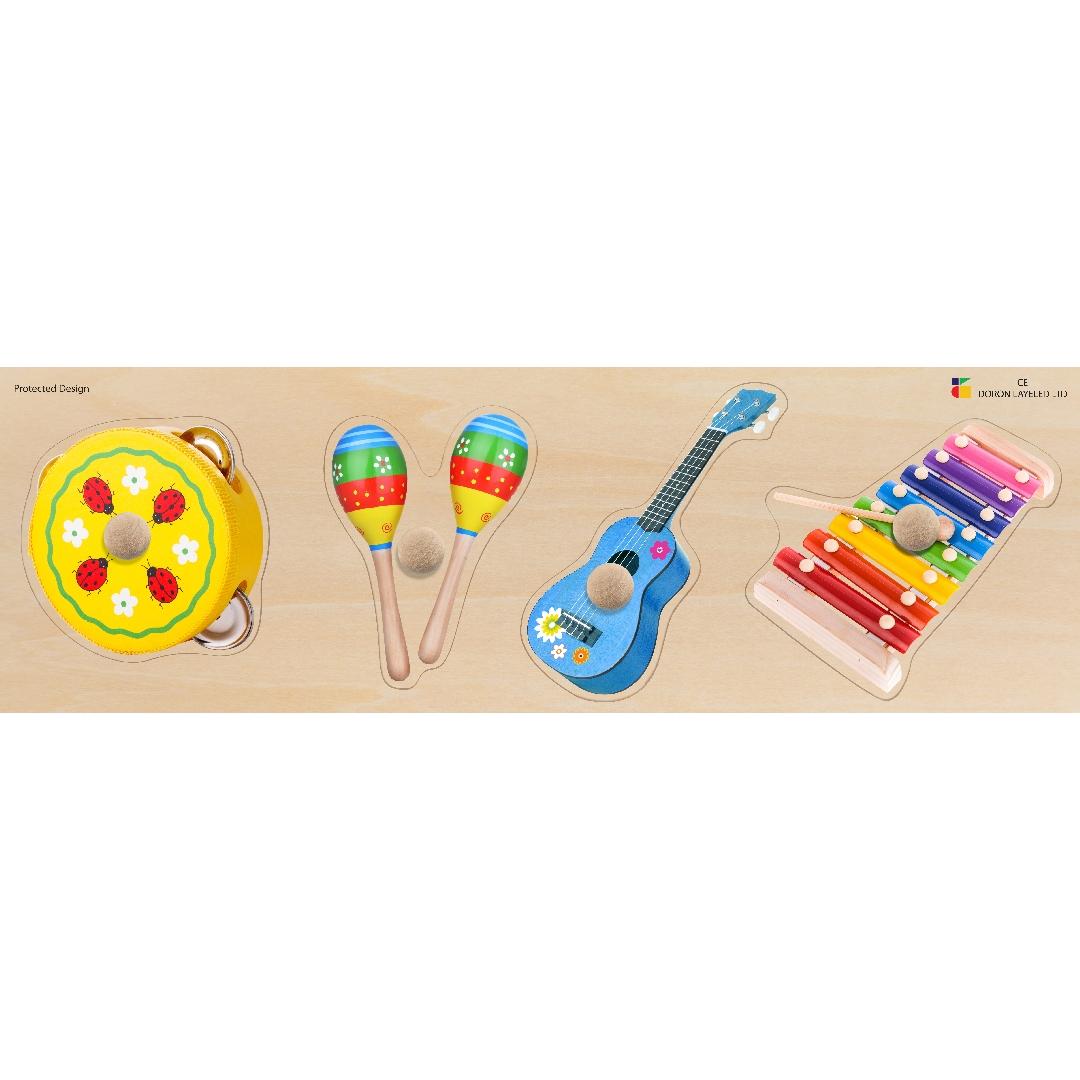
The Giant Knob Music Puzzle encourages children to engage in play-based learning by exploring the tactile experience of fitting oversized pieces together. This hands-on activity promotes inquiry as children investigate the shapes and images of musical instruments, fostering curiosity and a desire to learn more about music and sound.
Encouraging wellbeing, comfort, and independence
The design of the Giant Knob Music Puzzle, with its extra-large pieces and easy handling, supports children in developing their fine motor skills and promotes a sense of independence. As children successfully manipulate the puzzle, they experience a sense of achievement, contributing to their overall wellbeing and confidence in their abilities.
Relevant EYLF Outcomes
Outcome 1: Children have a strong sense of identity
Outcome 3: Children have a strong sense of wellbeing
Outcome 4: Children are confident and involved learners
Classroom, Play Activity & Provocation Ideas
Classroom & Learning Area Ideas
Set up a dedicated music corner where children can explore the Giant Knob Music Puzzle alongside other musical instruments, encouraging them to make connections between the puzzle and real-life sounds.
Incorporate the puzzle into a sensory play area, allowing children to explore textures and sounds while developing their motor skills.
Play-Based Activity Ideas
Invite children to work in pairs to complete the puzzle, fostering collaboration and communication as they discuss the images and share their thoughts on the instruments.
Encourage children to create their own musical stories using the puzzle pieces as prompts, integrating language development with imaginative play.
Organise a music-themed day where children can use the puzzle to learn about different instruments, followed by a group music-making session.
Provocation Ideas
Present the Giant Knob Music Puzzle alongside a selection of books about music and instruments, inviting children to explore the connections between the puzzle and the stories.
Use the puzzle as a starting point for a discussion about different types of music, encouraging children to share their experiences and preferences, thus enhancing their language skills.