How this product aligns with the EYLF
Supporting play-based learning and inquiry
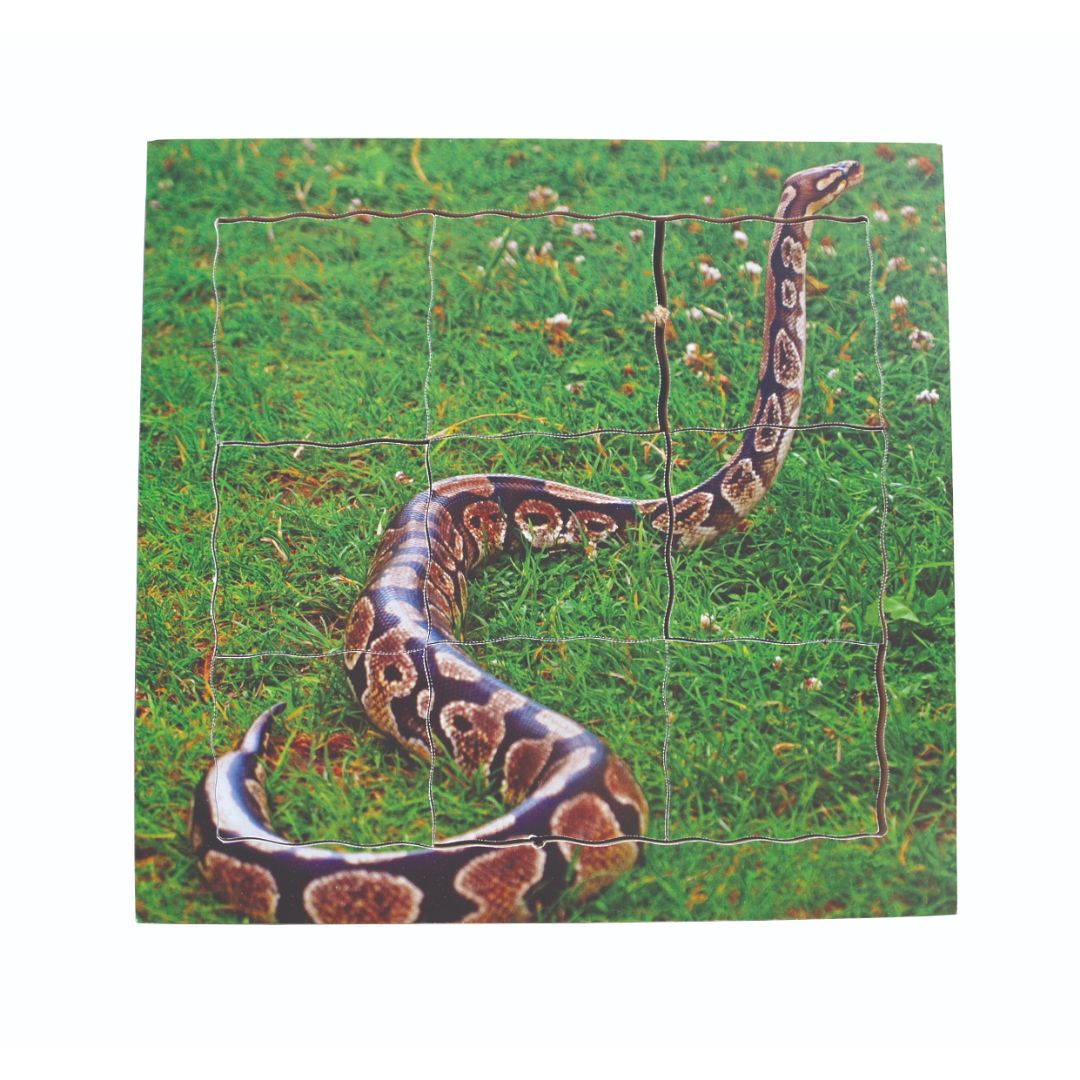
The Snake Life Cycle Layered Tray Puzzle invites children to engage in hands-on exploration of the life cycle of a snake. Through play, children can manipulate the puzzle pieces, fostering inquiry as they discuss and discover the various stages of development, from egg to adult. This interactive experience encourages curiosity and promotes a deeper understanding of biological concepts.
Developing early STEM and problem-solving skills
This puzzle serves as an effective tool for introducing foundational STEM concepts, particularly in understanding life cycles and sequencing. As children work through the layers of the puzzle, they enhance their problem-solving skills by figuring out how the pieces fit together, which supports critical thinking and cognitive development in a playful context.
Relevant EYLF Outcomes
Outcome 2: Children are connected with and contribute to their world.
Outcome 4: Children are confident and involved learners.
Outcome 5: Children are effective communicators.
Classroom, Play Activity & Provocation Ideas
Classroom & Learning Area Ideas
Set up a science corner featuring the Snake Life Cycle Layered Tray Puzzle alongside books and images of snakes to encourage exploration and discussion about reptiles.
Incorporate the puzzle into a nature study area, allowing children to compare the life cycle of snakes with other animals through additional puzzles or visual aids.
Play-Based Activity Ideas
Encourage children to create their own life cycle diagrams using the puzzle as a reference, integrating art materials to express their understanding.
Organise a group activity where children take turns assembling the puzzle while sharing facts about snakes, fostering language development and social interaction.
Use the puzzle as a starting point for storytelling, prompting children to create narratives about a snake’s journey through its life cycle.
Provocation Ideas
Introduce the puzzle during a nature walk, prompting children to look for signs of snakes or their habitats, enhancing their connection to the natural world.
Present the puzzle alongside a variety of real-life snake images or videos, inviting children to discuss similarities and differences in life cycles and habitats.