
How this product aligns with the EYLF
Supporting play-based learning and inquiry
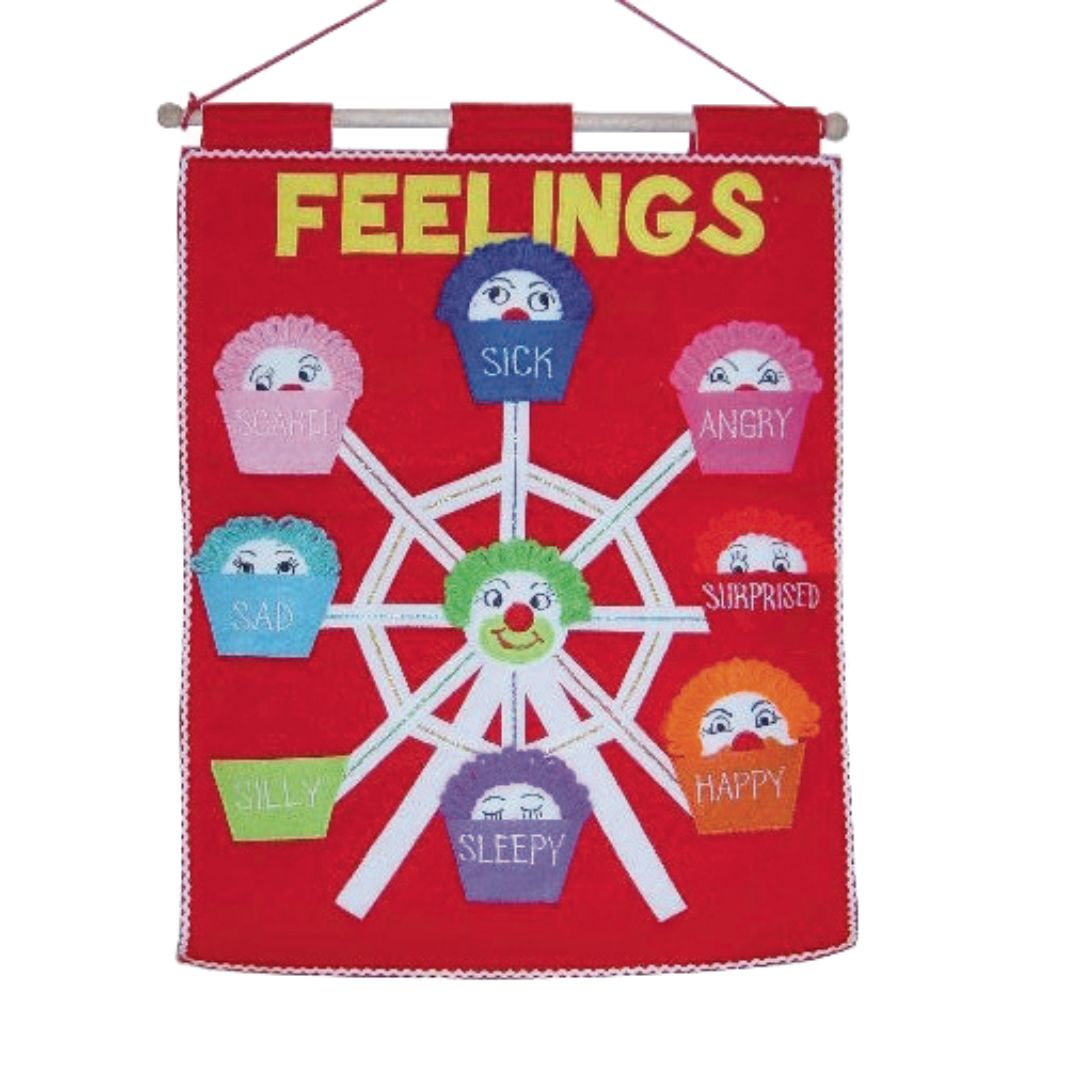
The Feelings Wall Chart provides a tangible resource for children to explore and express their emotions through play. By engaging with the chart, children can initiate discussions about feelings, enhancing their understanding of social interactions and emotional responses in various scenarios.
Encouraging wellbeing, comfort, and independence
This product supports children’s emotional development by allowing them to identify and articulate their feelings. By using the chart, children can gain confidence in expressing their emotions, which is essential for their overall wellbeing and social competence.
Relevant EYLF Outcomes
Outcome 1: Children have a strong sense of identity
Outcome 3: Children have a strong sense of wellbeing
Classroom, Play Activity & Provocation Ideas
Classroom & Learning Area Ideas
Display the Feelings Wall Chart in a quiet corner of the classroom, encouraging children to refer to it when discussing their emotions during group activities. Use the chart as a visual aid during circle time to facilitate conversations about feelings related to stories or personal experiences.
Play-Based Activity Ideas
Encourage children to role-play different scenarios using the chart to express how they might feel in those situations, fostering empathy and understanding. Create a feelings game where children match scenarios to the corresponding clown face on the chart, promoting language development and emotional literacy.
Provocation Ideas
Introduce the Feelings Wall Chart during a storytelling session, prompting children to identify and share how characters might feel in the story. Set up a feelings reflection activity where children can draw or create art based on their emotions, using the chart as a reference for expression.