How this product aligns with the EYLF
Supporting play-based learning and inquiry
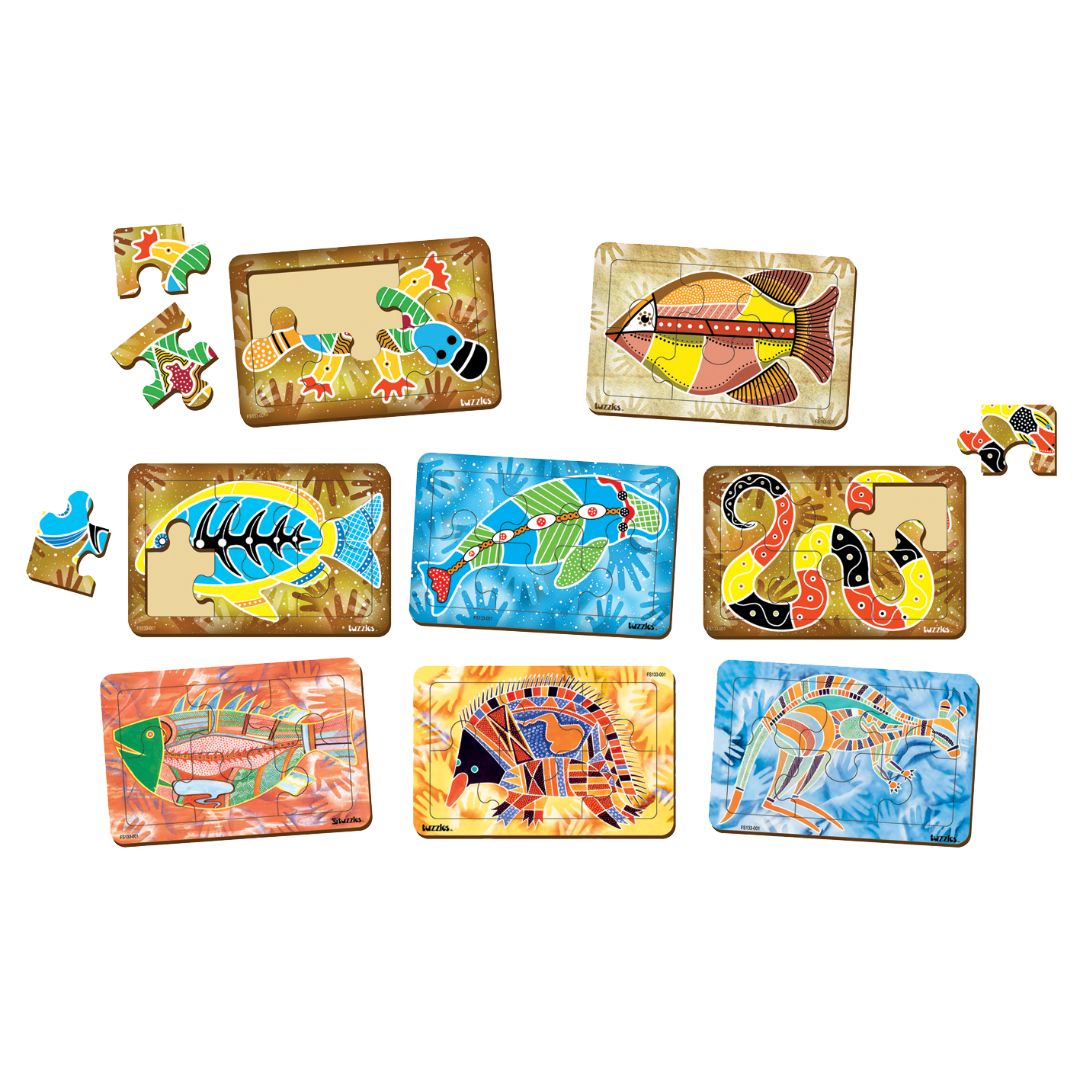
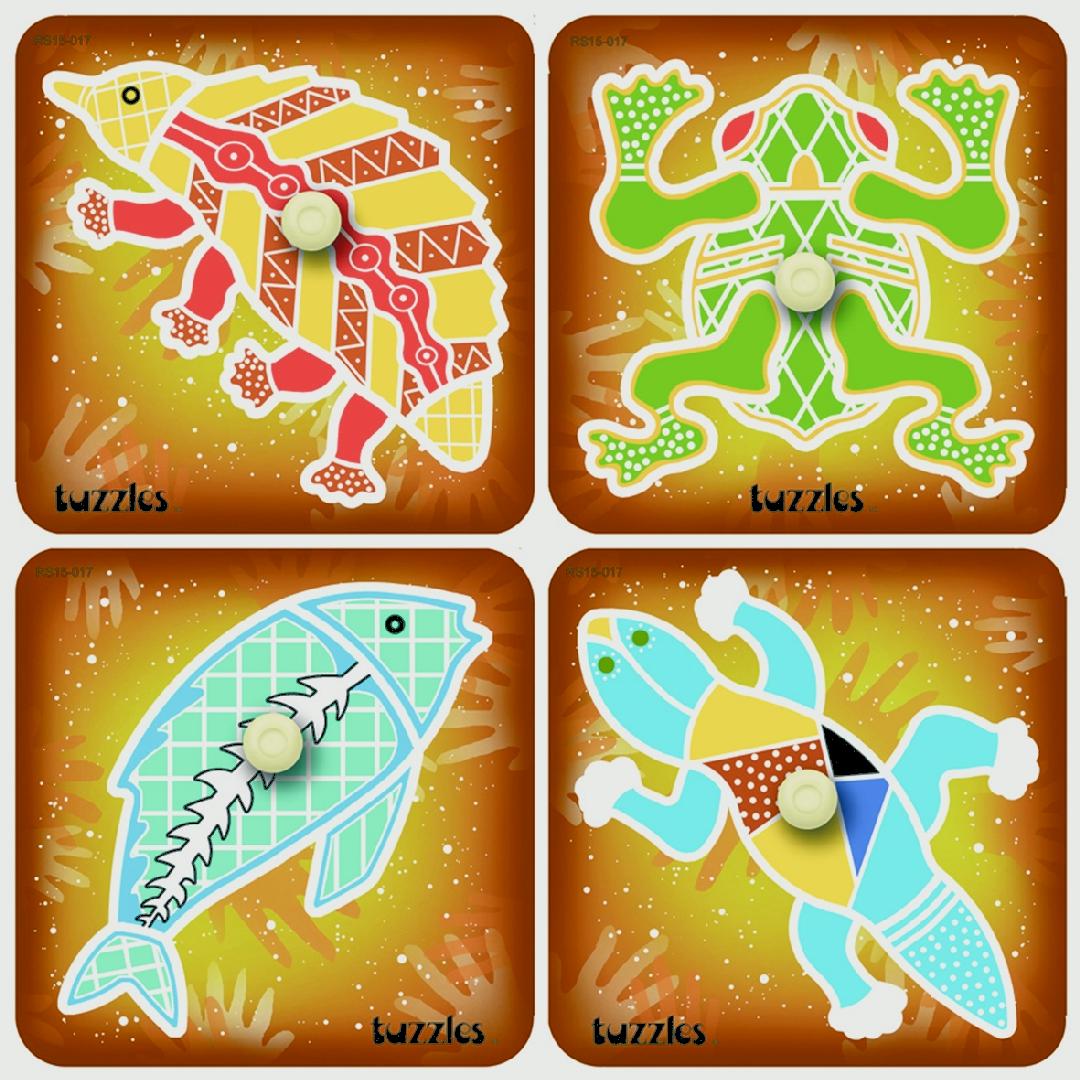
The Aboriginal Art Puzzles encourage children to engage in play-based learning by inviting them to explore traditional Aboriginal artwork while developing their problem-solving skills. As children manipulate the puzzle pieces, they naturally inquire about the stories and cultural significance behind the images, fostering a deeper understanding of Australia’s rich heritage.
Developing early STEM and problem-solving skills
As children assemble the 6-piece puzzles, they enhance their fine motor skills and spatial awareness, which are foundational components of early STEM learning. The process of fitting pieces together promotes critical thinking and perseverance, as children learn to approach challenges and find solutions through hands-on experiences.
Relevant EYLF Outcomes
Outcome 2: Children are connected with and contribute to their world.
Outcome 4: Children are confident and involved learners.
Outcome 5: Children are effective communicators.
Classroom, Play Activity & Provocation Ideas
Classroom & Learning Area Ideas
Create a dedicated cultural corner featuring the Aboriginal Art Puzzles alongside books and resources about Aboriginal culture to encourage exploration and discussion.
Incorporate the puzzles into a sensory play area, allowing children to explore textures and colours while engaging with the artwork.
Play-Based Activity Ideas
Organise a puzzle assembly challenge where children work in pairs to complete puzzles, fostering collaboration and communication.
Encourage children to create their own artwork inspired by the puzzles, integrating art and storytelling as they share their creations with peers.
Use the puzzles as a springboard for discussions about animals and cultural stories, enhancing language development through shared narratives.
Provocation Ideas
Introduce the puzzles during a cultural celebration or event, prompting children to reflect on their learning and experiences related to Aboriginal culture.
Set up a “puzzle of the week” display, rotating different puzzles to spark interest and encourage children to share what they have learned about each artwork.