
How this product aligns with the EYLF
Promoting connection with the natural world
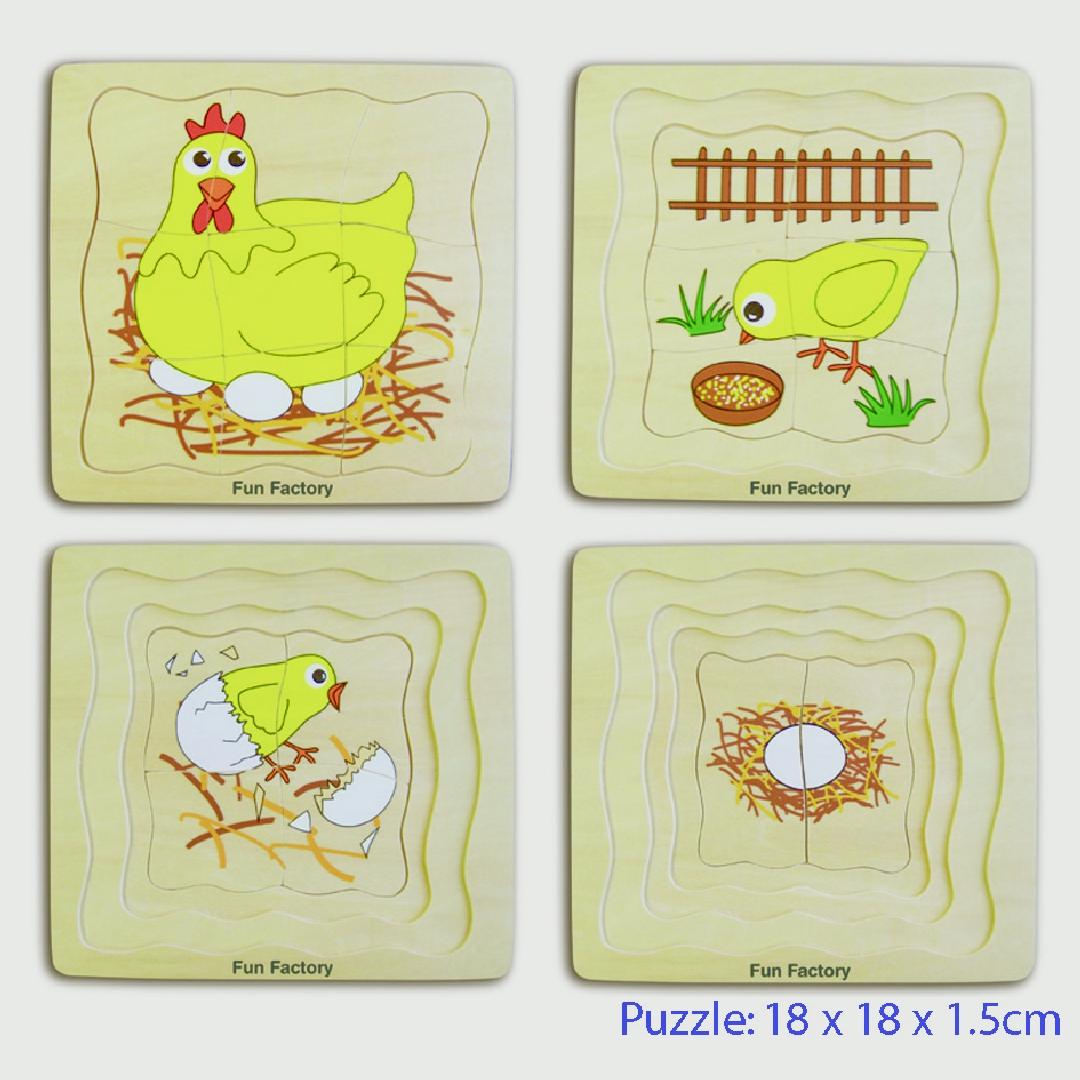
The Lifecycle of a Chicken Puzzle provides a tangible way for children to explore and understand the natural processes involved in the life cycle of a chicken. By engaging with this resource, children can develop a deeper appreciation for living things and their environments, fostering a sense of connection to the natural world.
Developing early STEM and problem-solving skills
This puzzle encourages children to think critically about the stages of a chicken’s life, promoting inquiry and exploration. As they manipulate the pieces to complete the puzzle, children enhance their sequencing skills and develop foundational understandings of biological processes, which are essential components of early STEM learning.
Relevant EYLF Outcomes
Outcome 2: Children are connected with and contribute to their world.
Outcome 4: Children are confident and involved learners.
Outcome 5: Children are effective communicators.
Classroom, Play Activity & Provocation Ideas
Classroom & Learning Area Ideas
Set up a science corner with the Lifecycle of a Chicken Puzzle alongside books and images of chickens and their habitats to encourage exploration and discussion about life cycles.
Incorporate the puzzle into a themed learning area focused on animals, allowing children to explore various life cycles through different resources.
Play-Based Activity Ideas
Invite children to work in pairs to complete the puzzle, discussing each stage of the chicken’s life as they go to enhance their language skills.
Encourage children to create their own life cycle drawings or models after completing the puzzle, integrating art with their understanding of biological processes.
Use the puzzle as a starting point for a storytelling session where children can narrate the journey of a chicken from egg to hen.
Provocation Ideas
Present the puzzle alongside real eggs (if safe and appropriate) or images of different chicken breeds to spark curiosity and questions about chickens and their life cycles.
Organise a nature walk to observe birds and discuss their life cycles, using the puzzle as a reference point for what they have learned.