
How this product aligns with the EYLF
Supporting play-based learning and inquiry
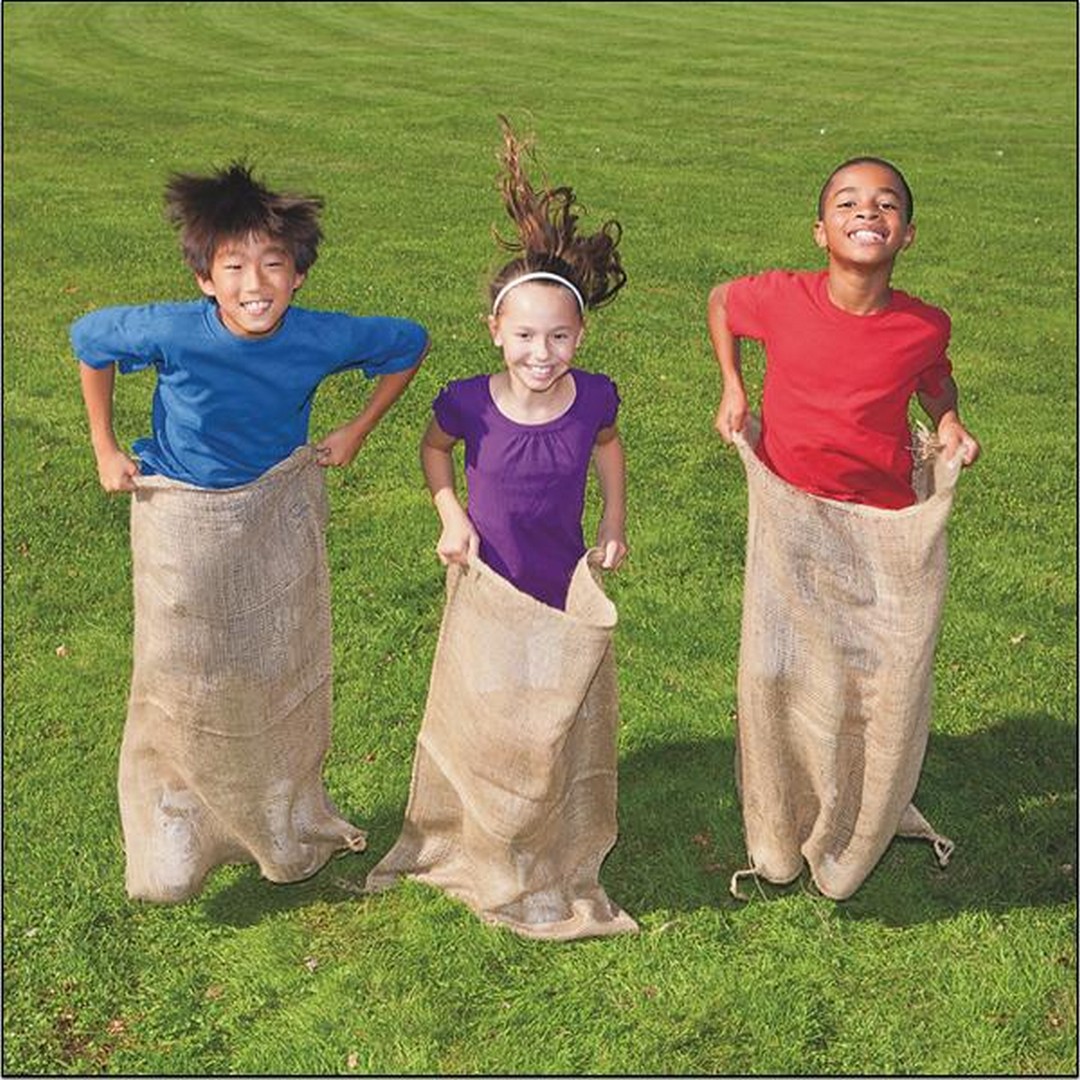
The Hessian Potato Sacks encourage children to engage in active play, promoting physical development through movement and coordination. As children participate in sack races, they naturally explore concepts of balance and teamwork, fostering inquiry-based learning as they experiment with different ways to move and interact with their peers.
Encouraging wellbeing, comfort, and independence
Using the jumping sacks allows children to develop their gross motor skills in a fun and supportive environment. This active play not only enhances physical wellbeing but also builds confidence as children learn to navigate challenges independently, contributing to their overall sense of comfort and security in the learning space.
Relevant EYLF Outcomes
Outcome 3: Children have a strong sense of wellbeing.
Outcome 4: Children are confident and involved learners.
Outcome 5: Children are effective communicators.
Classroom, Play Activity & Provocation Ideas
Classroom & Learning Area Ideas
Set up a designated outdoor play area where children can freely use the Hessian Potato Sacks for various activities, promoting physical engagement and social interaction.
Incorporate the sacks into a movement corner, encouraging children to practice their balance and coordination through different jumping and racing activities.
Play-Based Activity Ideas
Organise a sack race event where children can work in teams, fostering cooperation and communication skills while having fun.
Create obstacle courses using the sacks, allowing children to explore movement in diverse ways and encouraging problem-solving as they navigate the course.
Use the sacks for imaginative play, where children can pretend they are characters in a story, enhancing their storytelling and creative expression.
Provocation Ideas
Introduce a challenge where children must come up with their own games using the sacks, encouraging creativity and critical thinking.
Facilitate discussions about the materials and textures of the sacks, prompting children to describe their experiences and feelings while using them, thus enhancing language development.