How this product aligns with the EYLF
Supporting play-based learning and inquiry
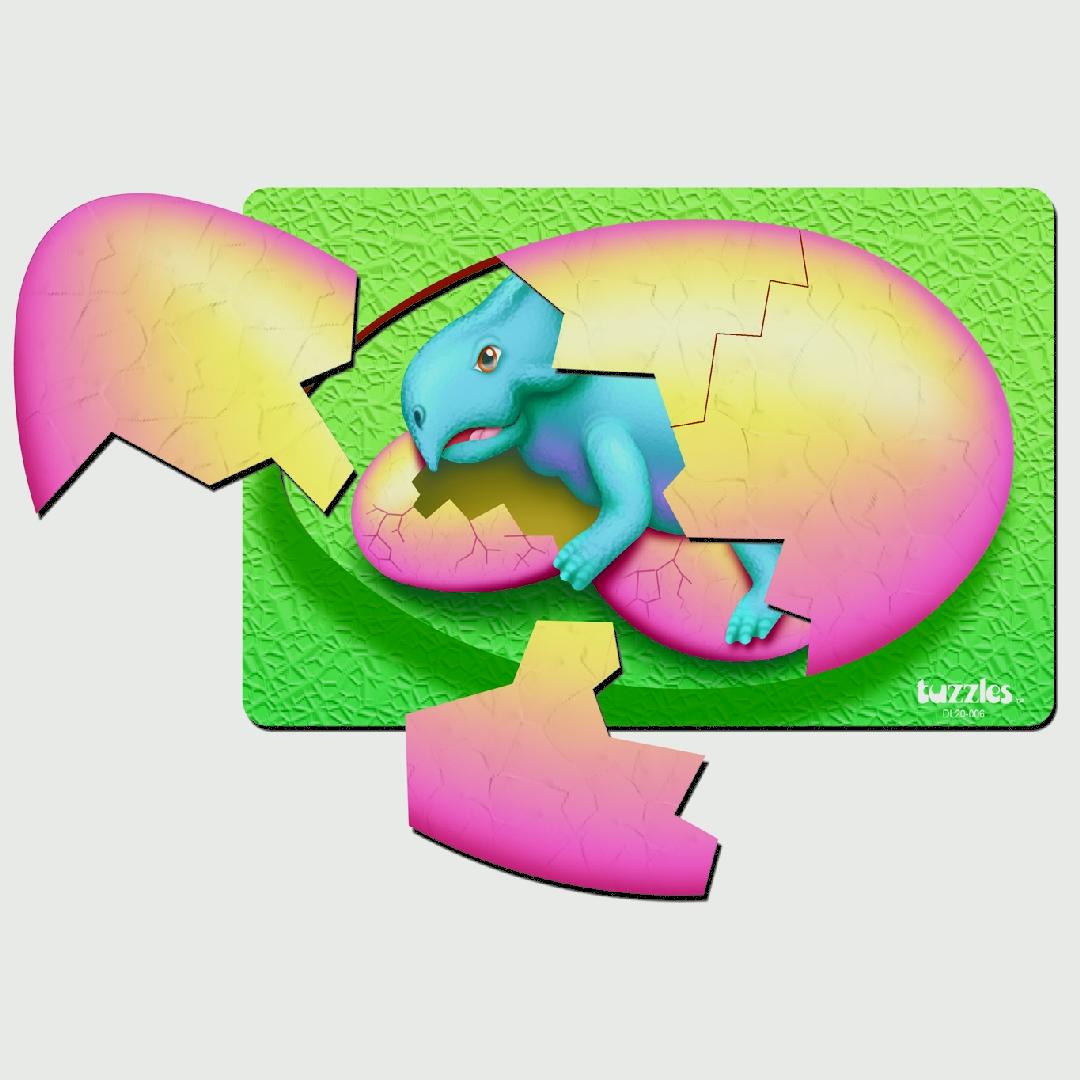
The Dino-Egg Puzzle invites children to engage in hands-on exploration of the dinosaur life cycle, fostering curiosity and inquiry. As children manipulate the layers of the puzzle, they naturally engage in discussions about the stages of development, enhancing their understanding of sequencing and scientific concepts.
Developing early STEM and problem-solving skills
This layered puzzle encourages children to think critically as they piece together the life cycle of dinosaurs. By recognising the order of the layers, children develop essential problem-solving skills and an early foundation in STEM learning, as they explore cause and effect through their interactions with the puzzle.
Relevant EYLF Outcomes
Outcome 2: Children are connected with and contribute to their world.
Outcome 4: Children are confident and involved learners.
Outcome 5: Children are effective communicators.
Classroom, Play Activity & Provocation Ideas
Classroom & Learning Area Ideas
Set up a dedicated STEM corner where children can explore the Dino-Egg Puzzle alongside books and resources about dinosaurs, encouraging inquiry and discussion.
Incorporate the puzzle into a science display that showcases various life cycles, allowing children to compare and contrast different species.
Play-Based Activity Ideas
Encourage children to create their own dinosaur stories using the puzzle as a visual aid, promoting language development and storytelling skills.
Organise a group activity where children work together to assemble the puzzle, fostering teamwork and communication as they discuss the life cycle stages.
Use the puzzle as a starting point for a creative art project where children can draw or craft their favourite dinosaurs, integrating imaginative play with learning.
Provocation Ideas
Introduce the Dino-Egg Puzzle during a nature exploration session, prompting children to think about how different animals grow and change over time.
Create a sensory bin with dinosaur-themed items and use the puzzle to spark conversations about dinosaurs and their habitats, encouraging children to make connections with the natural world.