
How this product aligns with the EYLF
Supporting play-based learning and inquiry
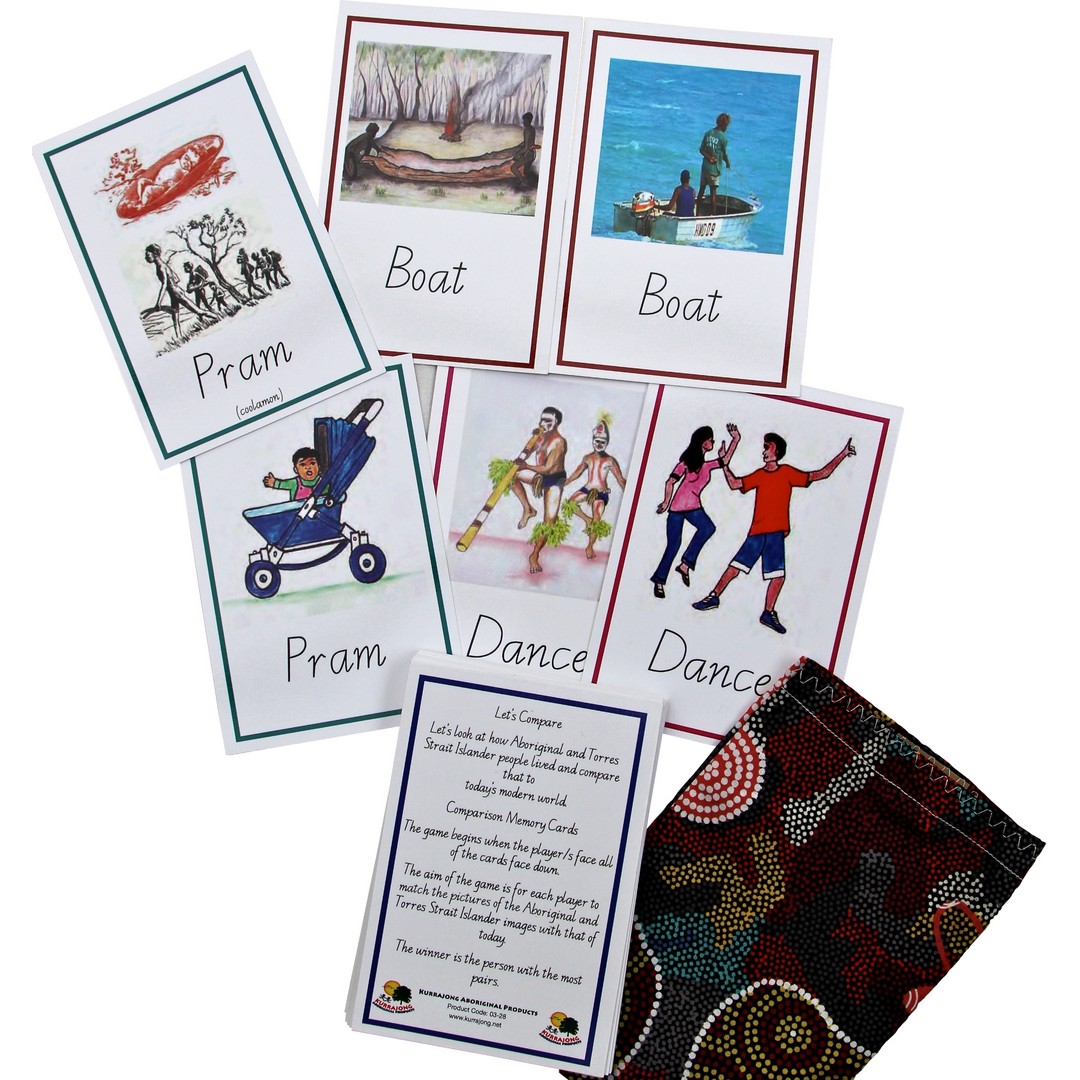
The Aboriginal Life Comparison Memory Cards encourage children to engage in play-based learning through matching activities that promote inquiry into cultural histories. By exploring the differences and similarities between modern and traditional Aboriginal lifestyles, children can develop a deeper understanding of cultural diversity and history in an interactive manner.
Building language, imagination, and social skills
Using the memory cards in group settings fosters communication and collaboration among children as they discuss their findings and strategies during games. This interaction not only enhances their vocabulary related to cultural concepts but also nurtures their imaginative play as they create narratives based on the images they match.
Relevant EYLF Outcomes
Outcome 2: Children are connected with and contribute to their world.
Outcome 4: Children are confident and involved learners.
Outcome 5: Children are effective communicators.
Classroom, Play Activity & Provocation Ideas
Classroom & Learning Area Ideas
Set up a multicultural corner where children can explore the memory cards alongside books and resources about Aboriginal culture, encouraging independent exploration and discussion.
Play-Based Activity Ideas
Organise a game of Memory Match using the cards to promote memory skills and cooperative play.
Encourage children to create their own stories based on the images, enhancing their narrative skills and creativity.
Use the cards to facilitate a discussion about cultural practices, allowing children to express their thoughts and connections to their own experiences.
Provocation Ideas
Present the cards alongside artefacts or images from Aboriginal culture to spark curiosity and questions among children.
Invite an Aboriginal guest speaker to share stories related to the images on the cards, enriching the children’s understanding and appreciation of cultural perspectives.