
How this product aligns with the EYLF
Supporting play-based learning and inquiry
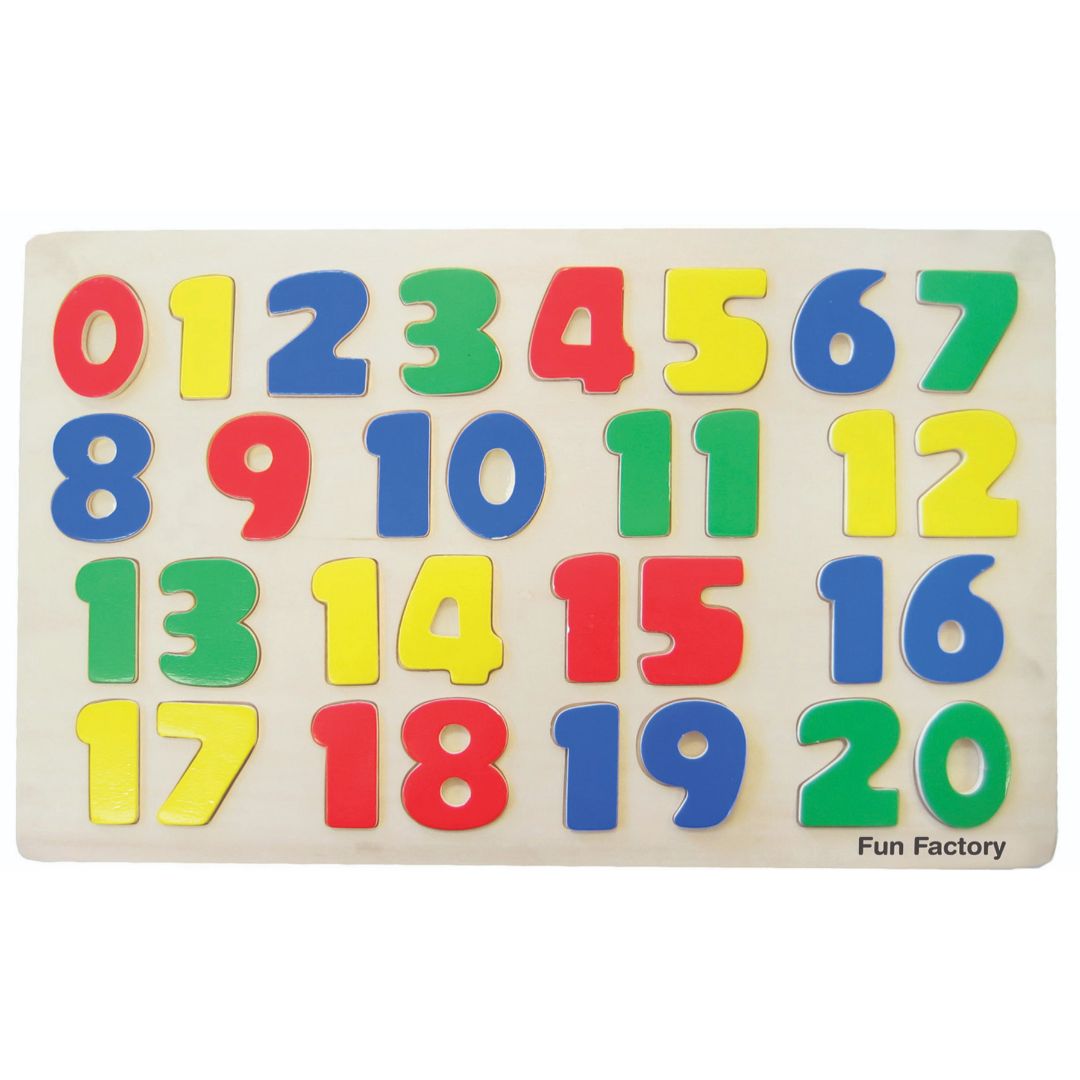
The 0-20 Number Puzzle encourages children to engage in play-based learning by providing a hands-on experience that promotes exploration and discovery. As children manipulate the puzzle pieces, they are able to investigate number relationships and develop their understanding of numeracy concepts through tactile interaction.
Developing early STEM and problem-solving skills
This product supports the development of early STEM skills by allowing children to practice counting and number recognition in a playful context. Through the process of fitting the pieces into the puzzle board, children enhance their problem-solving abilities as they figure out where each number belongs, fostering critical thinking and spatial awareness.
Relevant EYLF Outcomes
Outcome 4: Children are confident and involved learners.
Outcome 5: Children are effective communicators.
Classroom, Play Activity & Provocation Ideas
Classroom & Learning Area Ideas
Set up a dedicated numeracy corner where children can explore the 0-20 Number Puzzle alongside other counting and sorting materials.
Incorporate the puzzle into a maths-focused learning area, encouraging children to use it as a reference for number games and activities.
Play-Based Activity Ideas
Invite children to create their own number stories using the puzzle pieces as prompts, fostering language development and storytelling skills.
Organise a group activity where children take turns placing puzzle pieces while counting aloud, promoting social interaction and cooperative play.
Encourage children to sort the puzzle pieces by colour or size before assembling the puzzle, integrating concepts of categorisation and comparison.
Provocation Ideas
Present the puzzle alongside a variety of other number-related resources, such as books or number cards, to inspire children to explore different ways of learning about numbers.
Challenge children to create their own number games using the puzzle pieces, encouraging creativity and independent thinking in their play.