
How this product aligns with the EYLF
Supporting play-based learning and inquiry
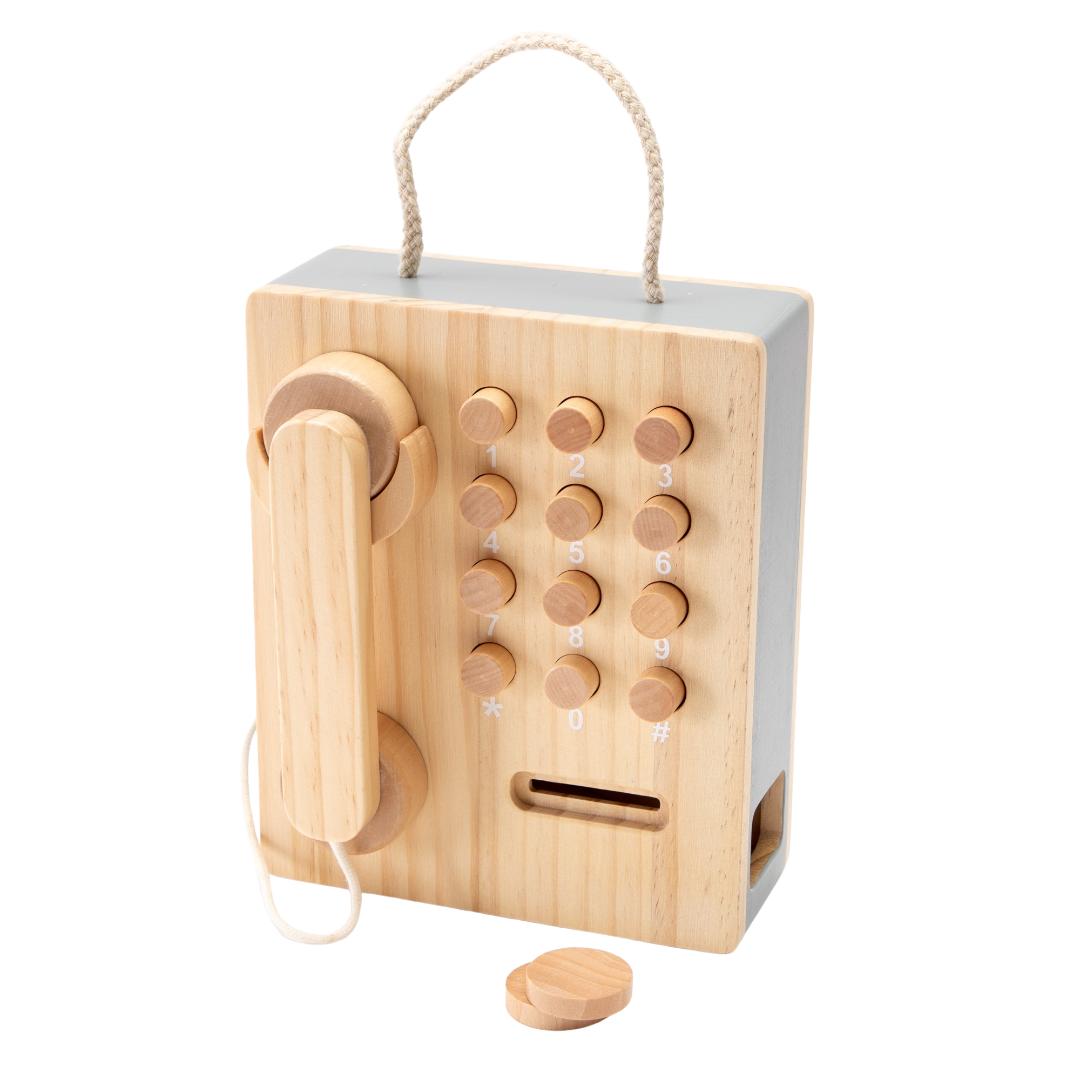
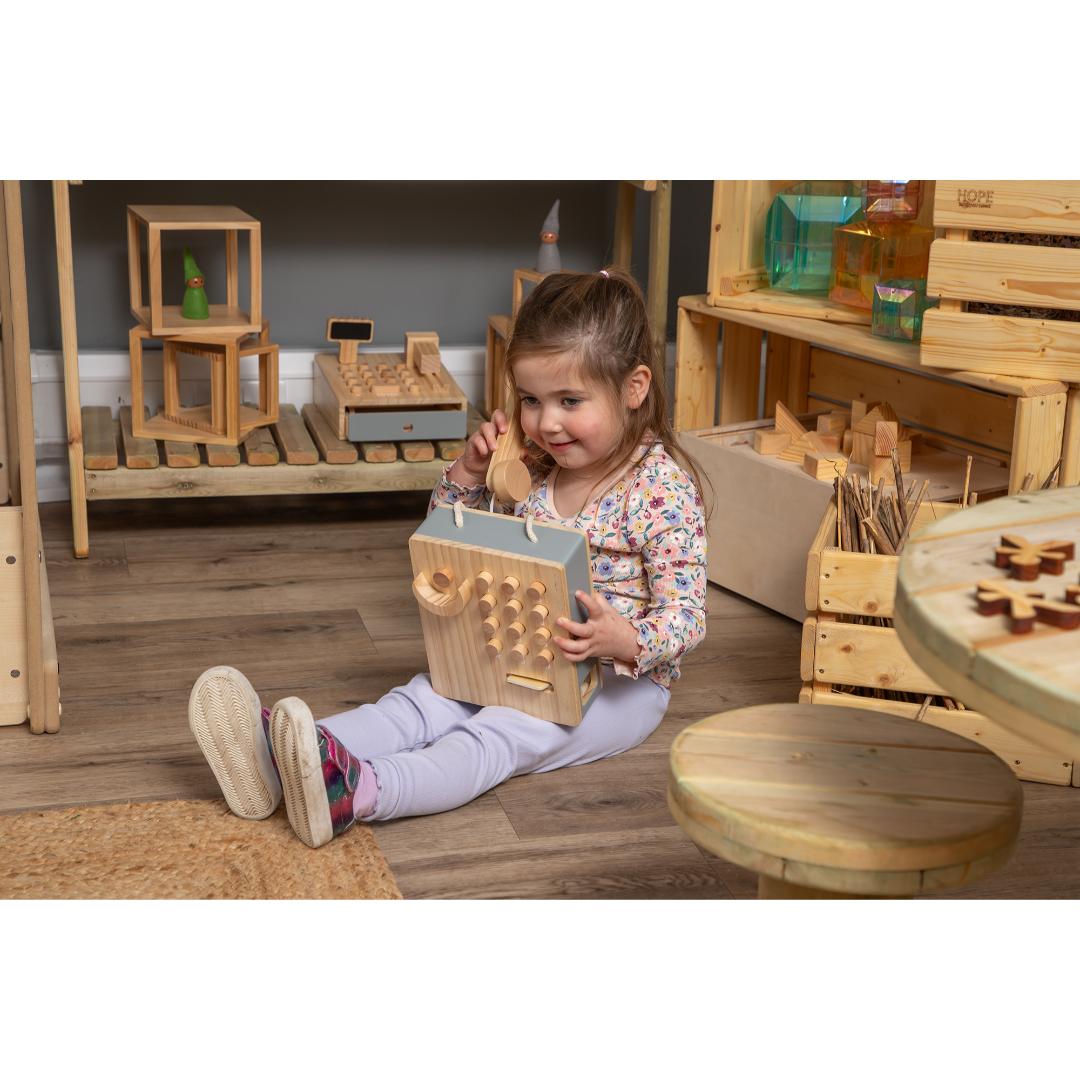
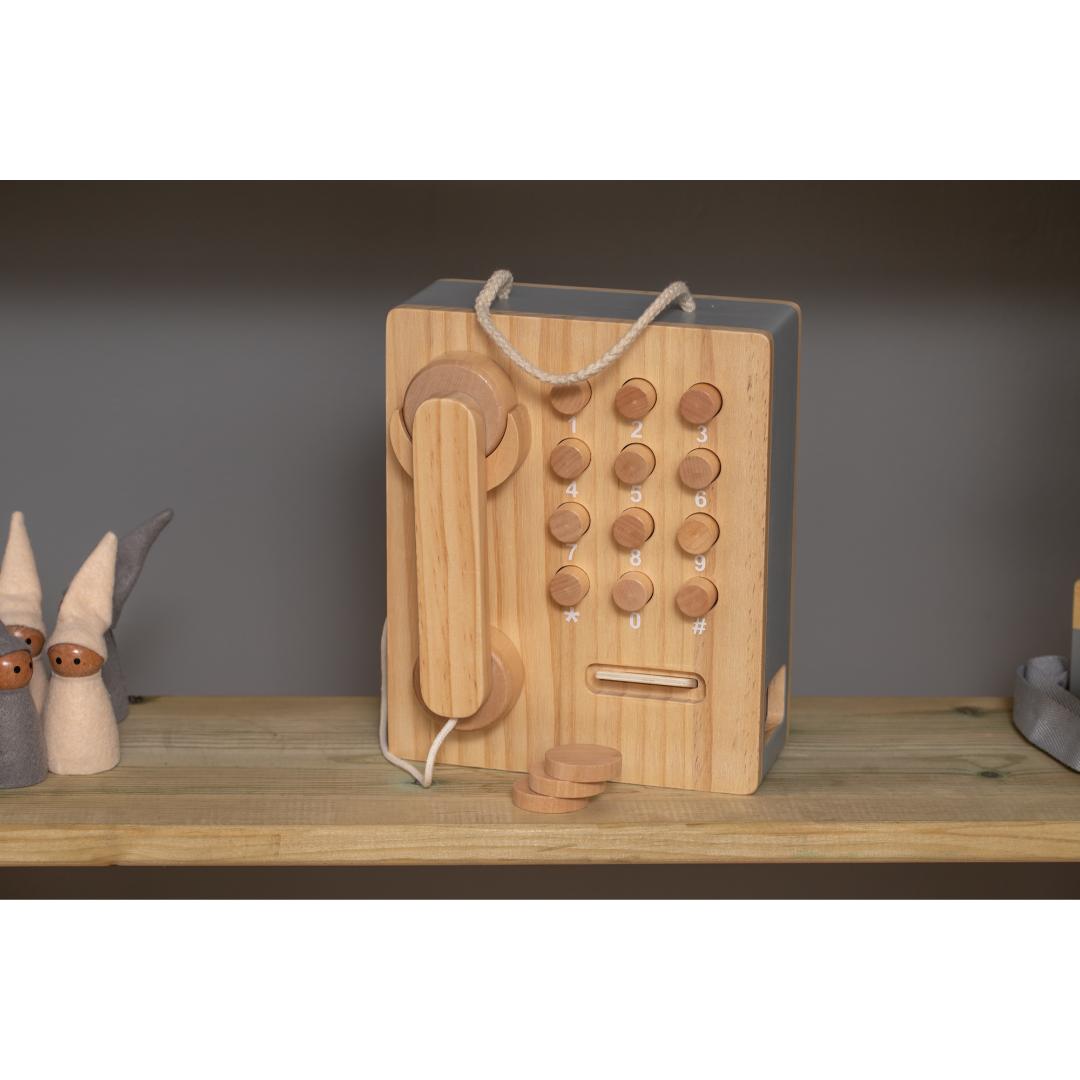
The Wooden Phone encourages children to engage in role-play scenarios, fostering their natural curiosity and exploration. Through imaginative play, children can experiment with communication and social interactions, which are essential components of their learning journey.
Building language, imagination, and social skills
This product provides opportunities for children to develop their language skills as they engage in conversations and storytelling during play. By using the phone in various role-play contexts, children can enhance their vocabulary and practice turn-taking, thereby strengthening their social skills.
Relevant EYLF Outcomes
Outcome 1: Children have a strong sense of identity.
Outcome 5: Children are effective communicators.
Outcome 4: Children are confident and involved learners.
Classroom, Play Activity & Provocation Ideas
Classroom & Learning Area Ideas
Set up a role-play corner with the Wooden Phone alongside other communication tools, encouraging children to explore different ways of connecting with one another.
Incorporate the phone into a themed learning area, such as a post office or shop, to enhance children’s understanding of community roles and interactions.
Play-Based Activity Ideas
Encourage children to create their own stories using the Wooden Phone, prompting them to act out different scenarios and characters.
Organise a “telephone game” where children pass messages to each other using the phone, promoting listening skills and clear communication.
Provocation Ideas
Introduce the Wooden Phone during discussions about technology and communication, prompting children to compare it with modern devices.
Provide a variety of props related to communication (e.g., letters, envelopes) and invite children to role-play sending messages using the phone, fostering creativity and imaginative play.