
How this product aligns with the EYLF
Supporting play-based learning and inquiry
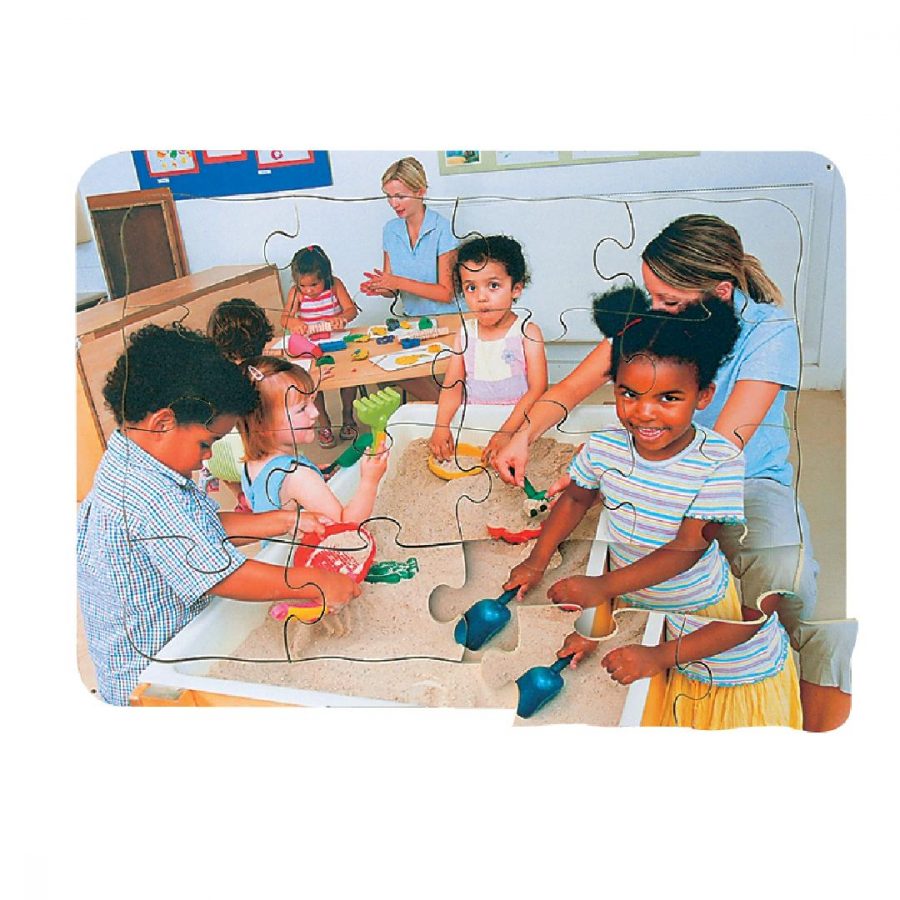
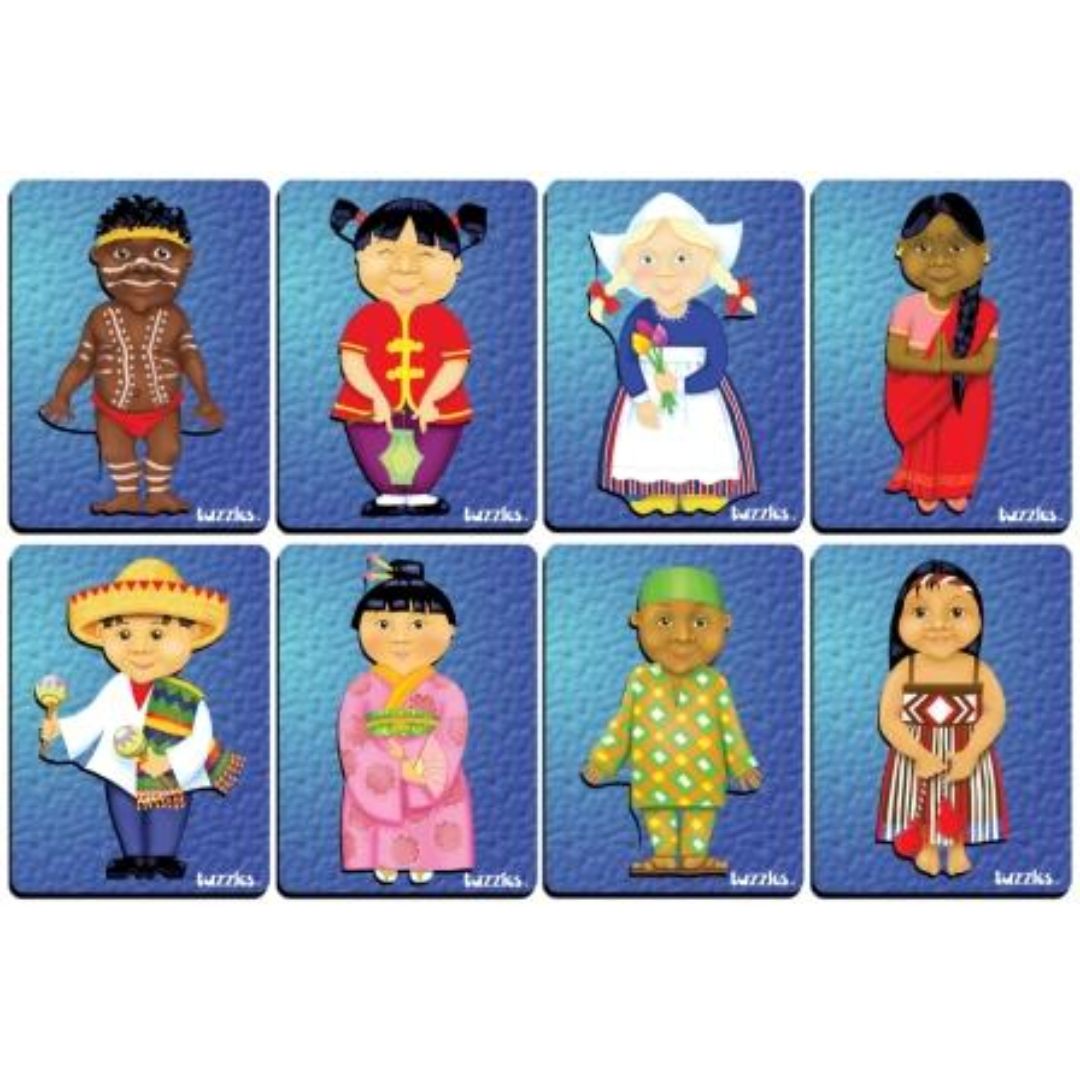
The Children of the World Puzzles encourage children to engage in play-based learning by exploring different cultures and nationalities through tactile and visual experiences. As children manipulate the puzzle pieces, they can inquire about the various backgrounds represented, fostering curiosity and understanding of diversity in their communities and the wider world.
Building language, imagination, and social skills
These puzzles provide opportunities for children to develop their language skills as they discuss the different children depicted and share stories about their own experiences or cultural backgrounds. This interaction promotes social skills, as children learn to communicate, collaborate, and appreciate the perspectives of their peers.
Relevant EYLF Outcomes
Outcome 2: Children are connected with and contribute to their world.
Outcome 5: Children are effective communicators.
Classroom, Play Activity & Provocation Ideas
Classroom & Learning Area Ideas
Set up a multicultural corner where children can explore the puzzles alongside books and materials representing different cultures, encouraging discussions and storytelling.
Incorporate the puzzles into a social studies unit, allowing children to research and present on the countries represented in the puzzles.
Play-Based Activity Ideas
Invite children to work in pairs or small groups to complete the puzzles, fostering teamwork and communication as they discuss the images and their meanings.
Encourage children to create their own puzzles using drawings or photographs of their families or communities, promoting creativity and personal connections to the theme of diversity.
Use the puzzles as a springboard for role-play activities, where children can act out scenarios reflecting the different cultures represented.
Provocation Ideas
Introduce the puzzles during a group discussion about community and belonging, prompting children to share their own cultural experiences.
Create a matching game where children pair puzzle pieces with related cultural artifacts or images, enhancing their understanding of the connections between the puzzles and real-world contexts.