How this product aligns with the EYLF
Supporting play-based learning and inquiry
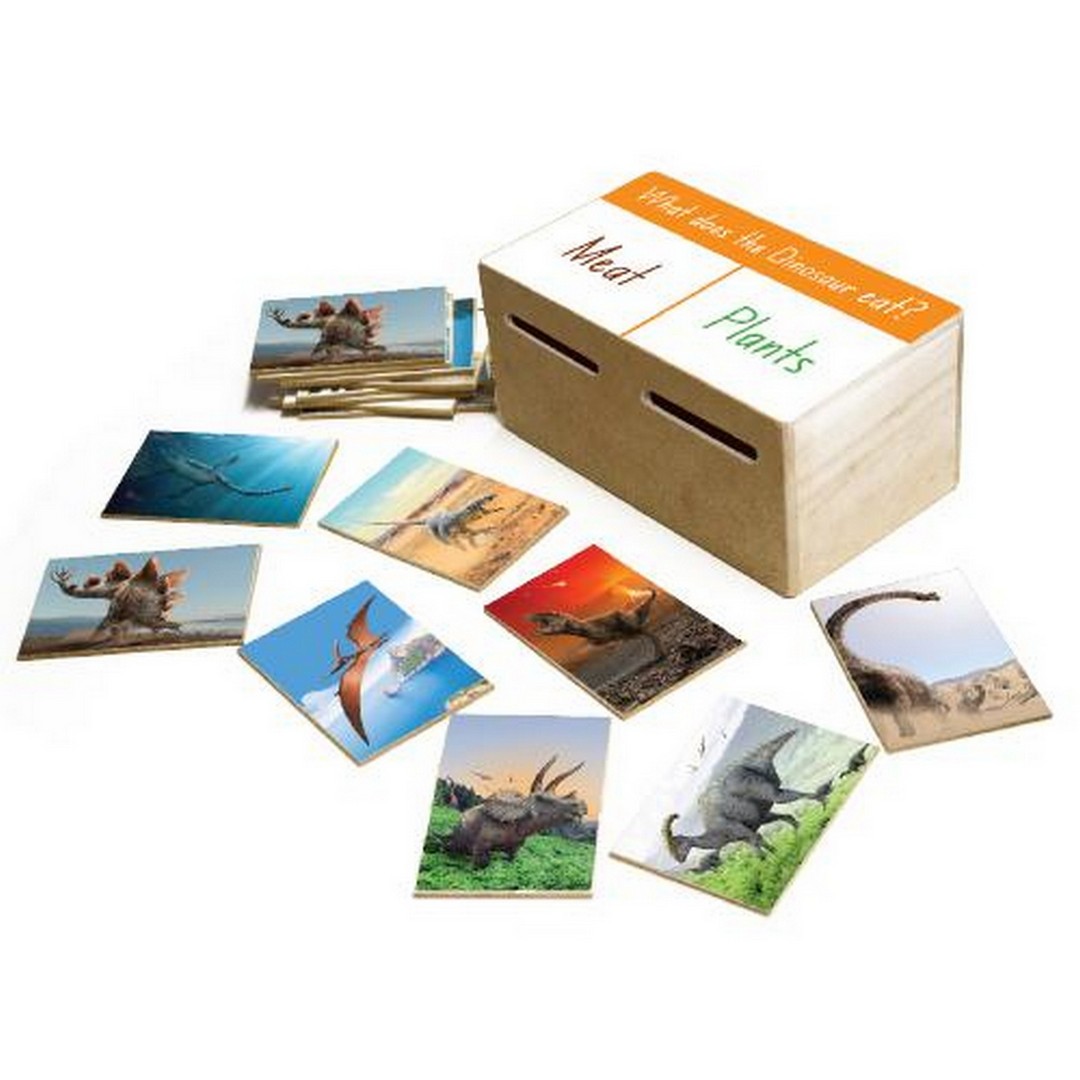
The What Does the Dinosaur Eat? Letterbox Game encourages children to engage in hands-on learning through sorting and matching activities. This play-based approach fosters inquiry as children explore the relationships between the cards and develop their understanding of categorisation and memory skills.
Developing early STEM and problem-solving skills
This game promotes early STEM skills by challenging children to think critically about which cards belong in each slot of the letterbox. As they manipulate the cards and consider their placements, children enhance their problem-solving abilities and fine motor skills, which are essential for their overall development.
Relevant EYLF Outcomes
Outcome 2: Children are connected with and contribute to their world.
Outcome 4: Children are confident and involved learners.
Outcome 5: Children are effective communicators.
Classroom, Play Activity & Provocation Ideas
Classroom & Learning Area Ideas
Set up a dedicated sorting station where children can use the letterbox game alongside other sorting materials to explore different categories, such as colours or shapes.
Incorporate the letterbox game into a literacy area, allowing children to create stories using the picture cards and discuss their choices.
Play-Based Activity Ideas
Encourage children to play a memory game with the cards by placing them face down and taking turns to find matching pairs.
Use the letterbox game to facilitate a group activity where children collaboratively decide how to sort the cards, promoting teamwork and communication.
Provocation Ideas
Introduce a dinosaur-themed sensory bin where children can find hidden cards that correspond with the letterbox game, enhancing their engagement with both play and learning.
Create a storytelling session where children use the cards to narrate a story about dinosaurs and their eating habits, fostering language development and creativity.