How this product aligns with the EYLF
Supporting play-based learning and inquiry
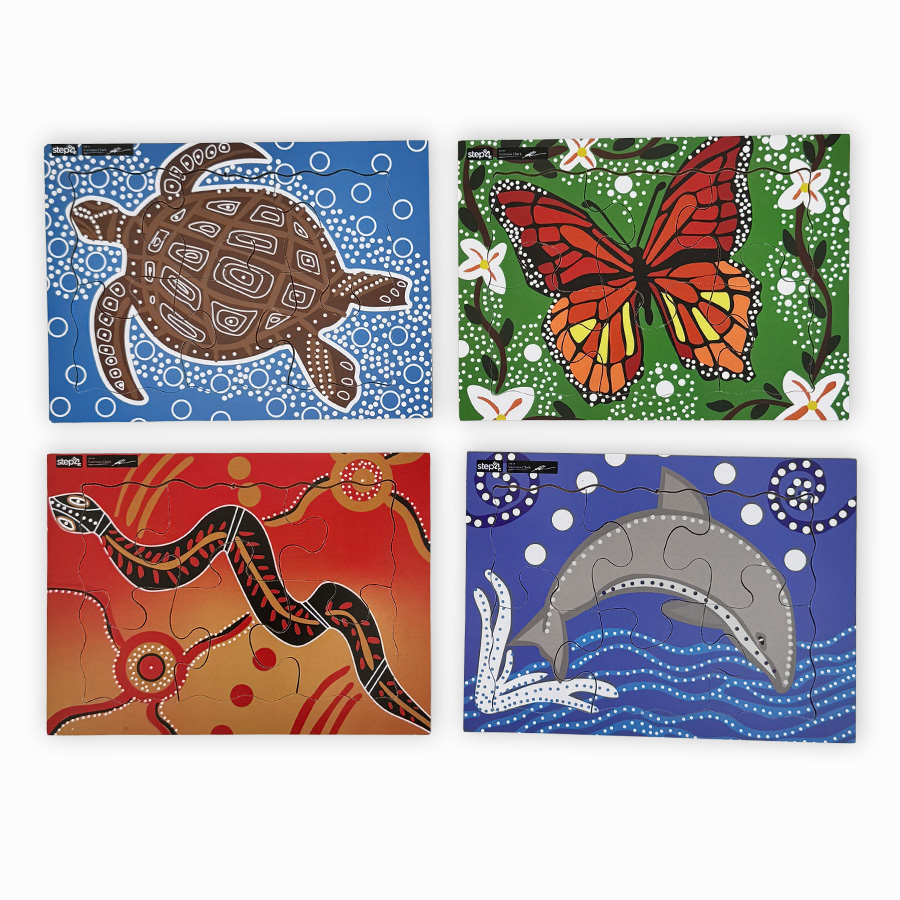
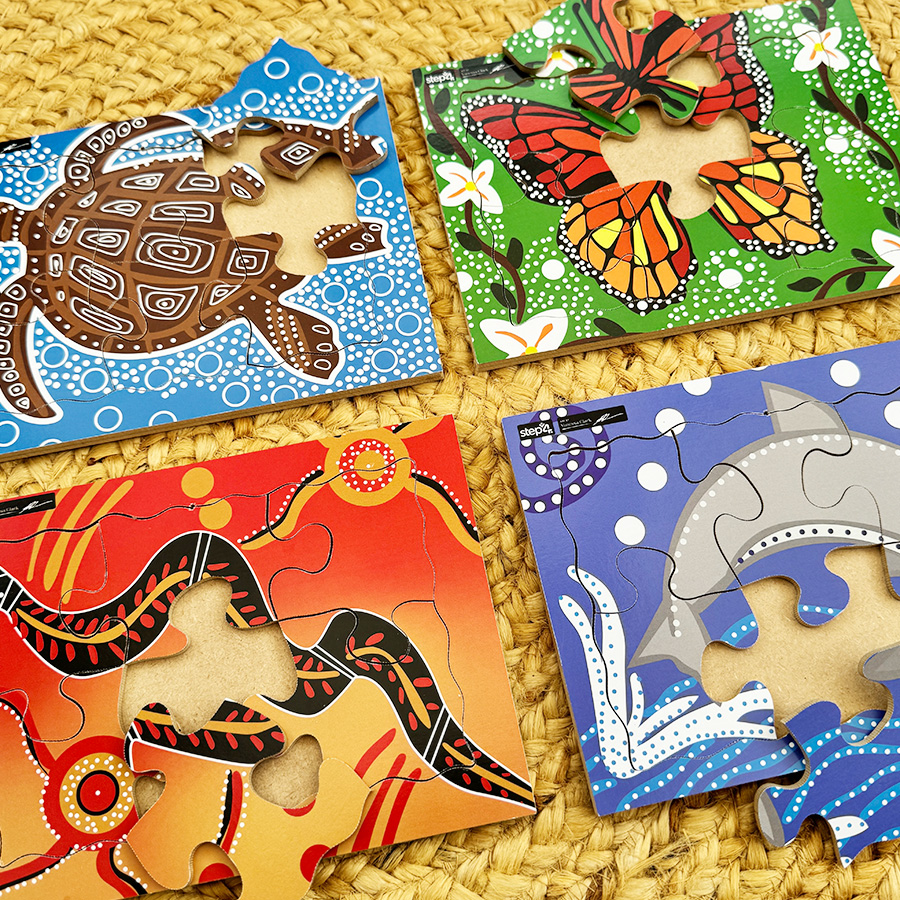
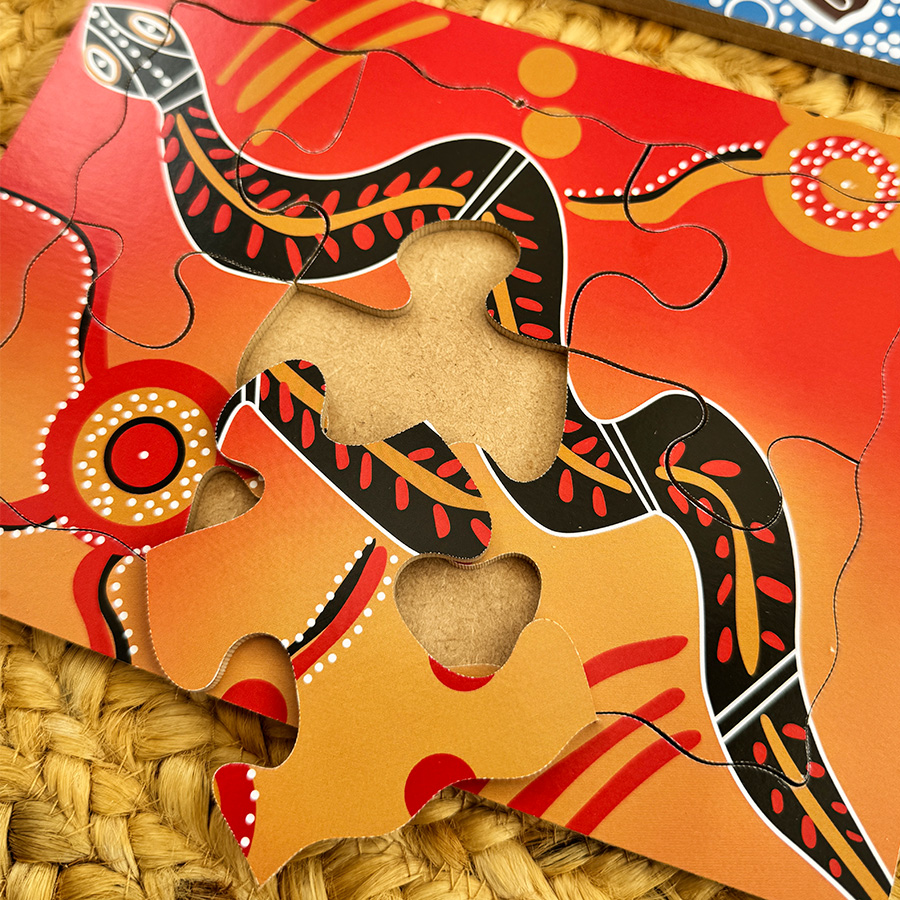
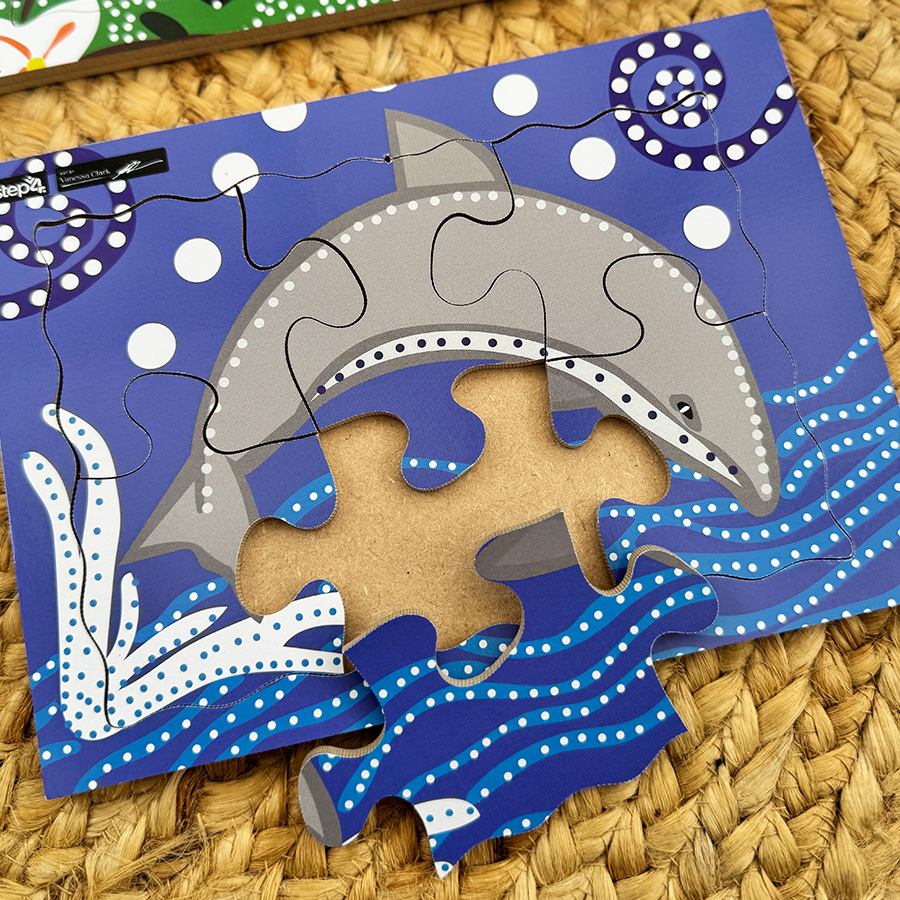
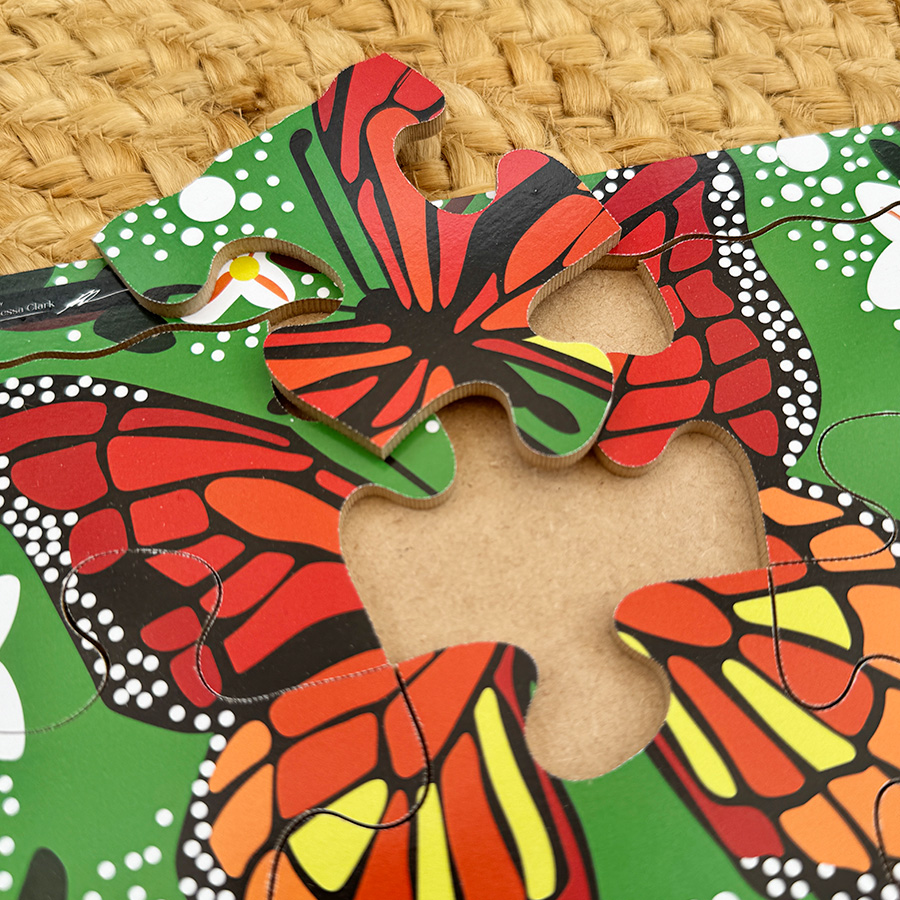
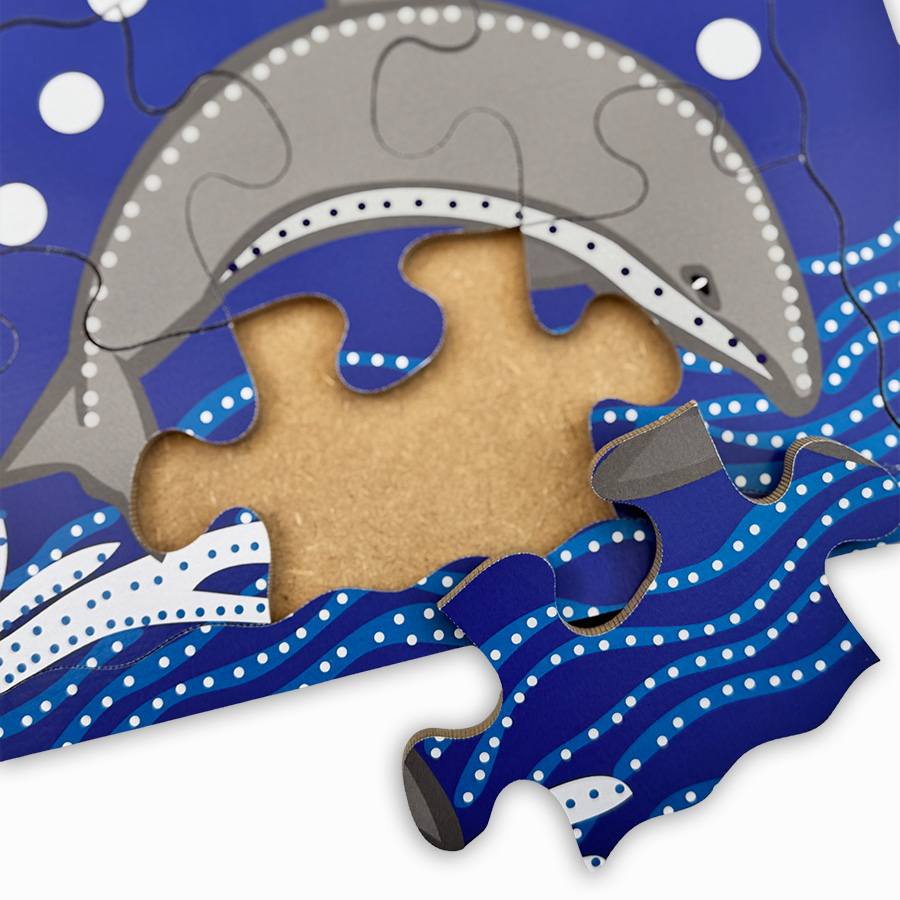
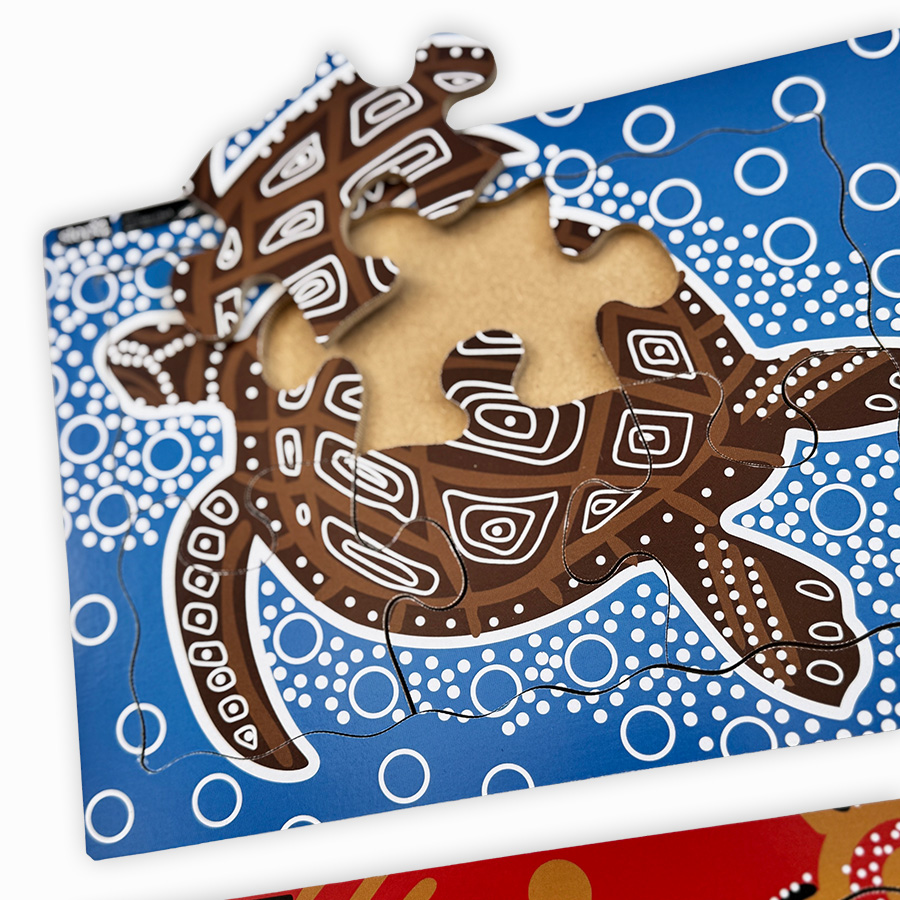
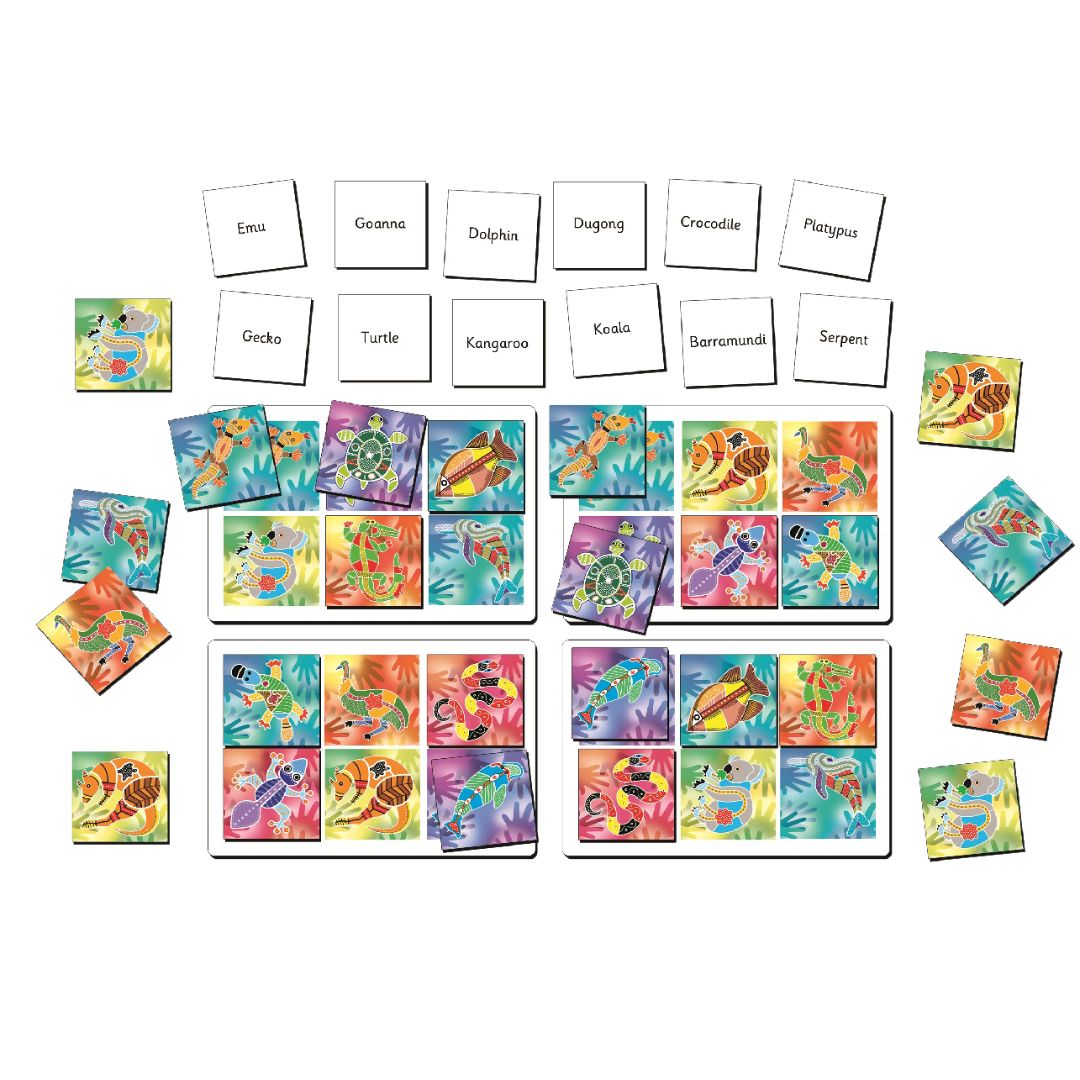
The Aboriginal Art Animals Tray Puzzle Set encourages children to engage in play-based learning by inviting them to explore Indigenous culture through interactive storytelling. As children manipulate the chunky wooden pieces to complete the puzzles, they develop problem-solving skills and engage in inquiry about the animals and their significance within Aboriginal culture.
Promoting connection with the natural world
This product fosters a connection with the natural world by featuring designs that represent native Australian wildlife. Through the puzzles, children can learn about the importance of these animals in Indigenous stories and their roles in the ecosystem, promoting an appreciation for biodiversity and cultural heritage.
Relevant EYLF Outcomes
Outcome 2: Children are connected with and contribute to their world.
Outcome 4: Children are confident and involved learners.
Outcome 5: Children are effective communicators.
Classroom, Play Activity & Provocation Ideas
Classroom & Learning Area Ideas
Set up a dedicated Indigenous culture corner where children can explore the puzzles alongside books and resources about Aboriginal stories and wildlife.
Incorporate the puzzles into a sensory play area with natural materials, allowing children to create landscapes that reflect the environments of the animals featured.
Play-Based Activity Ideas
Encourage children to work in pairs or small groups to complete the puzzles, fostering collaboration and communication as they share ideas about the stories behind each animal.
Use the puzzles as a starting point for a creative art project where children can design their own animal using Aboriginal art techniques and colours.
Provocation Ideas
Introduce the puzzles during a storytelling session, prompting children to discuss what they know about each animal and its significance in Indigenous culture.
Organise a nature walk where children can observe local wildlife, then return to the puzzles to reflect on their experiences and create connections between the animals they saw and those in the puzzles.