
How this product aligns with the EYLF
Supporting play-based learning and inquiry
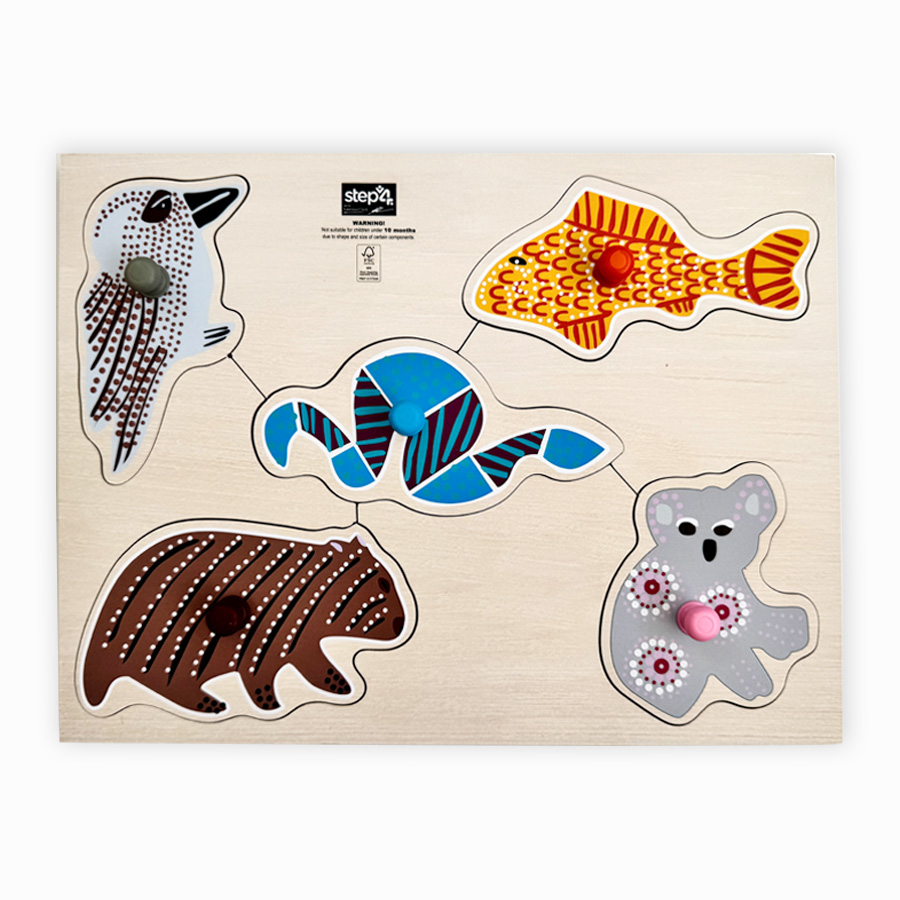
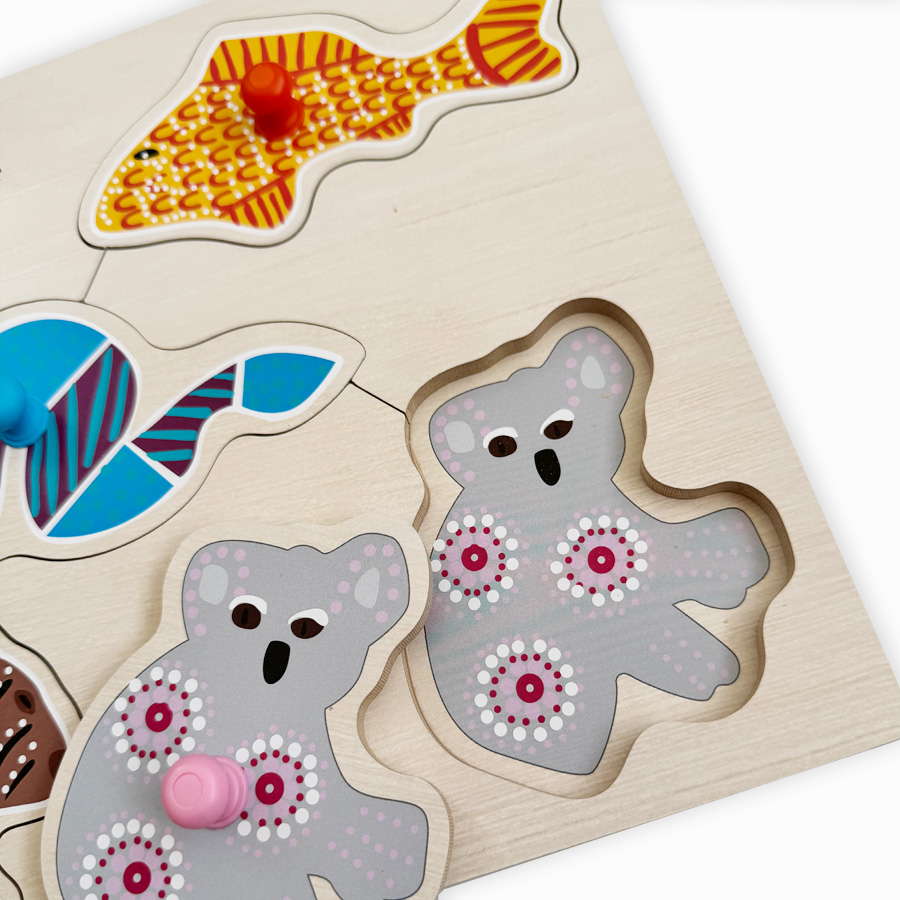
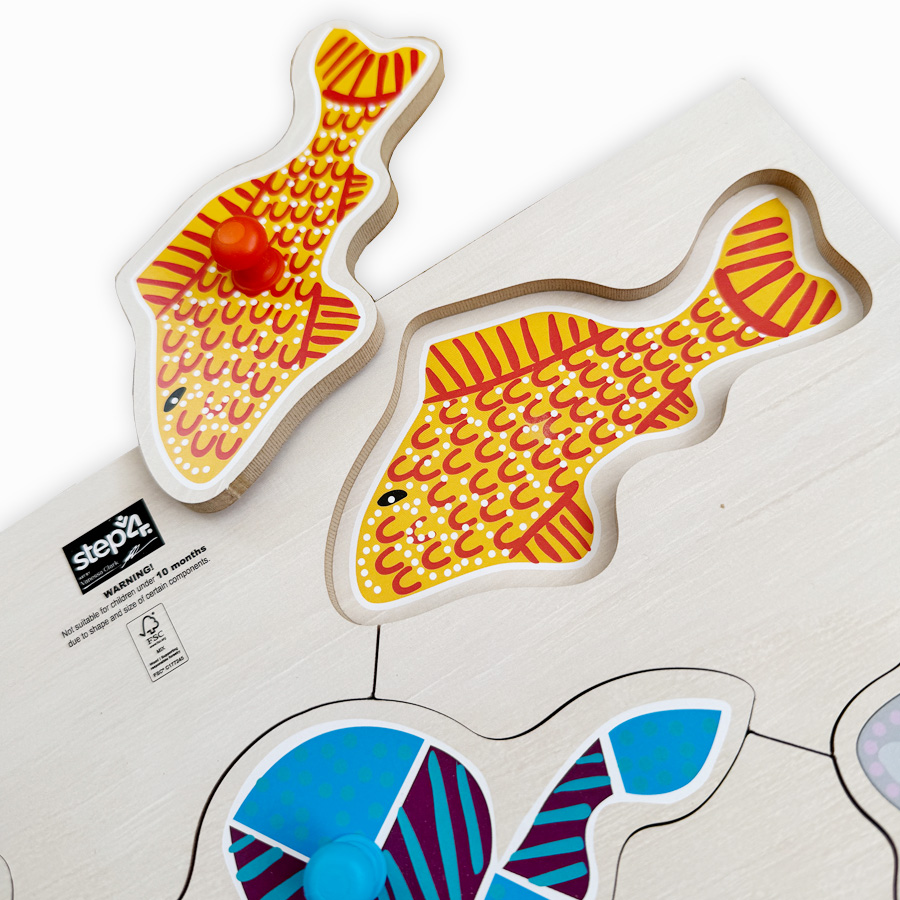
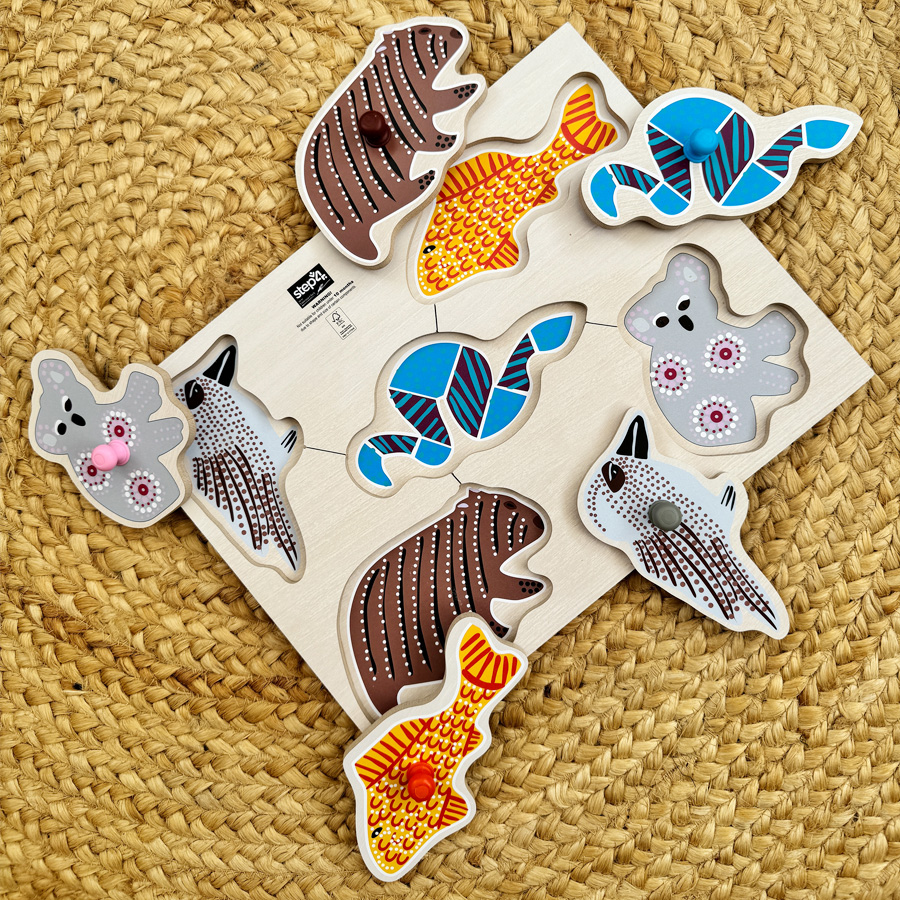
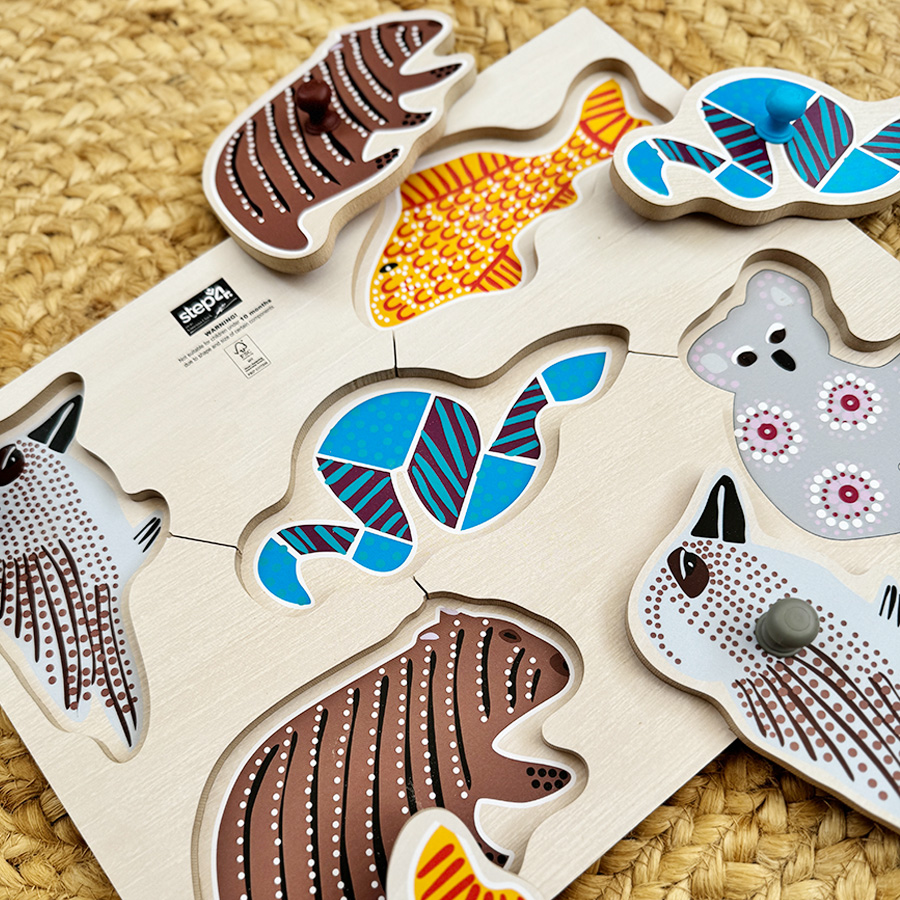
The Aboriginal Art Native Animals Peg Puzzle encourages children to engage in play-based learning by exploring the unique wildlife of Australia through hands-on interaction. As children manipulate the pieces, they are prompted to inquire about the animals and their cultural significance, fostering curiosity and a deeper understanding of their environment.
Promoting connection with the natural world
This puzzle serves as a meaningful resource for children to connect with Australia’s native animals and the cultural stories behind them. By incorporating authentic Indigenous artwork, children are invited to appreciate the natural world and the importance of caring for it, aligning with the EYLF’s focus on fostering respect for the environment and cultural heritage.
Relevant EYLF Outcomes
Outcome 2: Children are connected with and contribute to their world.
Outcome 4: Children are confident and involved learners.
Outcome 5: Children are effective communicators.
Classroom, Play Activity & Provocation Ideas
Classroom & Learning Area Ideas
Create a dedicated cultural corner featuring the puzzle alongside books and images of native Australian animals to encourage exploration and discussion.
Use the puzzle during group time to introduce concepts of totems and responsibilities within Indigenous cultures, facilitating a rich conversation about community and environment.
Play-Based Activity Ideas
Encourage children to create their own animal totems using the puzzle pieces as inspiration, integrating art and storytelling into their play.
Set up a matching game where children pair puzzle pieces with images or facts about the animals, promoting language development and cognitive skills.
Organise a nature walk where children can search for local wildlife, then return to the puzzle to discuss their findings and relate them to the animals represented.
Provocation Ideas
Present the puzzle alongside a selection of Indigenous stories or songs about the animals, inviting children to share their thoughts and connections.
Introduce natural materials such as leaves or stones to complement the puzzle, allowing children to explore textures and create a tactile learning experience related to the animals depicted.