
How this product aligns with the EYLF
Supporting play-based learning and inquiry
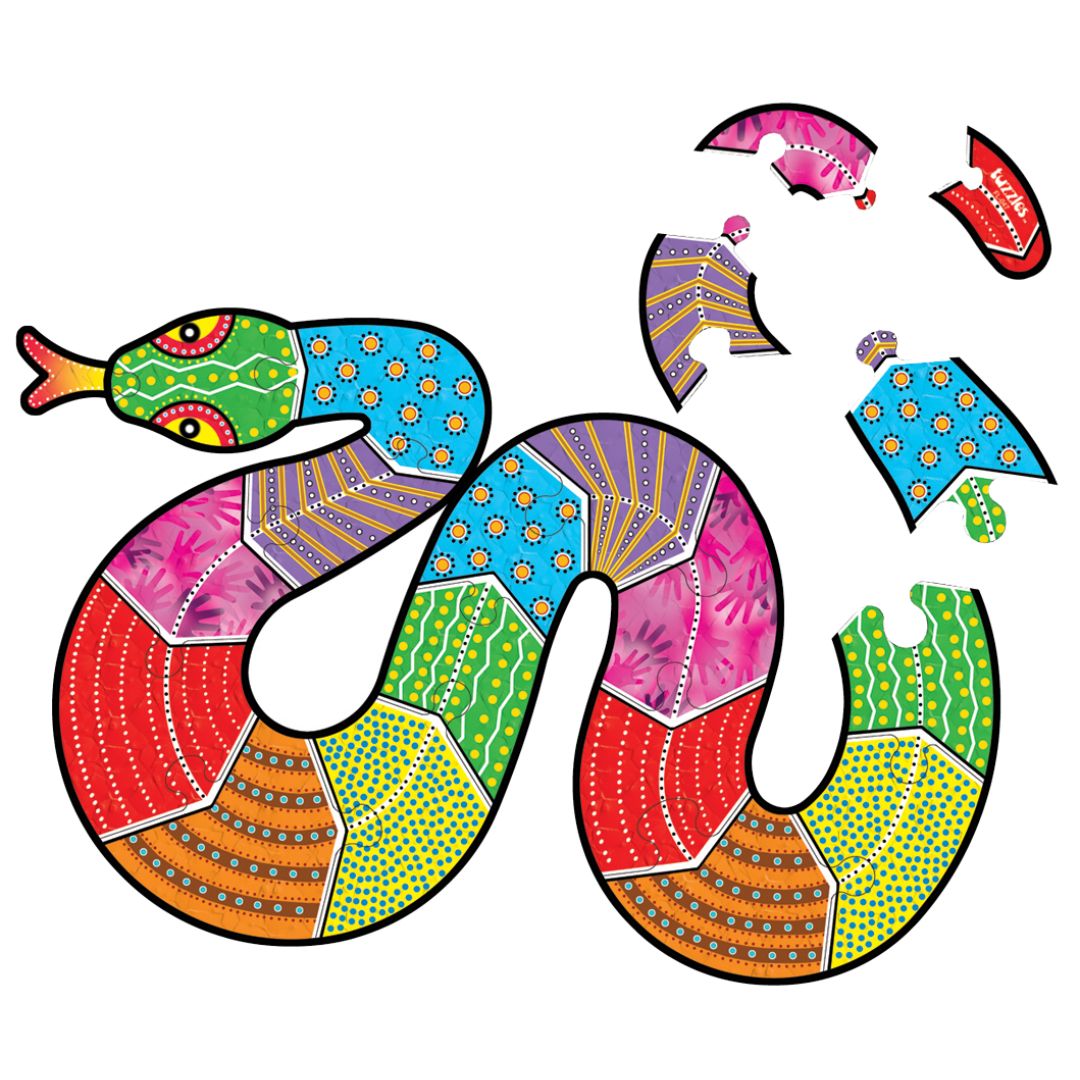
The Aboriginal Art Snake Floor Puzzle invites children to engage in play-based learning through hands-on exploration. As they manipulate the oversized pieces, children develop cognitive skills and engage in inquiry about patterns, colours, and shapes, fostering a natural curiosity about their environment and the stories behind the artwork.
Building language, imagination, and social skills
This puzzle serves as a catalyst for social interaction and language development as children collaborate during play. Through discussions about the Aboriginal-inspired artwork and the stories it may represent, children enhance their communication skills and imagination, enriching their understanding of cultural narratives.
Relevant EYLF Outcomes
Outcome 1: Children have a strong sense of identity
Outcome 2: Children are connected with and contribute to their world
Outcome 4: Children are confident and involved learners
Classroom, Play Activity & Provocation Ideas
Classroom & Learning Area Ideas
Set up a dedicated puzzle corner where children can explore the Aboriginal Art Snake Floor Puzzle alongside other cultural resources, encouraging them to share their thoughts and experiences.
Incorporate the puzzle into a cultural studies area, allowing children to compare and contrast different art forms and storytelling traditions.
Play-Based Activity Ideas
Encourage children to create their own snake designs using various art materials after completing the puzzle, promoting creativity and self-expression.
Organise a group activity where children work together to complete the puzzle, fostering teamwork and communication skills.
Facilitate a storytelling session where children create narratives based on the puzzle’s artwork, enhancing their language and imaginative skills.
Provocation Ideas
Introduce the puzzle alongside books about Aboriginal culture and stories, prompting discussions and deeper exploration of the themes presented.
Use the puzzle as a starting point for a nature walk, encouraging children to observe and discuss patterns and colours found in their natural environment, linking their play to the world around them.