
How this product aligns with the EYLF
Supporting play-based learning and inquiry
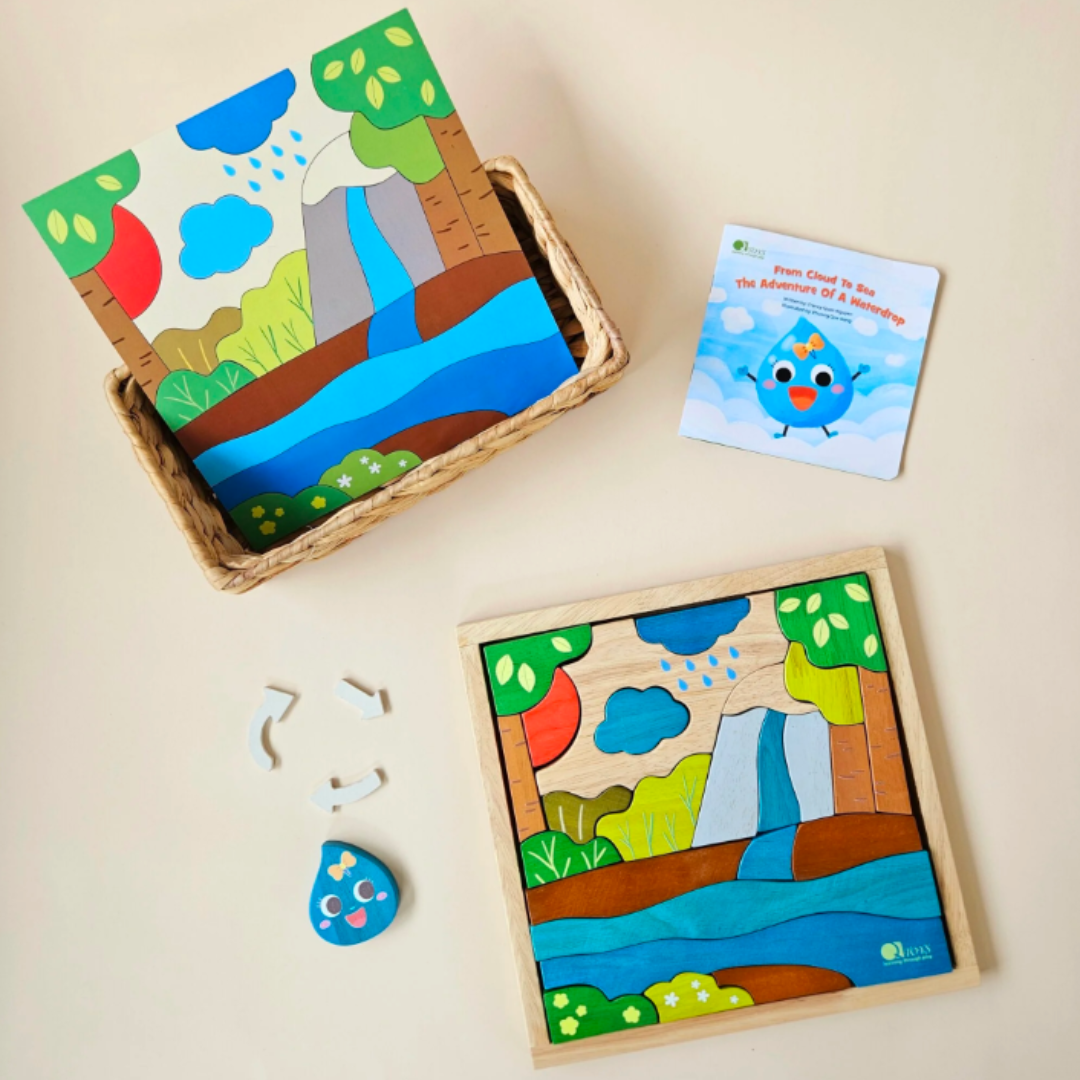
The Water Cycle Story and Puzzle Set encourages children to engage in play-based learning by exploring the concept of the water cycle through hands-on interaction. As children manipulate the puzzle pieces and listen to the accompanying story, they are prompted to ask questions and investigate the natural processes involved, fostering a sense of curiosity and inquiry.
Promoting connection with the natural world
This product provides an opportunity for children to connect with the natural world by learning about the water cycle, an essential environmental process. Through storytelling and puzzle play, children can develop an appreciation for nature and understand the importance of water in their lives, which is foundational for environmental awareness.
Relevant EYLF Outcomes
Outcome 2: Children are connected with and contribute to their world.
Outcome 4: Children are confident and involved learners.
Outcome 5: Children are effective communicators.
Classroom, Play Activity & Provocation Ideas
Classroom & Learning Area Ideas
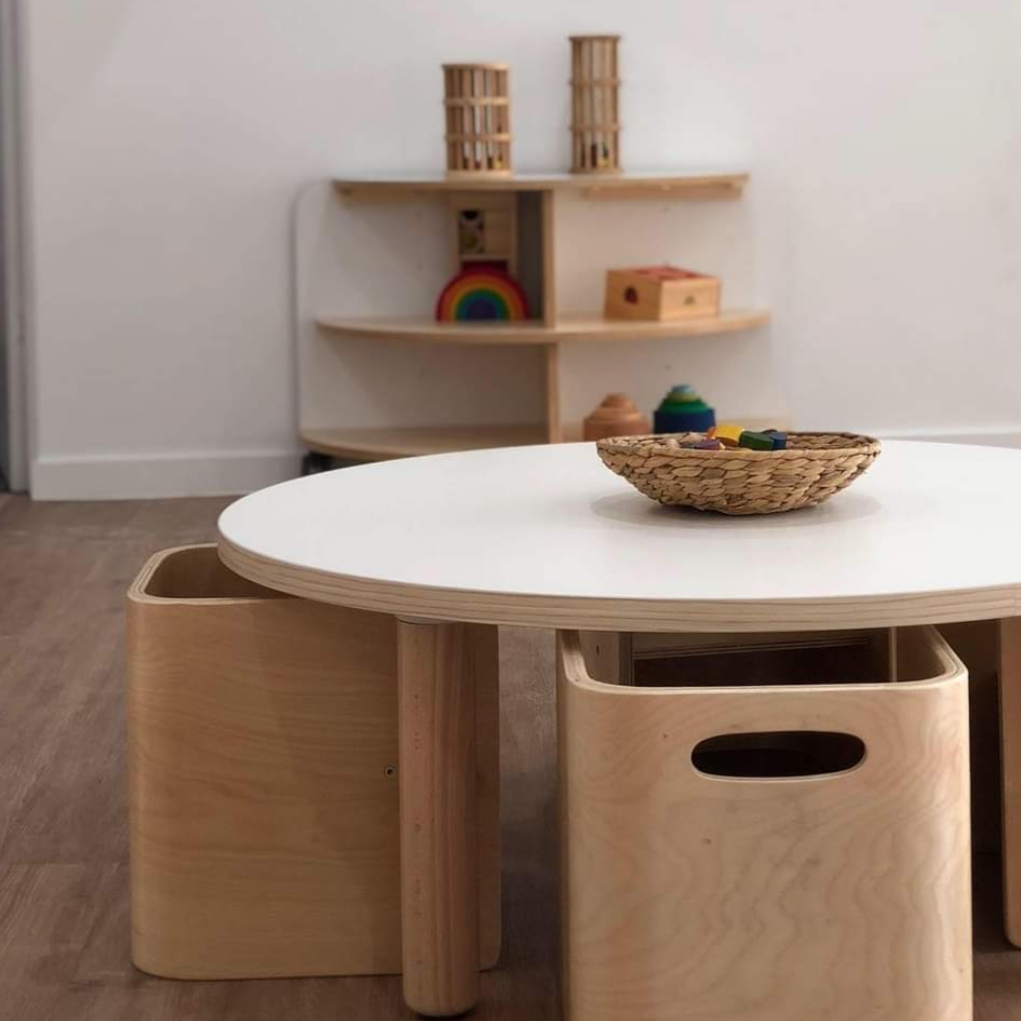
Set up a dedicated science corner with the Water Cycle Story and Puzzle Set, allowing children to explore the puzzle while referencing the storybook for context.
Incorporate the puzzle into a nature-themed display that includes images and facts about the water cycle, encouraging children to make connections between the puzzle and real-world phenomena.
Play-Based Activity Ideas
Encourage children to work in pairs to complete the puzzle, promoting collaboration and communication as they discuss the different stages of the water cycle.
Use the storybook as a springboard for children to create their own water cycle stories, enhancing their language skills and creativity through imaginative play.
Organise a water-themed sensory play activity where children can mimic the water cycle using water, ice, and steam, reinforcing their understanding through experiential learning.
Provocation Ideas
Invite children to draw or paint their interpretations of the water cycle after completing the puzzle, allowing them to express their understanding creatively.
Pose open-ended questions related to the water cycle during group discussions, encouraging children to share their thoughts and observations while using the puzzle and storybook as reference points.