Outdoor play doesn’t always need a big plan. Sometimes, all it takes is a wheelbarrow, a little space and the freedom for children to decide what happens next.
Spend enough time in an early learning outdoor space and you’ll notice something interesting. A child might set out to water the plants, only to become absorbed in collecting leaves. Another might fill a wheelbarrow with sand, transport it across the yard and return to do it all over again. A simple game of pretending to mow the lawn can turn into a conversation about helping at home, looking after the garden or getting a job done.
These moments might look ordinary to an adult, but they can tell us a great deal about how children learn.
Garden-inspired play offers children a familiar starting point, with plenty of room to take an idea in their own direction. It brings together movement, imagination, exploration and the everyday experiences children are already trying to make sense of.
For early childhood educators, the opportunity isn’t necessarily to plan another activity. It’s to consider how the outdoor environment can make more of these moments possible.
Why familiar experiences matter in children’s play
Children are constantly observing the world around them. They watch adults prepare food, sweep floors, carry shopping, water plants and tend to outdoor spaces. Through play, they revisit these experiences, test their understanding and give them new meaning.
A child pushing a toy lawn mower across the yard might be recreating something they’ve seen at home. Another might use a planting set to establish an imaginary garden, deciding what will grow there and who will look after it.
The value isn’t in whether the play looks realistic. It’s in what children do with the opportunity.
Familiar activities can give children an accessible way into play, particularly when they’re still developing confidence in a group or deciding how they want to participate. From there, the play can evolve. Children invent stories, negotiate roles, solve small problems and bring their own ideas into the experience.
And often, the most interesting part is what happens when adults leave enough room for those ideas to develop.
Outdoor play doesn’t need to be overplanned
There is a place for intentional teaching, carefully considered experiences and planned learning opportunities. But outdoor environments also need to leave room for children to make decisions for themselves.
When every resource has one obvious purpose and every experience has a predetermined outcome, there can be less opportunity for children to take the play somewhere unexpected.
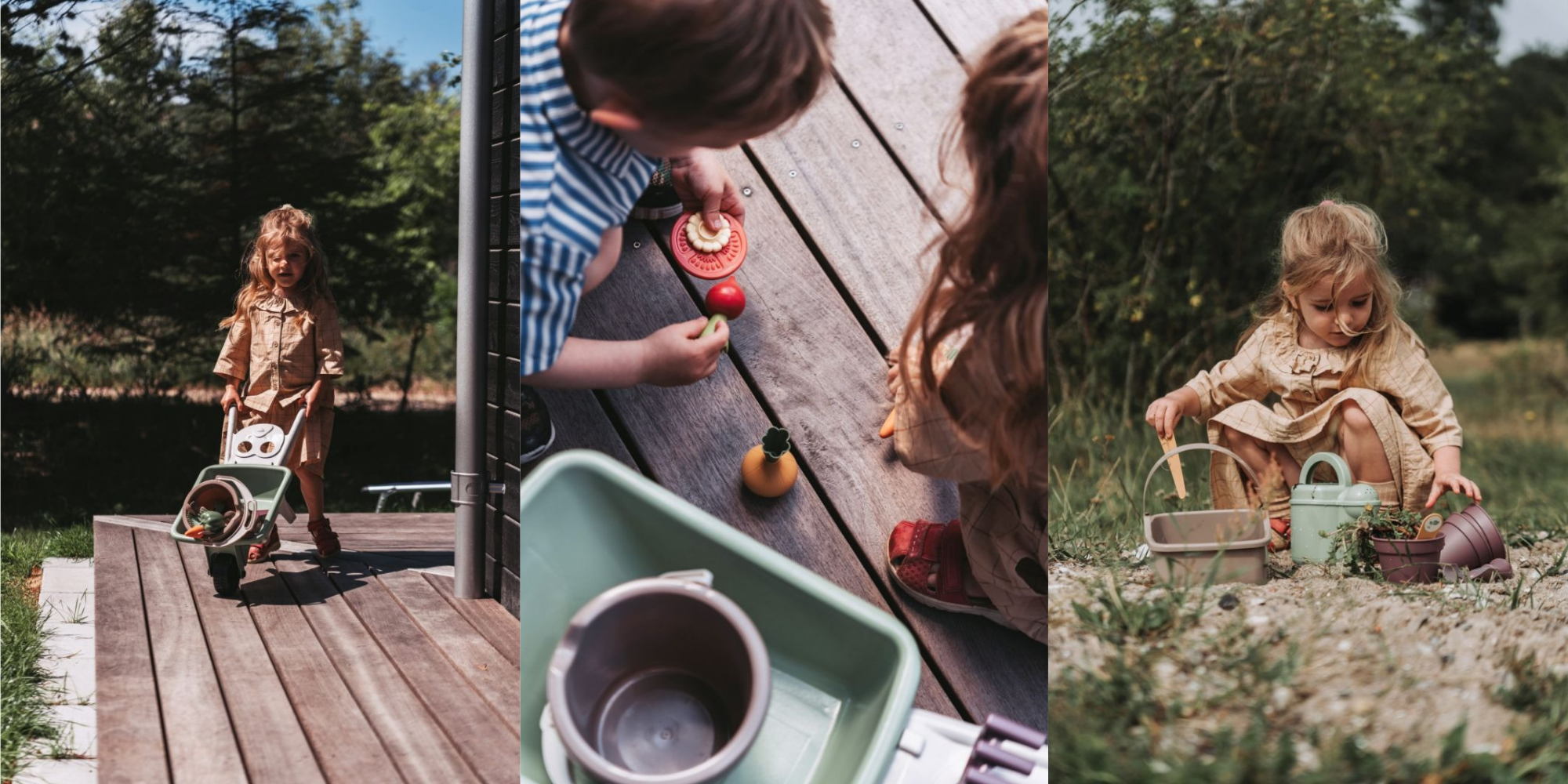
Consider a wheelbarrow in an outdoor play space. It might be used to transport sand, carry leaves, collect sticks or move gardening tools from one place to another. Children might decide they’re running a garden centre, delivering supplies or working together to transform a corner of the yard.
The resource hasn’t changed. The possibilities have.
This is where thoughtful resource selection matters. Look for products that invite children to participate, but don’t dictate exactly how they must play. Resources connected to familiar experiences can be particularly useful because children already have ideas about what they might do with them.
The educator’s role is to notice those ideas, provide the space and time for them to develop, and step in when support or an extension will add value.
Sometimes that means asking a question. Sometimes it means introducing another resource. And sometimes, it means resisting the urge to direct the experience and allowing children to work it out together.
What garden play can offer beyond imagination
Garden-inspired play can support several areas of learning at once. Rather than treating these as separate activities, educators can look at how they naturally come together during play.
Movement and coordination
Pushing a wheelbarrow, steering a toy lawn mower, carrying containers and moving around obstacles all involve physical action. These experiences give children opportunities to practise coordination, balance, spatial awareness and control of their movements.
Communication and collaboration
When children decide who’s planting, who’s watering or where the collected materials should go, they have reasons to communicate. They may need to explain an idea, negotiate a role, solve a disagreement or work towards a shared goal.
Problem-solving and early thinking skills
What happens when the wheelbarrow is too full? How can the children transport everything they have collected? Where should the garden go? These small, practical challenges encourage children to make decisions, test ideas and adjust their approach.
Connection with nature
When garden play is connected with real outdoor surroundings, it can create opportunities to notice leaves, soil, weather, plants and seasonal changes. Educators can build on children’s curiosity by making genuine nature experiences available alongside pretend play.
A toy planting set, for example, can spark interest in gardening. Real planting, where appropriate, can extend that interest into caring for living things and observing change over time.
The important distinction is that these benefits aren’t guaranteed simply by placing a product outside. They emerge through children’s engagement, the environment educators create and the opportunities children have to explore.
Creating an outdoor space that invites participation
You don’t need to redesign your entire outdoor area to make garden play more engaging. Start by looking at what children already enjoy and where there might be opportunities to extend their interests.
Ask yourself:
- Can children access the resources independently? Consider whether the products and materials are easy for children to reach, use and return.
- Is there room for movement? Leave enough space for children to push, carry, transport and manoeuvre resources safely.
- Can the play change direction? Choose resources that can be used in different ways, alongside open-ended materials such as leaves, sticks, containers and natural loose parts.
- Are there opportunities to connect pretend play with real experiences? A small planting area, suitable gardening tasks or opportunities to observe changes in the environment can extend children’s interest.
- Are we allowing enough time? Children may need repeated opportunities to return to an idea, build on it and involve other children.
It’s also worth observing which resources children return to and how they use them. Their play can tell you whether a resource is engaging, whether it needs to be repositioned or whether another material could help extend the experience.
A well-considered outdoor environment isn’t necessarily the one with the most equipment. It’s the one that gives children meaningful opportunities to participate.
Bringing more possibilities into outdoor play with Dantoy Green Garden
For educators looking to introduce more garden-inspired play, the Dantoy Green Garden collection offers practical resources that connect with familiar outdoor activities.
The collection includes options such as the Dantoy Green Garden Lawn Mower, Wheelbarrow Set and Planting Set resources that can help children explore gardening themes, recreate everyday experiences and develop their own ideas through play.
As mentioned before, a lawn mower can become part of a pretend gardening routine. A wheelbarrow creates opportunities to transport materials around the yard. A planting set can inspire conversations about what grows, how we care for plants and what children might like to create in their own garden.
These products can also sit alongside existing outdoor resources, including natural loose parts, sand, water and real gardening opportunities where appropriate. The aim isn’t to replace children’s experiences of the natural world, but to provide additional ways for them to engage with it.
When choosing resources for an early learning environment, consider how they will fit into your existing program, the ages and interests of the children, available space and your requirements for safe use and supervision.
The most useful additions are those that give children another reason to get involved and enough freedom to make the experience their own.
Explore the Dantoy Green Garden collection to find garden-inspired resources for your outdoor learning environment.
Shop the Green Garden Collection