
How this product aligns with the EYLF
Supporting play-based learning and inquiry
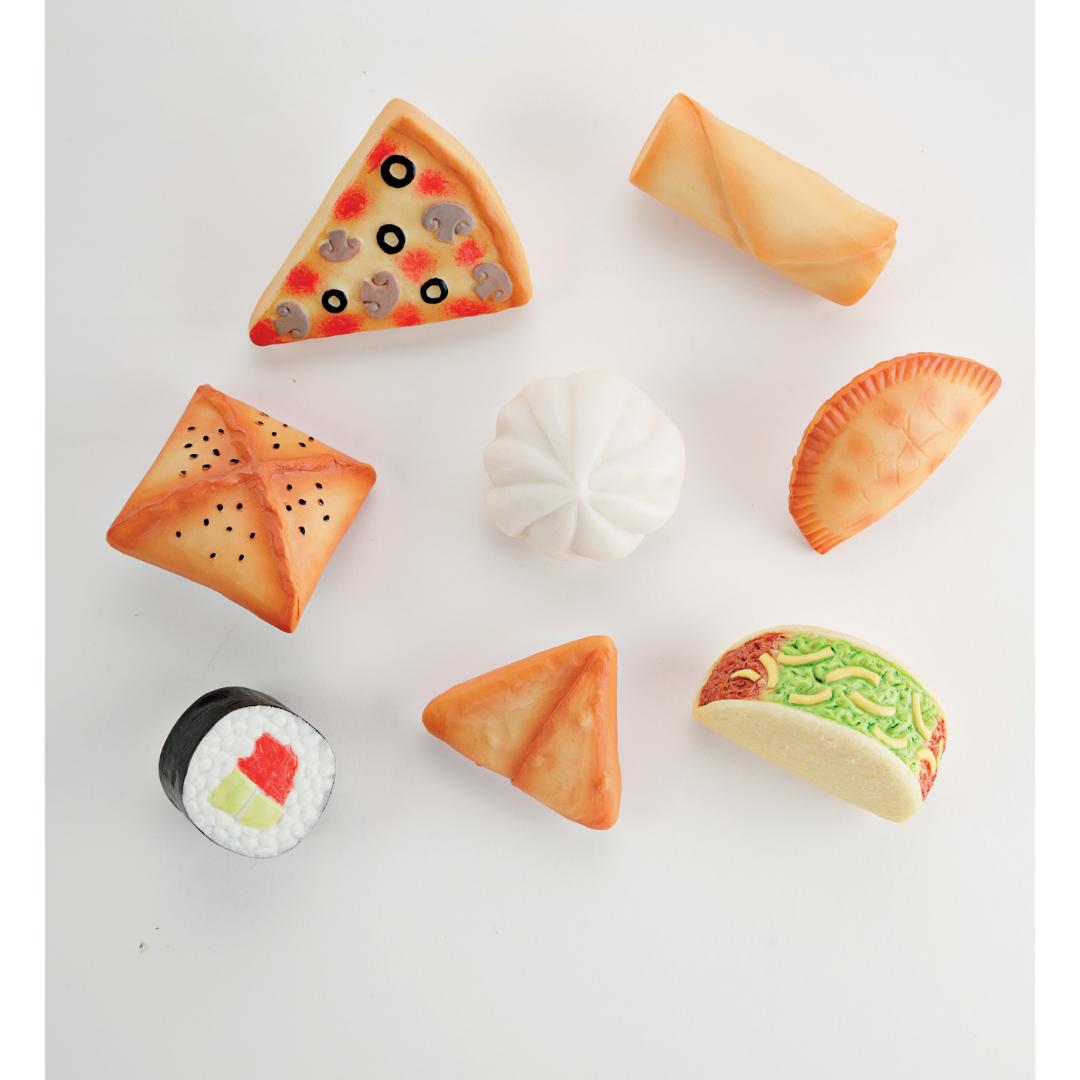
The Sensory Play Stones – Foods of the World provide a rich resource for play-based learning, allowing children to engage in imaginative role play that reflects diverse culinary traditions. Through hands-on exploration, children can inquire about different cultures and food practices, fostering curiosity and understanding of the world around them.
Building language, imagination, and social skills
These play stones encourage children to engage in conversations and storytelling as they create scenarios involving food from various cultures. This interaction not only enhances their vocabulary and language skills but also promotes social skills as they collaborate and negotiate roles during play.
Relevant EYLF Outcomes
Outcome 1: Children have a strong sense of identity
Outcome 2: Children are connected with and contribute to their world
Outcome 5: Children are effective communicators
Classroom, Play Activity & Provocation Ideas
Classroom & Learning Area Ideas
Set up a multicultural food corner where children can explore the Sensory Play Stones alongside related books and images, encouraging discussions about different cultures.
Create a dedicated mud kitchen area where children can incorporate the food stones into their play, enhancing sensory experiences and imaginative cooking scenarios.
Play-Based Activity Ideas
Encourage children to create a pretend food festival using the stones, allowing them to role-play as chefs and customers, which supports social interaction and creativity.
Facilitate a storytelling session where children use the food stones to inspire narratives about their favourite meals or cultural traditions, promoting language development and imagination.
Organise a collaborative cooking game where children match the stones to their corresponding recipes or cultural origins, fostering inquiry and problem-solving skills.
Provocation Ideas
Introduce a world map and invite children to place the food stones on the countries of origin, sparking discussions about geography and cultural diversity.
Present the stones alongside real food items or pictures, prompting children to compare and contrast different foods, enhancing their observational and critical thinking skills.