How this product aligns with the EYLF
Promoting connection with the natural world
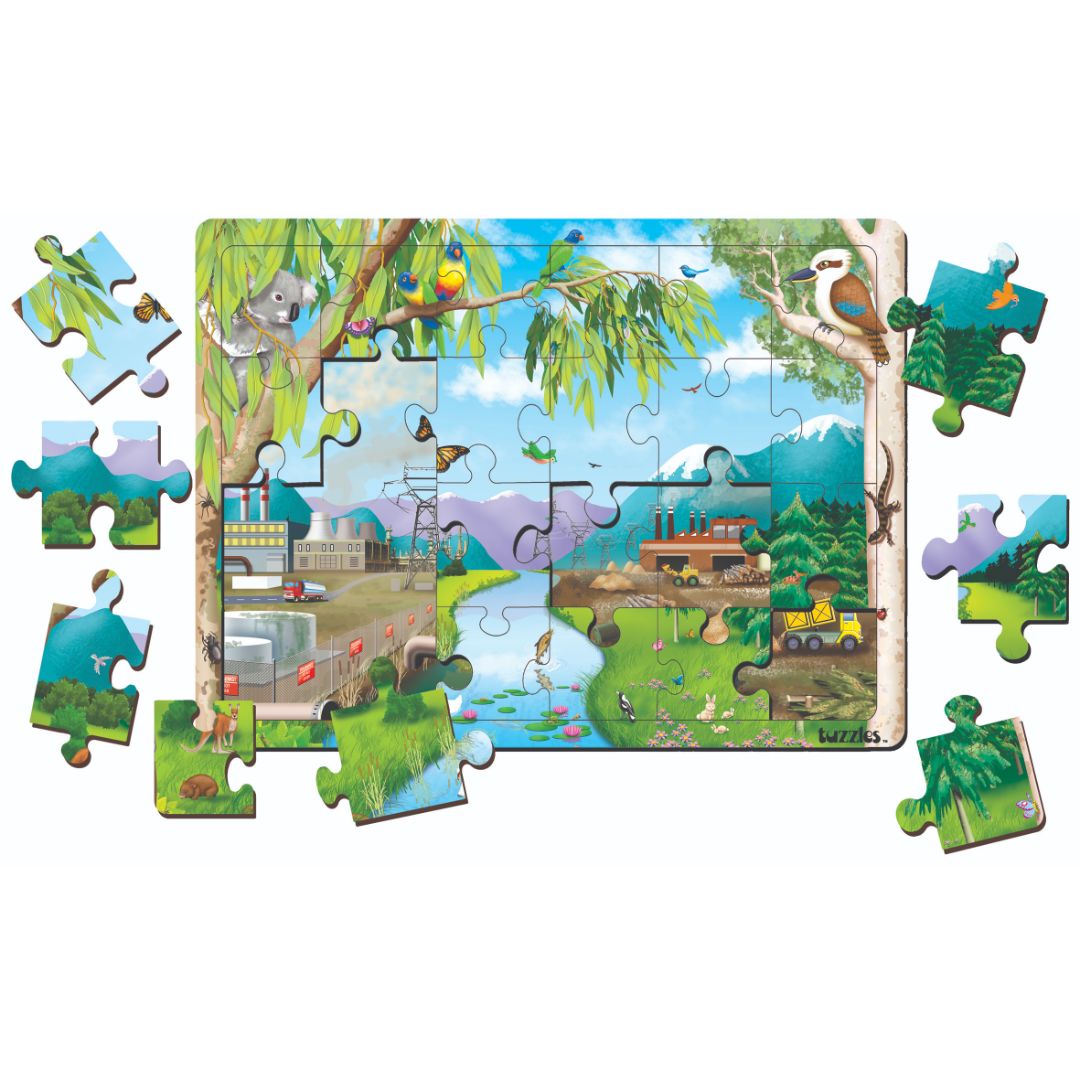
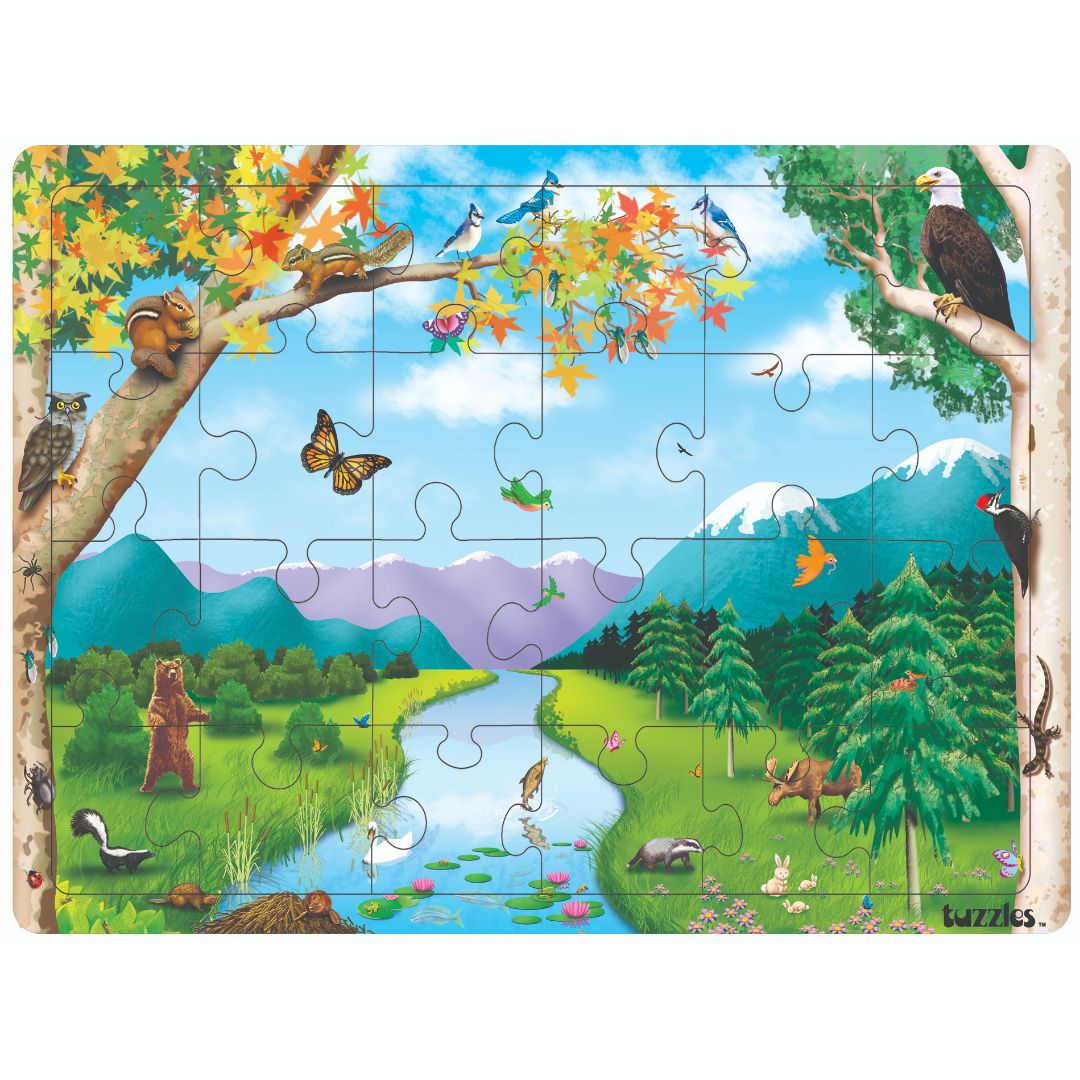
The Environmental Change Puzzle serves as a tangible resource for children to explore the relationship between human actions and environmental health. By engaging with the puzzle, children can visually comprehend the stages of environmental change, fostering a sense of responsibility and connection to the natural world.
Supporting play-based learning and inquiry
This layered puzzle encourages children to engage in hands-on learning through play, allowing them to investigate and discuss the impact of environmental changes. As they manipulate the pieces, children can ask questions, share observations, and collaborate with peers, enhancing their inquiry skills in a playful context.
Relevant EYLF Outcomes
Outcome 2: Children are connected with and contribute to their world.
Outcome 4: Children are confident and involved learners.
Outcome 5: Children are effective communicators.
Classroom, Play Activity & Provocation Ideas
Classroom & Learning Area Ideas
Set up a dedicated environmental corner where children can explore the puzzle alongside books and materials about sustainability and nature conservation.
Incorporate the puzzle into a science learning area, allowing children to connect their understanding of environmental changes with real-world examples.
Play-Based Activity Ideas
Encourage children to work in pairs or small groups to complete the puzzle, discussing each layer’s significance and sharing their thoughts on how to care for the environment.
Create a storytelling session where children use the completed puzzle to narrate a story about environmental changes and the importance of sustainability.
Invite children to create their own drawings or collages inspired by the different layers of the puzzle, promoting creativity and expression.
Provocation Ideas
Present the puzzle alongside natural materials (e.g., leaves, stones) and ask children to compare and contrast these with the puzzle’s images, prompting discussions about nature and environmental care.
Use the puzzle as a starting point for a group discussion about local environmental issues, encouraging children to brainstorm potential solutions and actions they can take.