How this product aligns with the EYLF
Supporting play-based learning and inquiry
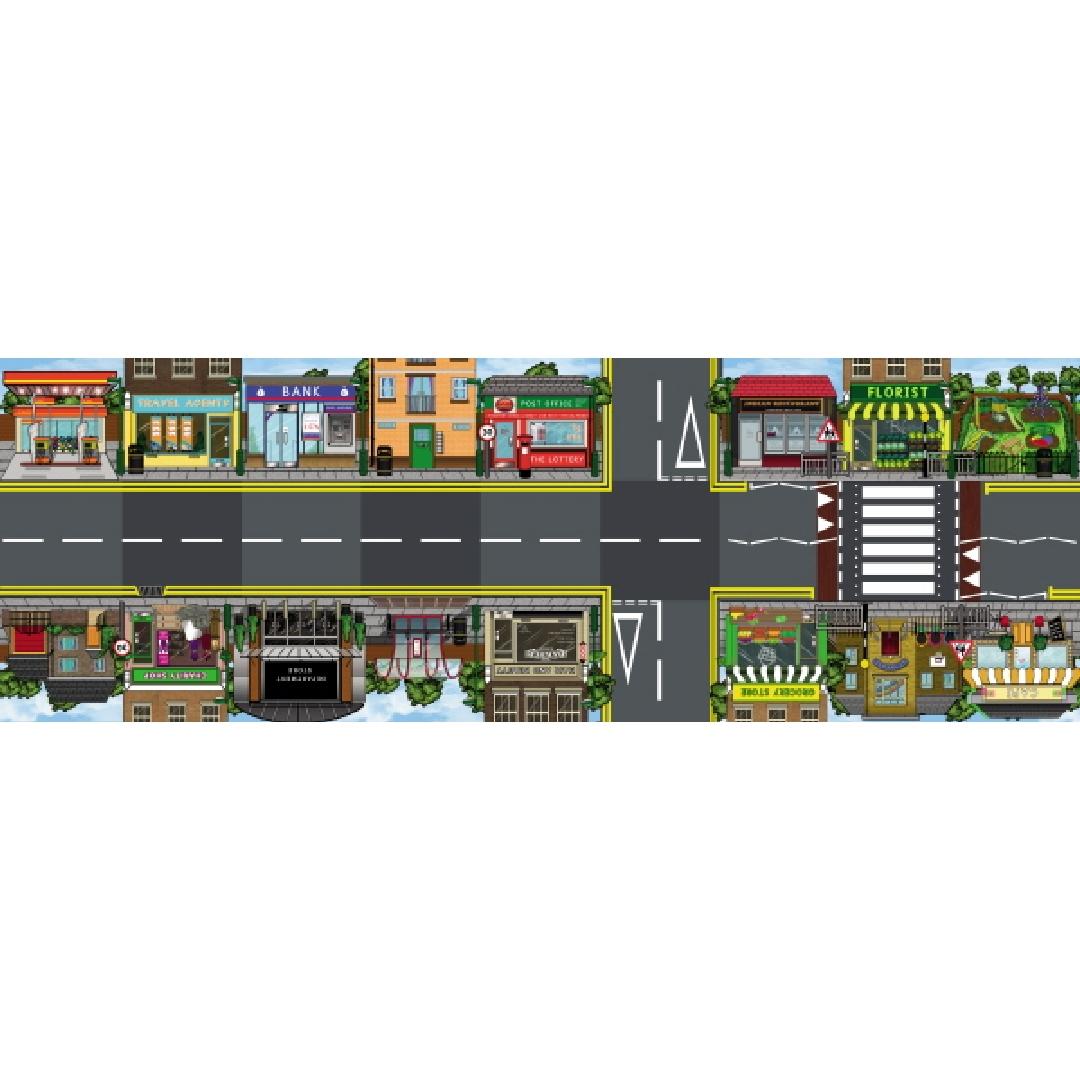
The Bee-Bot and Blue-Bot Busy Street Mat encourages children to engage in play-based learning by providing a dynamic environment for exploration and interaction. Through activities such as counting and geography tasks, children can inquire about their surroundings, fostering curiosity and a sense of discovery as they navigate the mat with the robots.
Developing early STEM and problem-solving skills
This product is designed to support the development of early STEM skills by allowing children to engage in coding and sequencing activities with the Bee-Bot and Blue-Bot robots. As children plan their routes and solve challenges on the mat, they enhance their problem-solving abilities and develop critical thinking skills essential for their future learning.
Relevant EYLF Outcomes
Outcome 4: Children are confident and involved learners.
Outcome 5: Children are effective communicators.
Classroom, Play Activity & Provocation Ideas
Classroom & Learning Area Ideas
Set up the Busy Street Mat in the mathematics area to facilitate counting and number recognition activities, allowing children to use the robots to navigate to specific numbers.
In the geography corner, use the mat to introduce concepts of mapping and spatial awareness, encouraging children to discuss different locations represented on the mat.
Play-Based Activity Ideas
Organise a coding challenge where children direct the Bee-Bot or Blue-Bot to various locations on the mat, promoting teamwork and communication skills.
Encourage children to create their own stories using the mat as a backdrop, integrating language development with imaginative play as they navigate their robots through different scenarios.
Incorporate odds and evens games where children take turns programming the robots to land on designated spots, reinforcing mathematical concepts through interactive play.
Provocation Ideas
Present a scenario where the robots need to deliver items to different locations on the mat, prompting children to devise a plan and discuss their strategies.
Invite children to explore the concept of prepositions by directing the robots to move ‘under’, ‘over’, or ‘next to’ various features on the mat, enhancing their understanding of spatial language.