How this product aligns with the EYLF
Supporting play-based learning and inquiry
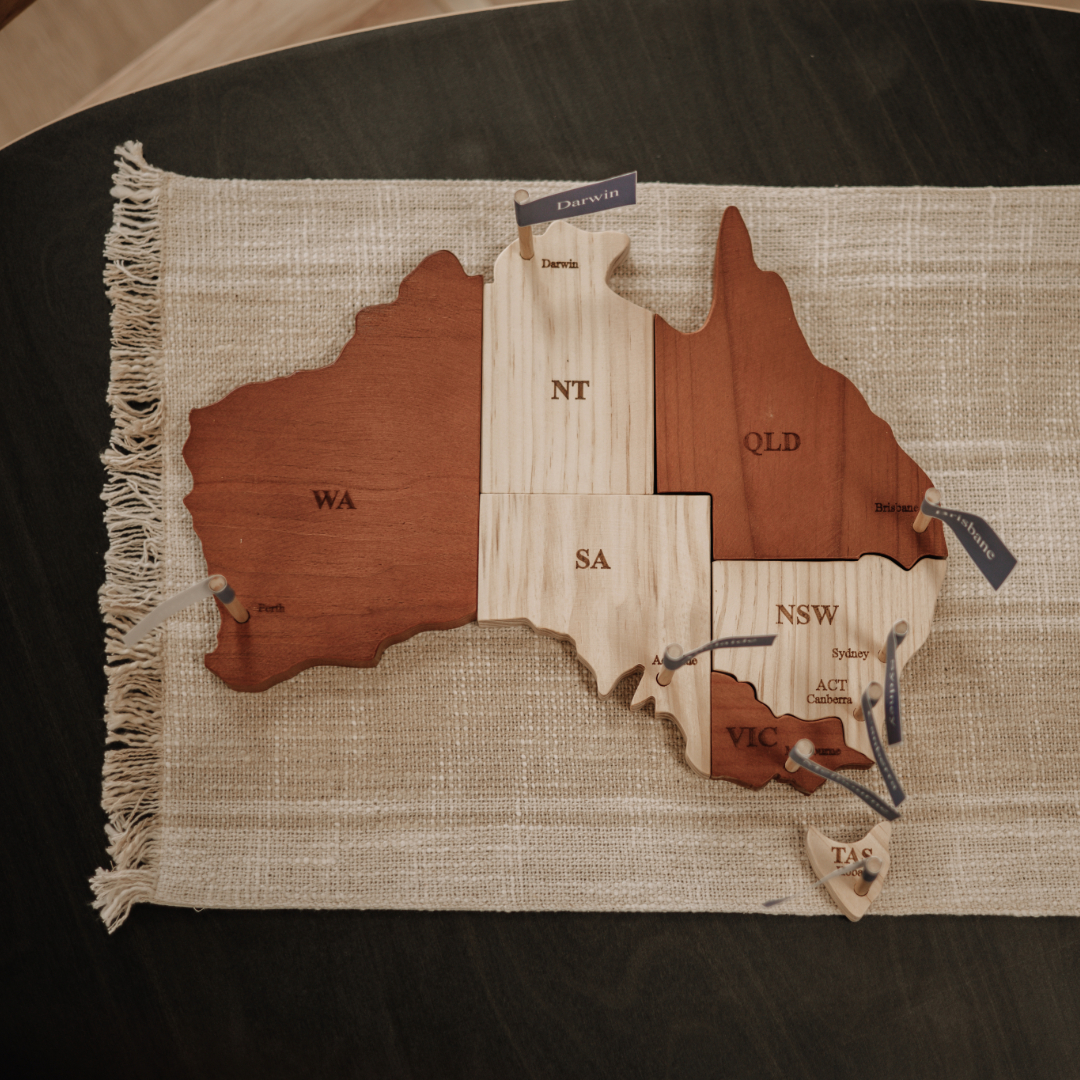
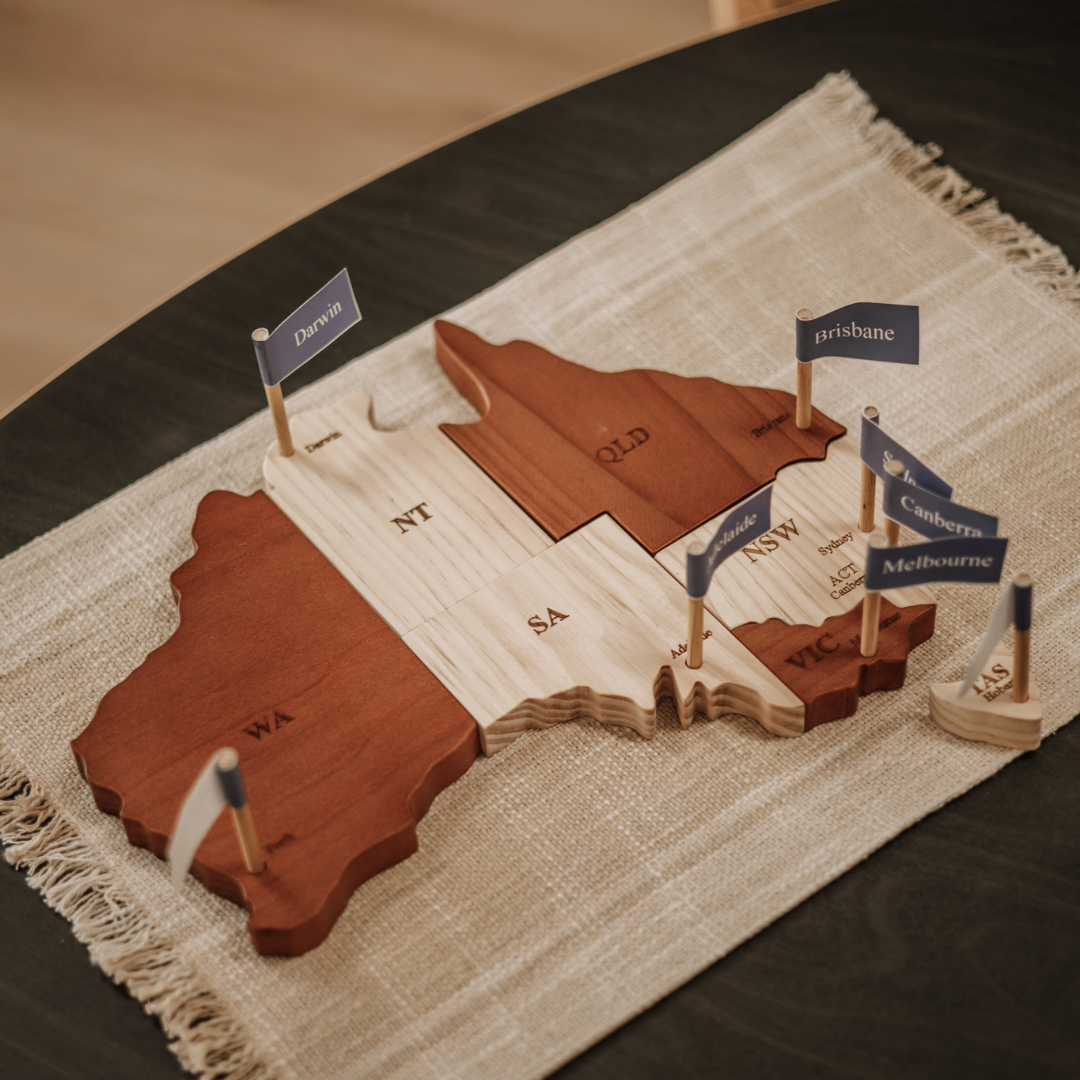
The Australian Map Puzzle Play Set encourages children to engage in play-based learning by exploring geographical concepts through hands-on interaction. As children manipulate the puzzle pieces and match capital cities with their respective states using the wooden flags, they are naturally driven to ask questions and investigate further, fostering a sense of curiosity and inquiry about their environment.
Developing early STEM and problem-solving skills
This product supports the development of early STEM skills by inviting children to think critically as they piece together the map and identify relationships between different locations. The act of matching flags to states not only enhances spatial awareness but also promotes problem-solving as children determine how to fit the pieces together correctly.
Relevant EYLF Outcomes
Outcome 2: Children are connected with and contribute to their world.
Outcome 4: Children are confident and involved learners.
Outcome 5: Children are effective communicators.
Classroom, Play Activity & Provocation Ideas
Classroom & Learning Area Ideas
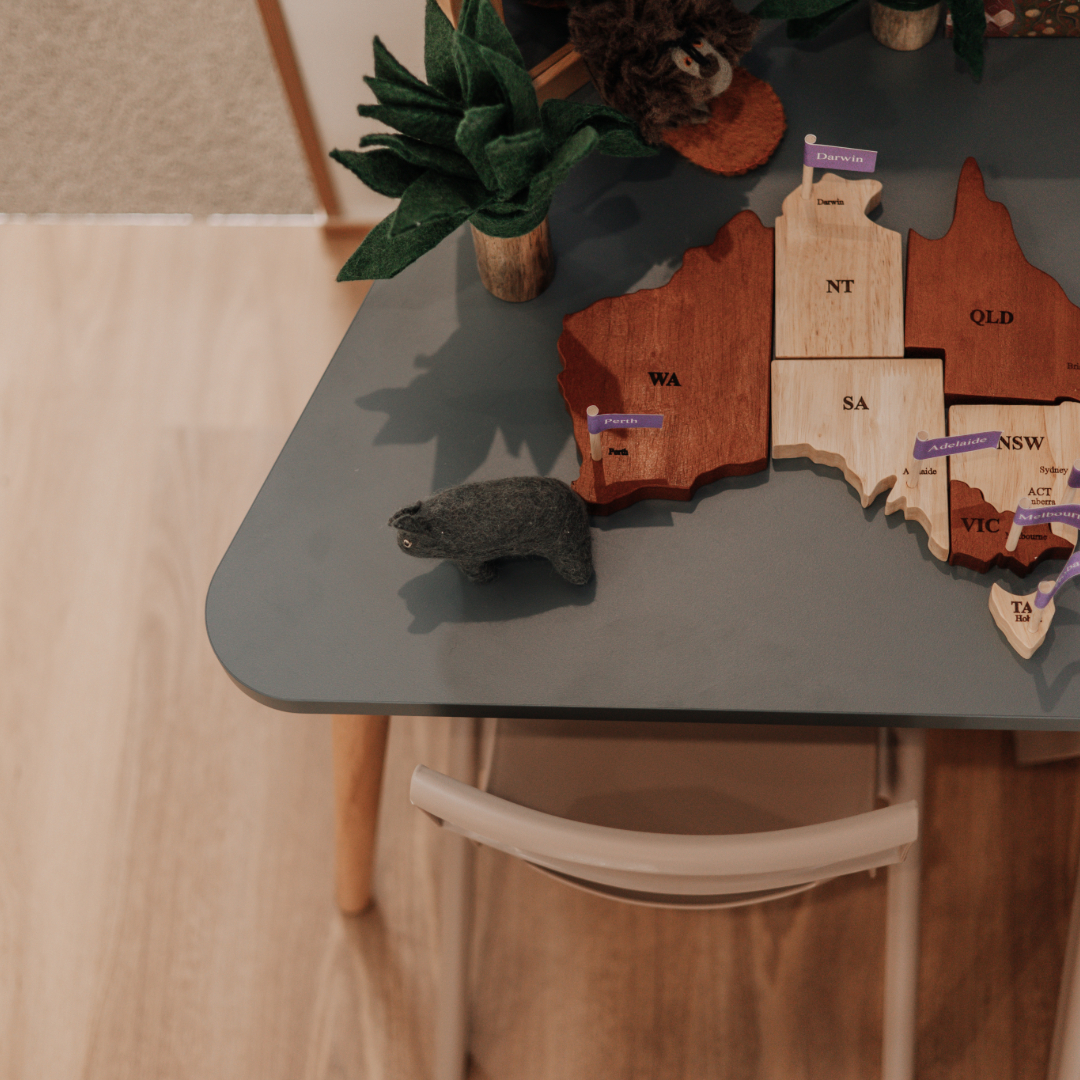
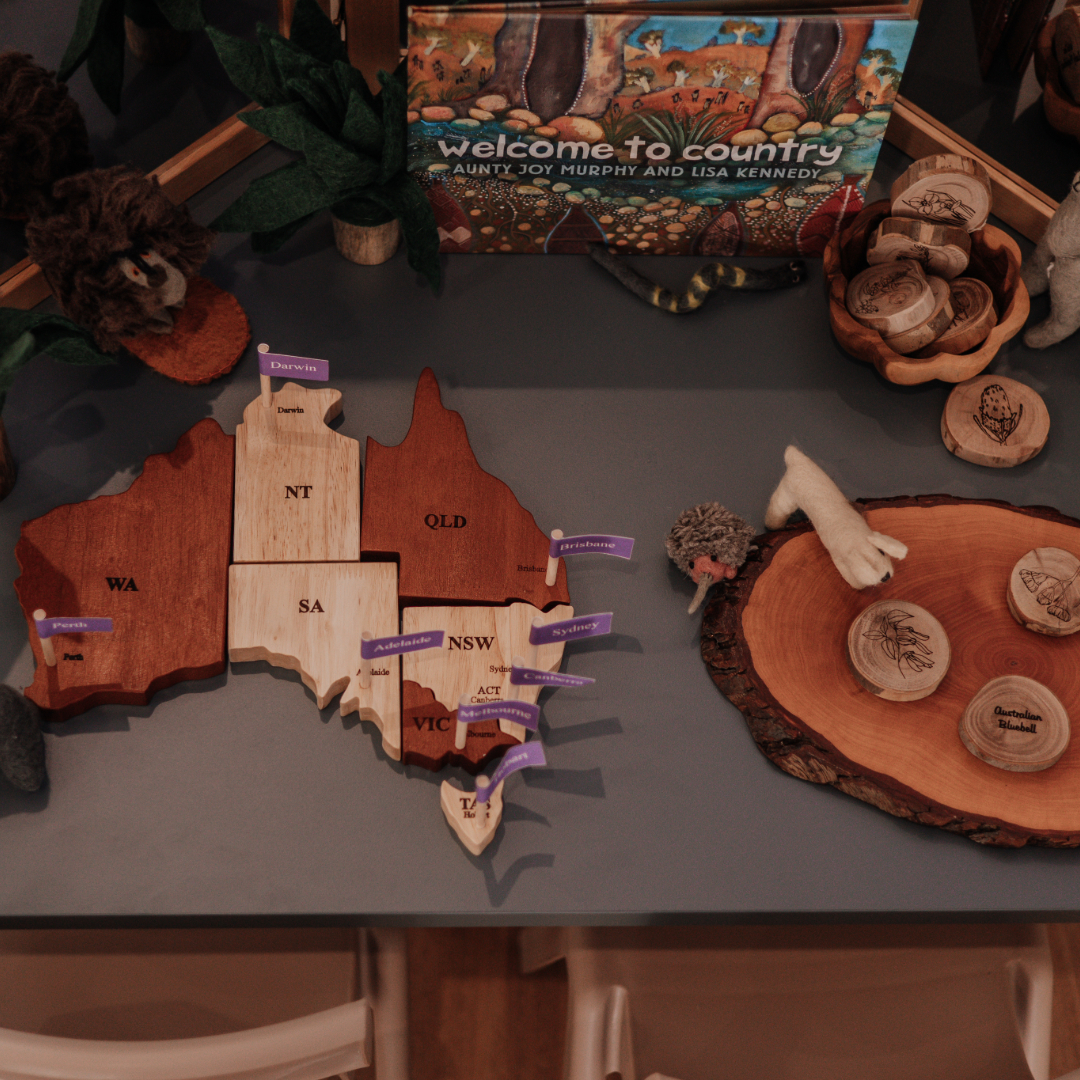
Set up a dedicated geography corner where children can explore the Australian Map Puzzle alongside books and resources about Australia’s geography and culture.
Incorporate the puzzle into a larger learning area that includes maps and globes, allowing children to compare the puzzle with other representations of Australia.
Play-Based Activity Ideas
Encourage small groups to work together to complete the map puzzle, discussing the locations of different states and capital cities as they play.
Use the wooden flags as prompts for storytelling, where children create narratives based on the different locations represented on the map.
Organise a scavenger hunt where children find objects or images representing each state and match them to the corresponding area on the puzzle.
Provocation Ideas
Introduce a question of the day related to Australian geography, prompting children to use the puzzle to find answers and engage in discussions.
Provide additional materials such as clay or drawing tools for children to create their own maps or flags, inspired by the Australian Map Puzzle.