How this product aligns with the EYLF
Supporting play-based learning and inquiry
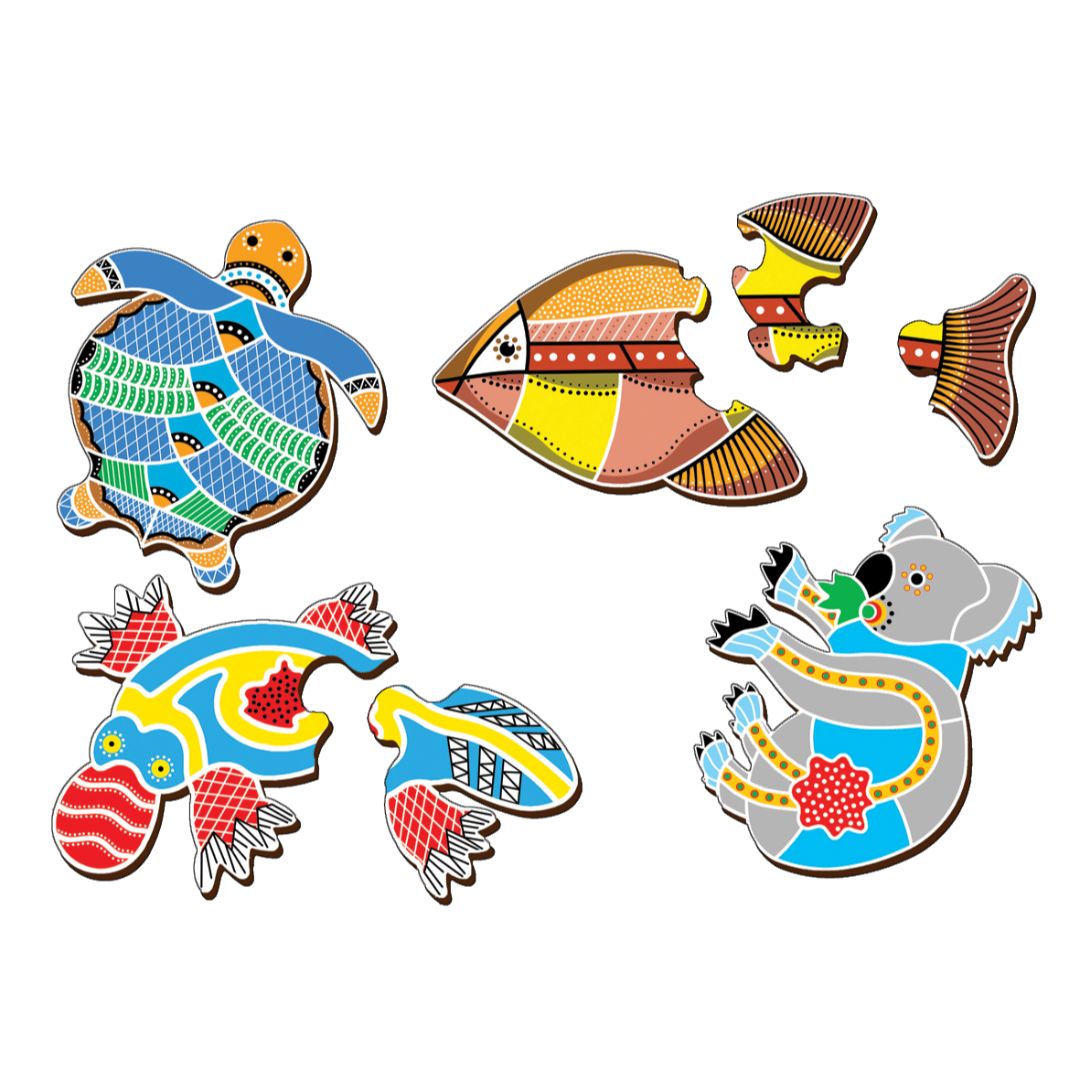
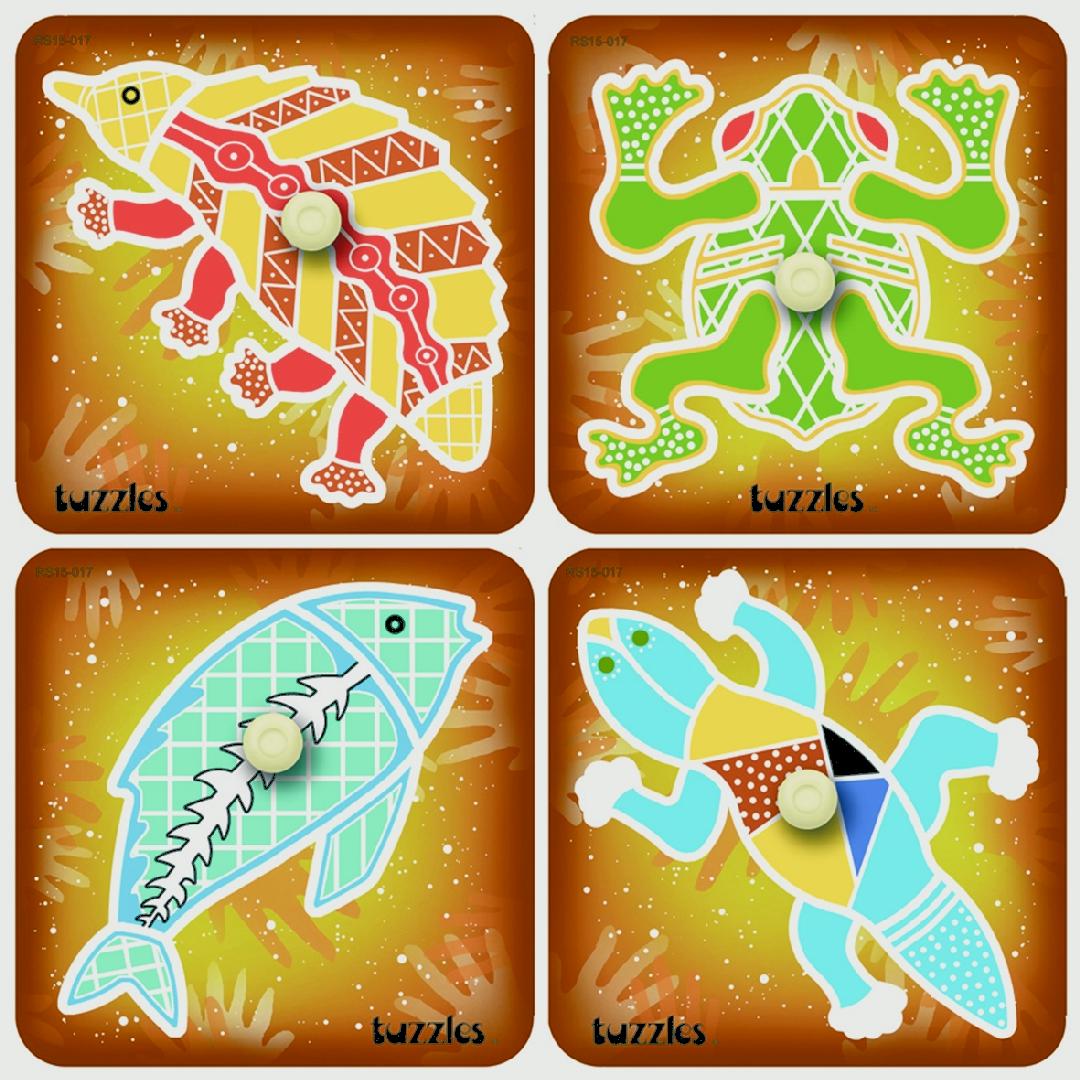
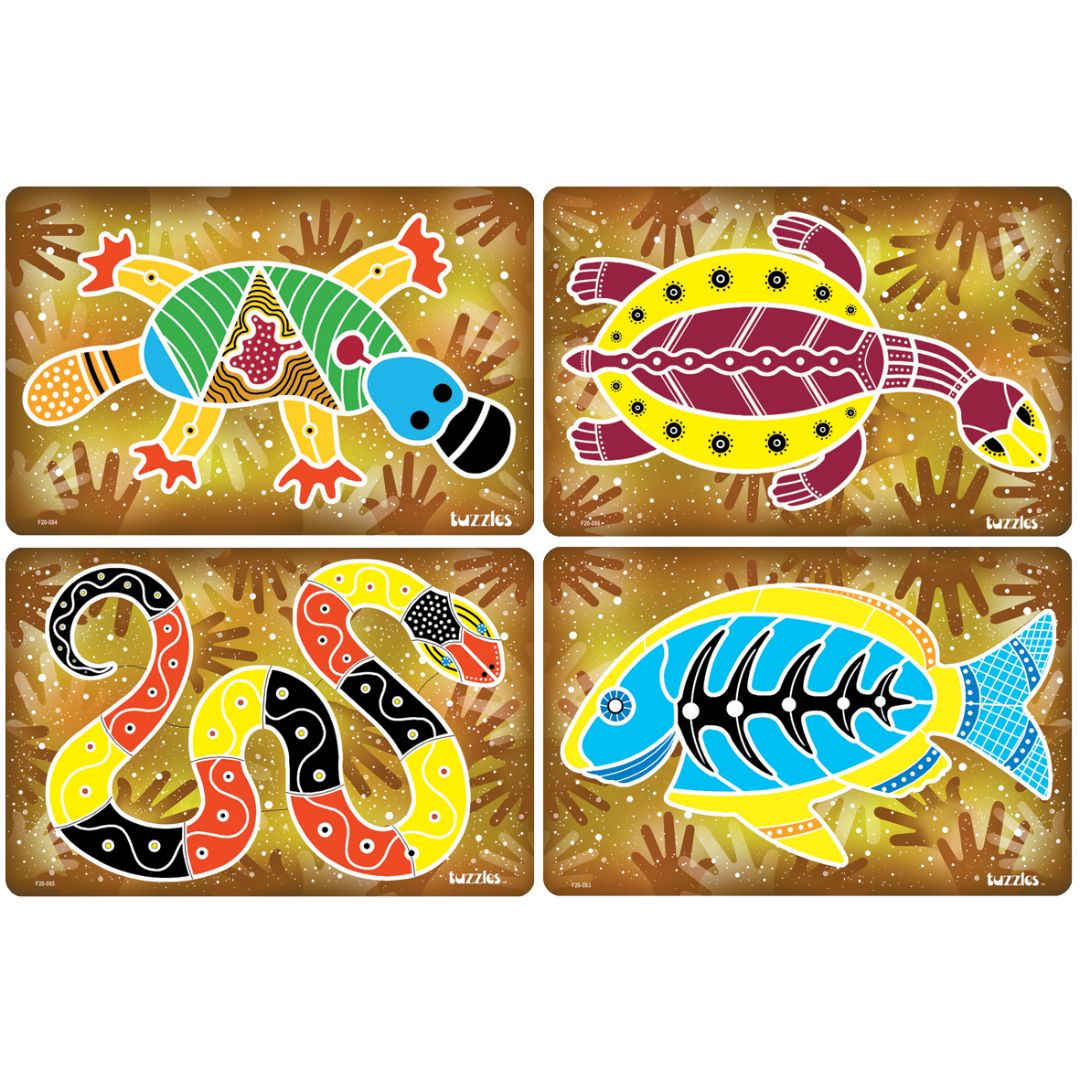
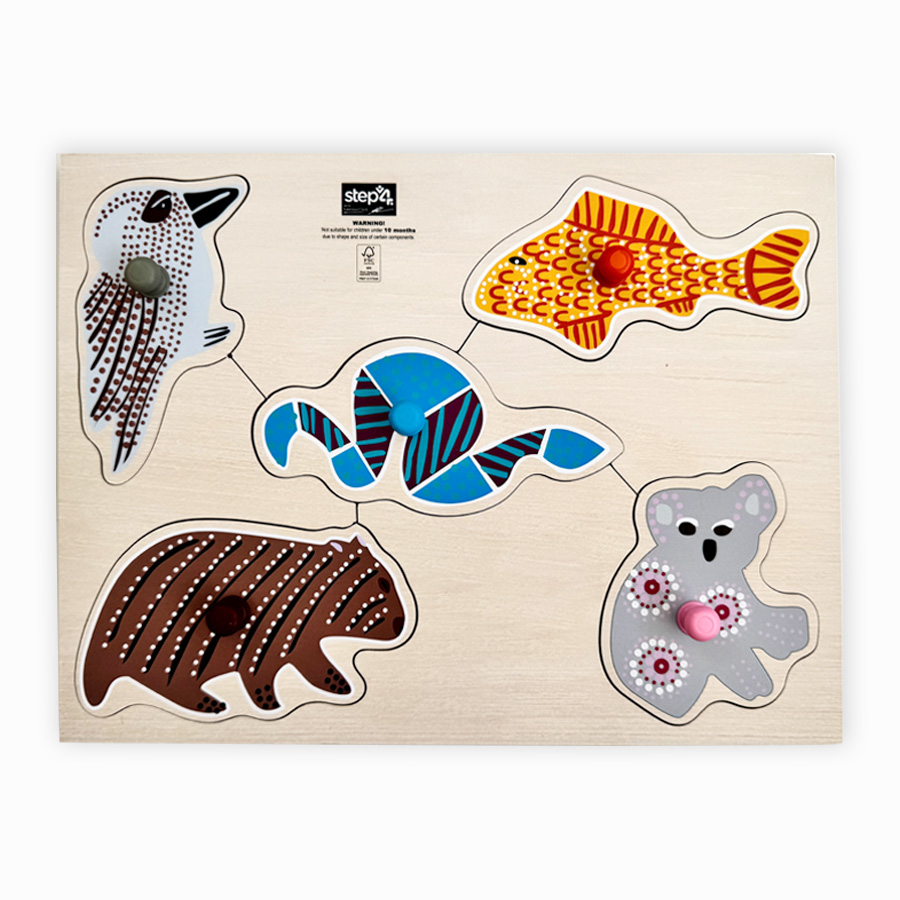
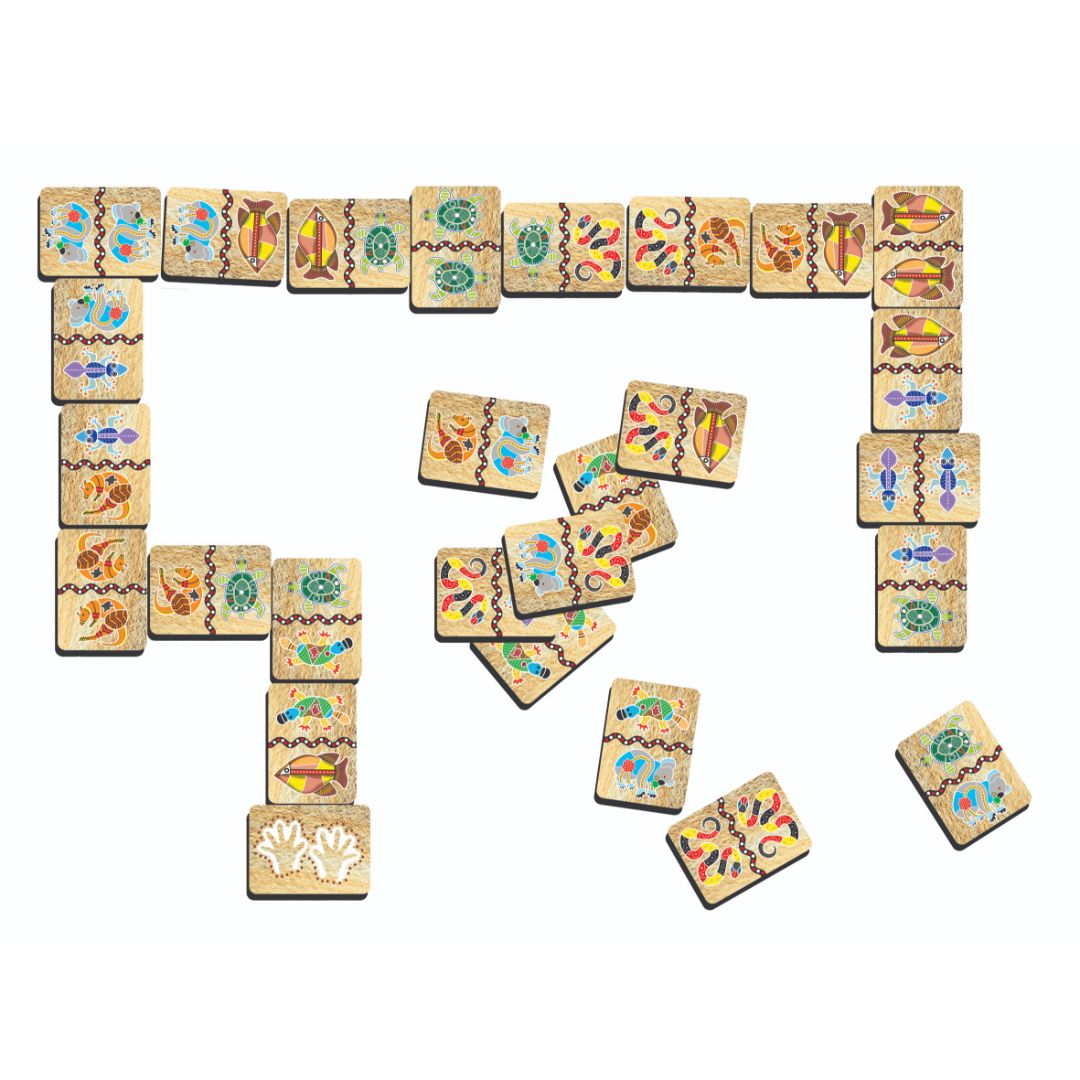
The Aboriginal Art Table Puzzles encourage children to engage in play-based learning by inviting them to explore and manipulate the puzzle pieces. As children work collaboratively to complete the puzzles, they naturally inquire about the animals and the cultural significance of the designs, fostering a deeper understanding of Australia’s First Nations culture.
Promoting connection with the natural world
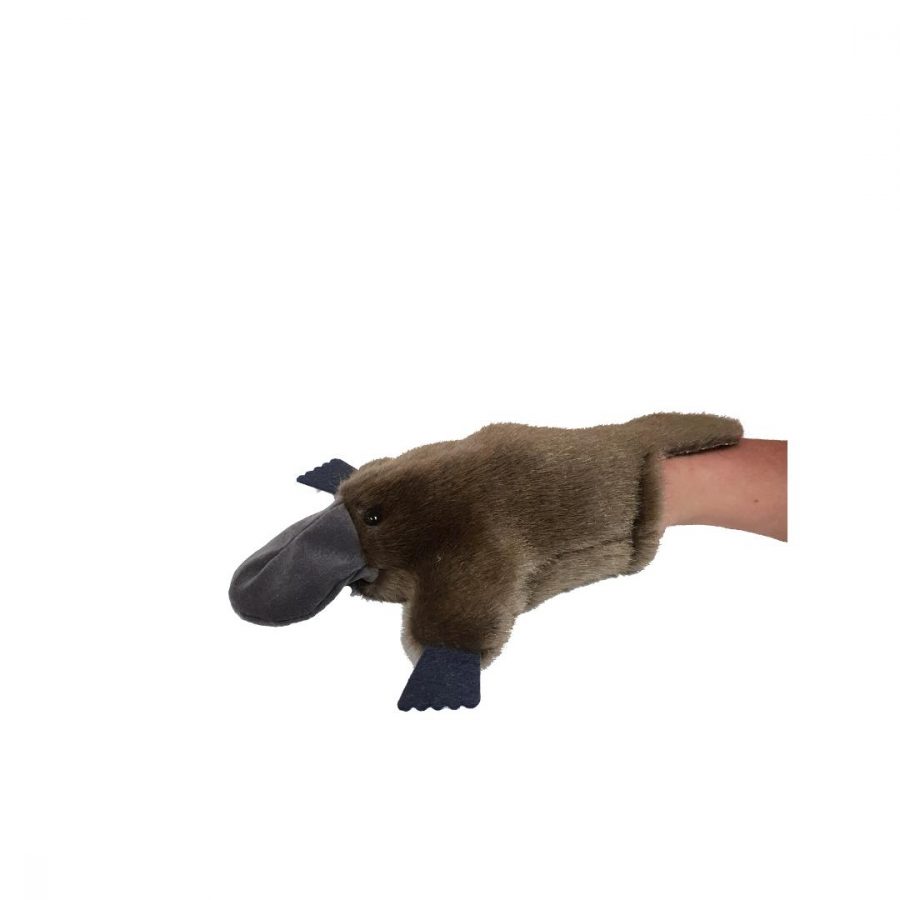
Through the beautifully illustrated native animals featured in the puzzles, children are provided with opportunities to connect with the natural world. This connection is enhanced as they learn about the habitats and characteristics of the turtle, fish, platypus, and koala, promoting respect and appreciation for wildlife and the environment.
Relevant EYLF Outcomes
Outcome 2: Children are connected with and contribute to their world.
Outcome 4: Children are confident and involved learners.
Classroom, Play Activity & Provocation Ideas
Classroom & Learning Area Ideas
Set up a dedicated puzzle corner where children can explore the Aboriginal Art Table Puzzles alongside books about Australian wildlife and First Nations culture.
Incorporate the puzzles into a thematic unit on animals, allowing children to discuss and share their knowledge about each animal represented.
Play-Based Activity Ideas
Encourage small groups to work together to complete the puzzles, fostering teamwork and communication skills as they discuss strategies.
Create a storytelling session where children can use the completed puzzles as a backdrop to share their own stories about the animals and their habitats.
Invite children to create their own animal art inspired by the designs in the puzzles, integrating art and cultural exploration.
Provocation Ideas
Present the puzzles alongside natural materials such as leaves or stones, prompting children to make connections between the animals and their environments.
Use the puzzles as a starting point for a discussion about the importance of caring for native wildlife, encouraging children to think critically about conservation.