How this product aligns with the EYLF
Supporting play-based learning and inquiry
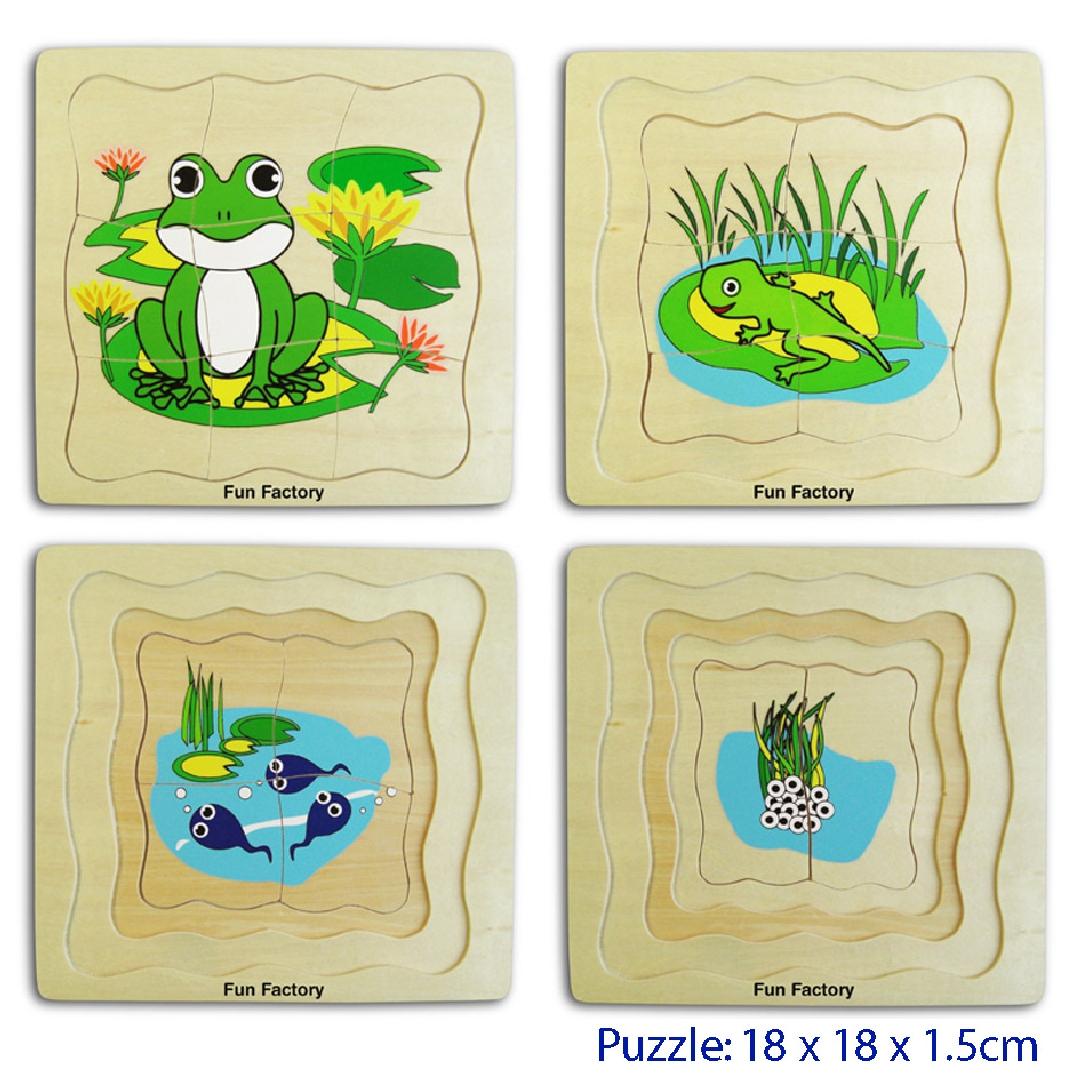
The Life Cycle of a Frog Puzzle encourages children to engage in hands-on exploration of scientific concepts through play. As they manipulate the puzzle pieces, children can investigate the stages of a frog’s life cycle, fostering curiosity and inquiry about nature and biological processes.
Developing early STEM and problem-solving skills
This puzzle provides an opportunity for children to develop early STEM skills by sequencing the life cycle stages of a frog. As they work to fit the pieces together, they enhance their logical reasoning and problem-solving abilities, which are foundational skills for future learning in science and mathematics.
Relevant EYLF Outcomes
Outcome 2: Children are connected with and contribute to their world.
Outcome 4: Children are confident and involved learners.
Outcome 5: Children are effective communicators.
Classroom, Play Activity & Provocation Ideas
Classroom & Learning Area Ideas
Set up a science corner where children can explore the Life Cycle of a Frog Puzzle alongside books and images of frogs in various stages of development.
Incorporate the puzzle into a nature-themed learning area, allowing children to compare the life cycle of frogs with other animals.
Play-Based Activity Ideas
Encourage children to create their own frog life cycle drawings after completing the puzzle, promoting artistic expression and understanding of the concept.
Facilitate a group discussion where children share what they learned about frogs while playing with the puzzle, enhancing their communication skills.
Organise a role-play activity where children act out the different stages of a frog’s life cycle, integrating physical movement with learning.
Provocation Ideas
Present the puzzle alongside real-life frog specimens or videos of frogs in their natural habitat to spark discussion and inquiry about their life cycle.
Invite children to observe and document any frogs they see in the local environment, linking their findings back to the puzzle and reinforcing their understanding of life cycles.