A puddle becomes an ocean. A handful of sand becomes the foundations of a new building. A collection of buckets, boats and scoops becomes the beginning of an entirely imagined world.
For children, outdoor play is full of possibilities. With space to experiment and resources that can be used in different ways, everyday outdoor experiences can become opportunities for creativity, discovery and imaginative thinking.
For early learning educators, the challenge is not to plan every moment of play. It is to create environments that invite children to explore their interests, test their ideas and discover what happens next.
Open-ended outdoor play encourages children to take the lead. Through water, weather, mark-making and imaginative experiences, children can investigate the world around them while developing problem-solving skills, communication and creative confidence.
At Step4, we see the value in resources that support this flexibility. The Dantoy Blue Marine and Dantoy Classic ranges offer practical options for outdoor environments where children can move between creating, exploring and pretending.
CREATE: Make space for creativity and mark-making
Creativity outdoors does not always require paint, paper or a finished project. Sometimes, the most engaging experiences begin with materials children can manipulate, combine and transform.
Wet sand, water, soil and natural materials offer opportunities for children to experiment with lines, shapes, textures and patterns. They can draw pathways in the sand, paint outdoor surfaces with water or create structures that change as they add or remove materials.
These experiences allow children to make decisions, test different approaches and see the results of their actions.
Outdoor ideas to try
Water painting: Provide paintbrushes and containers of water so children can make temporary marks on suitable outdoor surfaces. As the water evaporates, their artwork changes and creates an opportunity to explore what happens when materials dry.
Sand construction: Offer buckets, scoops and shovels for digging, shaping and building. Children might create towers, roads, tunnels or structures that evolve as their play continues.
Texture and pattern exploration: Encourage children to make marks in wet or dry sand, compare patterns and experiment with different tools.
The aim is not to achieve a particular result. It is to give children opportunities to explore their own ideas and discover different ways to use the materials available.
Versatile sand play resources can help educators create flexible outdoor experiences without needing a different set of equipment for every activity. Buckets, shovels and sand tools can support everything from construction and mark-making to collaborative projects and imaginative play.
Explore Dantoy Classic Sand Set
EXPLORE: Let water and weather guide discovery
Outdoor environments change constantly, offering new opportunities for investigation. Water moves, surfaces change after rain, and wind transforms the movement of leaves and other lightweight materials.
These changes encourage children to observe, compare, experiment and ask questions.
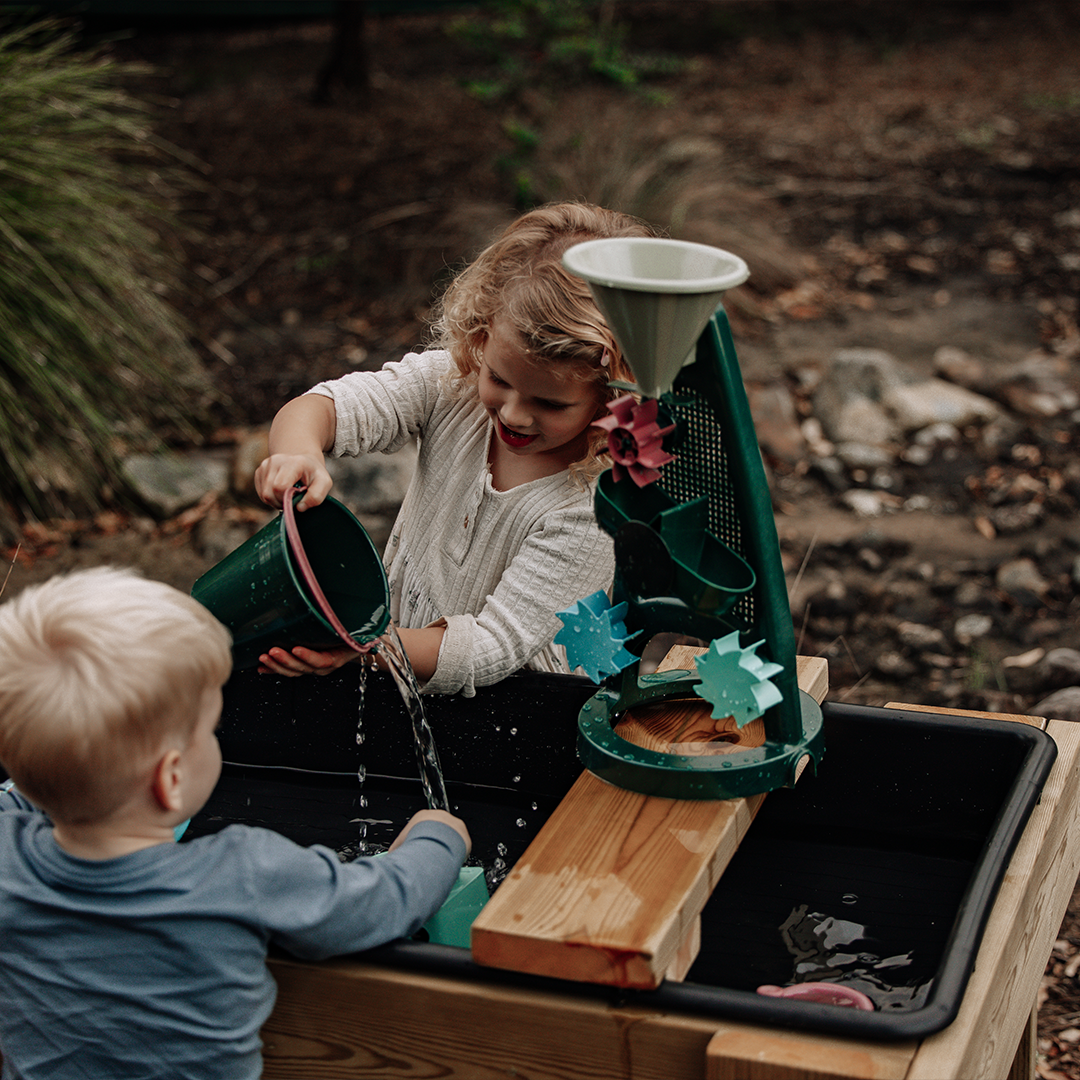
Water play is particularly valuable because it gives children a hands-on way to investigate cause and effect. Pouring, scooping, filling and transporting water allows them to explore how it behaves and how different tools can change what happens.
Outdoor ideas to try
The water investigation station: Set out containers, scoops, sieves and boats. Allow children to experiment with filling and emptying, moving water between vessels and discovering which objects float.
Build a water pathway: Invite children to use sand and suitable tools to create channels. Observe where the water travels and encourage them to adjust their designs when the flow changes.
Weather detectives: After rain, explore puddles and notice where water collects. On a breezy day, observe how leaves move or investigate how wind affects lightweight materials.
Educators can extend these experiences by asking open-ended questions such as, “What do you think will happen if we add more water?” or “How could we change the direction it flows?”
These conversations encourage children to develop their own theories rather than simply follow instructions.
The Dantoy Blue Marine range offers resources suited to water and sand exploration, including opportunities for children to use boats, buckets and sand tools in different ways.
A boat might become part of a floating investigation one day and the centre of an imaginary ocean adventure the next. The same resource can support different interests as children’s play develops.
Discover Dantoy Blue Marine Toys and Sand Set
PRETEND: Turn everyday resources into imaginative worlds
A bucket becomes a cooking pot. A boat carries imaginary passengers across an ocean. Sand and water become the ingredients for an outdoor café.
Imaginative play allows children to transform familiar materials into something new. When resources are flexible and accessible, children can create their own stories, negotiate roles and develop ideas together.
The beauty of open-ended play is that the direction can change at any moment. An outdoor construction site might become a harbour, which then transforms into a rescue mission.
Educators can support these possibilities without needing to prescribe the storyline.
Outdoor ideas to try
The imaginary harbour: Combine boats, buckets and sand tools to create a harbour where children can build shorelines, transport materials and invent journeys.
The outdoor café: Provide sand and water resources for children to create pretend meals, take orders and develop their own café stories.
The construction challenge: Encourage children to build roads, bridges or structures using sand and suitable loose parts, adapting their ideas as they play.
These experiences provide opportunities for communication, collaboration, creativity and problem-solving. Children can take on different roles, share ideas and learn from one another as their stories develop.
Resources that grow with children’s ideas
When choosing outdoor play resources, consider how many different ways children might use them. Products that support multiple experiences can remain relevant as children’s interests change.
Dantoy Classic and Blue Marine resources can be incorporated into a range of imaginative scenarios, from sand construction to water adventures and outdoor role-play.
SUSTAINABILITY: Bring environmental awareness into everyday play
Outdoor play creates opportunities for children to build a relationship with the natural world. They might notice how soil changes after rain, observe insects in the garden, collect fallen leaves for an activity or help care for an outdoor space.
These everyday experiences can help educators introduce conversations about caring for the environment in ways children can see and understand.
Sustainability can also influence the resources selected for early learning environments.
The Dantoy Blue Marine collection is made using recycled plastics, including materials sourced from the maritime industry. The range provides an example of how recovered materials can be given a new purpose through product design.
The Blue Marine range carries the Nordic Swan Ecolabel, which assesses environmental impacts against established criteria.
Alongside the materials used to make a product, educators can consider how resources are maintained, how long they remain useful and how they can be incorporated into different experiences over time.
For example, children might use the same boats and containers for water exploration, sand construction and imaginative play. Educators can also model caring for resources, using water thoughtfully and respecting plants and animals in the outdoor environment.
Sustainability is not only about the products we choose, IIt’s about the everyday habits and experiences that help children develop an appreciation for the world around them.
For educators looking to consider material choices alongside play value, the Blue Marine range provides an opportunity to explore resources made using recycled plastics.
SHOP the Danoty Blue Marine Range
Bringing it all together: Create, Explore and Pretend
You do not need to redesign an entire outdoor environment to encourage richer play. Often, it starts with a few thoughtfully selected resources, an interesting invitation and the time for children to take their ideas in different directions.
Try these three simple setups:
CREATE: The mark-making space
Provide sand tools, paintbrushes and water for children to draw, build patterns and experiment with temporary marks.
EXPLORE: The water discovery station
Offer boats, buckets, containers and scoops so children can investigate movement, capacity and floating.
PRETEND: The outdoor imaginary world
Combine sand and water resources with suitable natural loose parts to create an environment children can transform into a harbour, café, garden or construction site.
Observe what captures children’s attention, introduce new materials when useful and allow their interests to guide what happens next.
The most effective outdoor experiences are not necessarily the most elaborate. They are the ones that leave room for children’s ideas.
Supporting the next generation of outdoor explorers
Open-ended outdoor play reminds us that learning does not always begin with a planned outcome. Sometimes, it starts with a puddle, a handful of sand or a simple question about what might happen next.
By creating opportunities to create, explore and pretend, educators can support experiences that encourage curiosity, collaboration, imagination and connection with nature.
Thoughtfully chosen resources can help make these opportunities accessible in everyday early learning environments. From water and sand exploration with Dantoy Blue Marine to the versatile possibilities of Dantoy Classic, the right resources can support play that changes and develops with children’s interests.